
Vandaag of morgen in huis

Kwaliteit gegarandeerd

Welkomstaanbiedingen ontgrendelen: GRATIS bezorging | Tot 80% korting | Gratis 30 dagen JoyPlus-proefperiode
Download de app
Educational toys for children should not just look appealing. They should be suitable for the child’s age, able to withstand daily use and offer a type of play that supports their development. This can make the range difficult to compare for parents, grandparents and anyone looking for a gift.
Marketing copy often highlights terms such as “Montessori”, “sensory” or “developmental”. On their own, these words do not tell you much. Instead, focus on verifiable details such as the recommended age, materials, number of pieces and warnings on the packaging.
A product may look appealing for a baby but still contain small parts. Always check the choking hazard warning and the minimum age. Even with toys suitable from 1 year, supervision is still sensible if parts could come loose.
Also look out for conflicting information. For example, the Little Dutch Christmas Block Train lists different age details, while the safety warning states that the product is not suitable for children under 12 months. In this situation, use the strictest and clearest warning as your guide.
A toy car with lights and music may provide sensory stimulation, but that does not mean every child will play with it for long. A simple set with shapes, colours or building blocks may actually offer more scope for repetition, independent exploration and playing together.
Ask yourself: what action does the child perform? Sorting, stacking, rolling, drawing, building and completing puzzles are more meaningful play activities than simply pressing a button.
Large toys do not always fit easily into a typical living room. Check the dimensions before ordering. With musical toys, volume control is useful, especially in a flat. Easy cleaning is also important for baby toys and toddler toys.
Wooden toys can be wiped with a slightly damp cloth, while electronic toys must not be submerged in water. Always follow the manufacturer’s care instructions.
The age shown on the packaging is an indication of safety and use, not a guarantee that every child will use the toy in the same way.
Check that the material is clearly stated, such as wood, cardboard, rubber or ABS plastic. A CE marking indicates that the manufacturer declares the product complies with relevant European requirements. It is not an independent quality ranking and does not mean that a product is indestructible.
Supervision is important when toys contain small parts, even if the product has a CE marking. Check toys regularly for cracks, loose parts and damage. Claims such as “non-toxic”, “BPA-free” or “safe to chew” should be treated as product information provided by the manufacturer. Do not use them as a substitute for safety warnings and age restrictions.
Choose the type of play based on the child’s interests and your everyday circumstances:

Why it suits this profile: A clear, battery-free set for children aged 2 to 5. Ideal as a first introduction to shapes, colours and simple sorting.
The play activity is clear: matching 16 shapes to coloured cards. There are no batteries or sound effects to distract from the core of the game.
16 cardboard shapes, 4 coloured cards, Dutch-language game information and an indicated play time of 15 minutes.
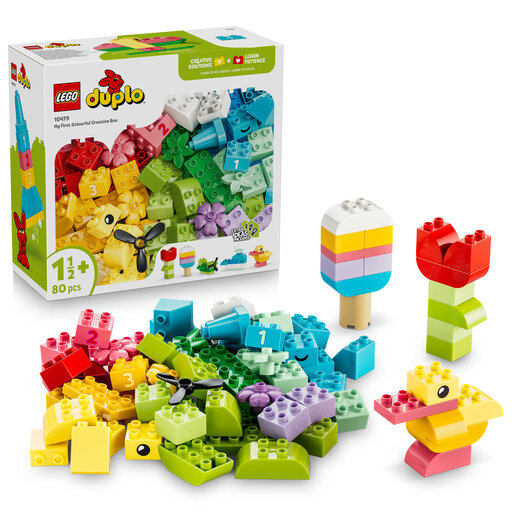
Why it suits this profile: Suitable for toddlers from 18 months who enjoy building, taking things apart and starting again. The large pieces are designed for little hands.
The set states a clear minimum age and contains 80 large bricks. However, check the warning about small parts and tidy the set away after play.
80 pieces, examples for animals and vehicles, plus options for free building or playing together.
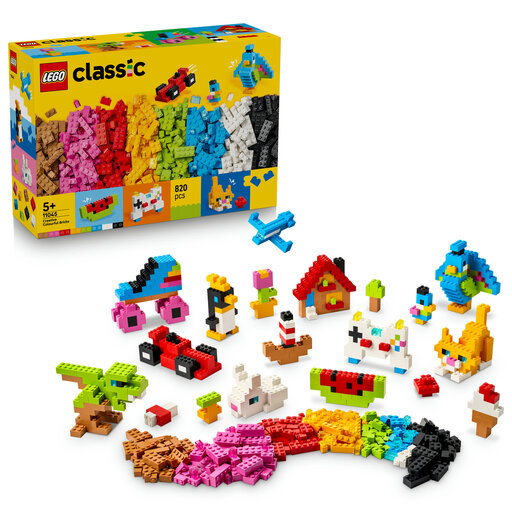
Why it suits this profile: For children from 5 years who want plenty of variety and regularly enjoy creating new models. The large number of pieces does require a dedicated storage space.
The play value does not depend solely on lights or sounds: children can follow models and create their own builds. Pay attention to the warning about small parts.
820 pieces, instructions for 14 models and additional digital instructions for 3 larger builds.
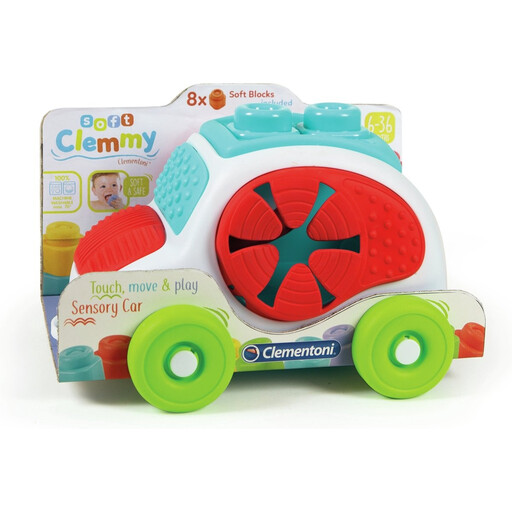
Why it suits this profile: A great choice for babies from 6 months who enjoy touching, holding, stacking and discovering. The soft blocks are suitable for supervised play.
The product information states a minimum age of 6 months, includes soft blocks and says that the blocks can be cleaned on the top rack of the dishwasher. Supervise play and check the material regularly.
8 soft blocks, a car that also works as a shape sorter, and a stated age range of 6 to 36 months.
We have put together a complete, up-to-date list of products that fully meet these strict selection criteria and the applicable European safety regulations.
Choose large parts that are easy to grip and contain no small, loose components. Stacking blocks, a sturdy shape sorter or a push-along toy may be suitable. Always check the minimum age, CE marking and safety warnings. A product with lots of lights and sounds is not automatically more suitable than wooden toys or simple building blocks.
Lifespan depends on the material, how intensively the toy is used and how it is stored. Wooden toys and building blocks can last for a long time when stored in a dry place and checked regularly for damage. Electronic toys also contain batteries and moving or sound-producing parts that can wear out. Keep the packaging or instructions for care and safety information.
For toys without electronics, running costs are generally limited to maintenance. With musical toys, interactive farms and toys with lights, you need to factor in batteries. Check whether batteries are included, which type is required and whether the volume can be adjusted. For a birthday gift for children or a Christmas gift for children, a simple construction set may therefore be more practical than a product with ongoing battery costs.
