
Vandaag of morgen in huis

Kwaliteit gegarandeerd

Welkomstaanbiedingen ontgrendelen: GRATIS bezorging | Tot 80% korting | Gratis 30 dagen JoyPlus-proefperiode
Download de app
A product with colourful buttons, familiar characters or a big box can quickly seem like a good buy. Yet many toys end up unused in a cupboard after just a few weeks. Often, the problem isn’t the child but a poor match between their age, the type of play and your home environment.
A play table with a piano, lights, a toy phone and spinning parts might look appealing. But for a baby or young toddler, too much stimulation can be confusing. So don’t just count the features; think about how your child can play with the toy. A few easy-to-reach parts are often more practical than a complicated panel.
A product for toys for children aged 3 and over isn’t automatically suitable for a younger child who seems capable. Small parts can pose a choking hazard. Always check the minimum age on the product page and packaging, and look out for parts that could come loose during play.
Terms such as Montessori, sensory, early learning and motor development often describe a style of play, not a guaranteed result. A brand’s own research or product information may suggest that certain activities can help children practise skills such as fine motor control, but this isn’t a proven effect for every child. Focus on the practical details instead: size, material, number of pieces, volume control and batteries required.
For baby toys from around 6 months, look for large parts that are easy to grasp and simple actions. An activity table with detachable legs can be used on the floor or standing up, but check that your child can sit or stand independently before using it in that position.
For toddler toys aimed at children aged 1 to 3, push buttons, spinning elements, music and simple role play are a good fit. For children aged 3 and over, building sets, memory activities and more interactive toys come into their own. A set with 83 or 94 pieces offers more ways to play, but also needs space for storage and may require adult supervision.
Check whether the product information lists the material, such as ABS plastic, and whether the edges are rounded. A claim such as BPA-free comes from the seller; also check the latest safety information and warnings.
CE and EN 71 markings are often mentioned for toys sold in the European market. Treat them as information provided on the product page or packaging, and check whether the relevant documentation is available if that matters to you. No marking replaces supervision around young children. Check toys regularly for cracks, loose parts and damaged accessories.
For musical toys, volume control, an on/off switch and a silent mode can be useful in flats, during naps and when toys are shared. Some product descriptions mention adjustable volume, but that doesn’t mean every volume level is automatically suitable. Start low and supervise your child.
Check the batteries too. Batteries aren’t included with several electronic products in this guide. Check the battery type and where the compartment is located. If your family has limited storage space, compact sets or toys with a storage bag are more convenient than large play stations.
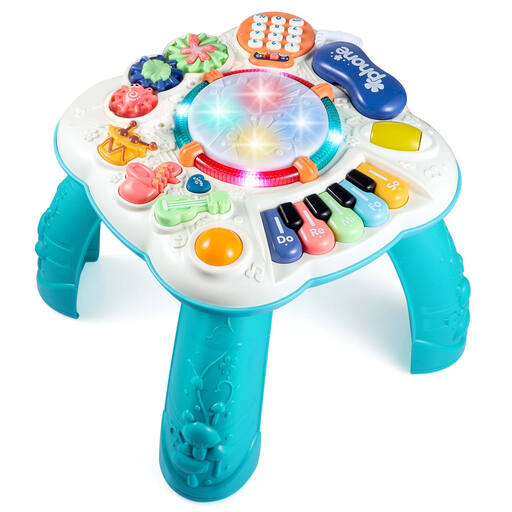
Why it suits this profile: A multi-functional table for children aged 6 to 36 months, combining different types of play in one product. According to the product description, the legs can be removed for floor play.
The product information mentions rounded edges, ABS material and volume control. Before buying, check the latest safety information and instructions for use.
6 play zones, detachable legs and dimensions of approximately 30 × 30 × 31 cm. Batteries are not included.
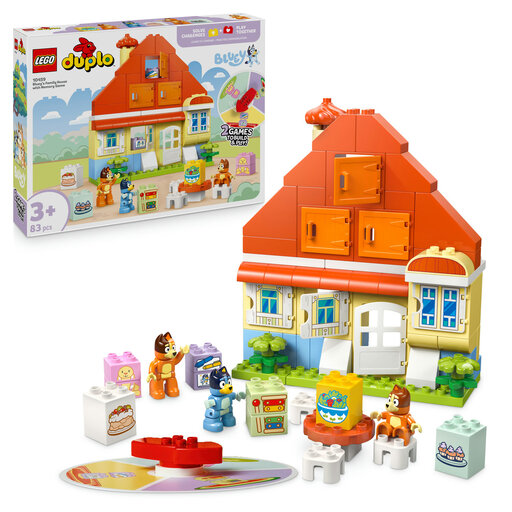
Why it suits this profile: Ideal for Bluey fans aged 3 and over who want to combine building with memory games and role play.
The age recommendation and small-parts warning are clearly stated. An adult can explain how to play before a child uses it independently.
83 pieces, 3 figures and a playhouse with a memory activity. The set is intended for children aged 3 and over.
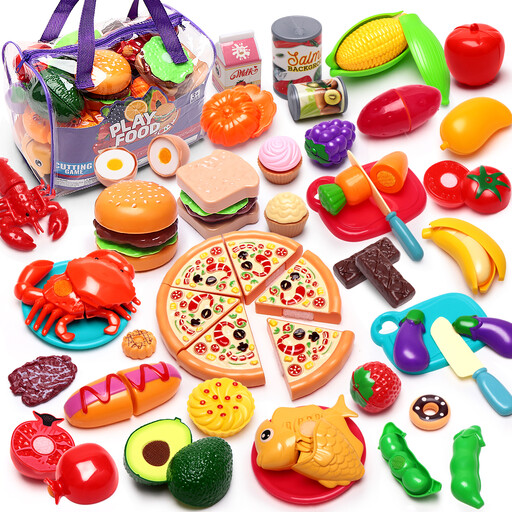
Why it suits this profile: A good choice for children aged 3 and over who enjoy role play and like cooking together, playing shops or sorting food.
The set comes with a storage bag, helping to keep its many pieces together. The small parts mean supervision is still needed, and it’s important to follow the minimum age recommendation.
The product information lists 78 food pieces, hook-and-loop fastenings and BPA-free plastic. No batteries are needed.
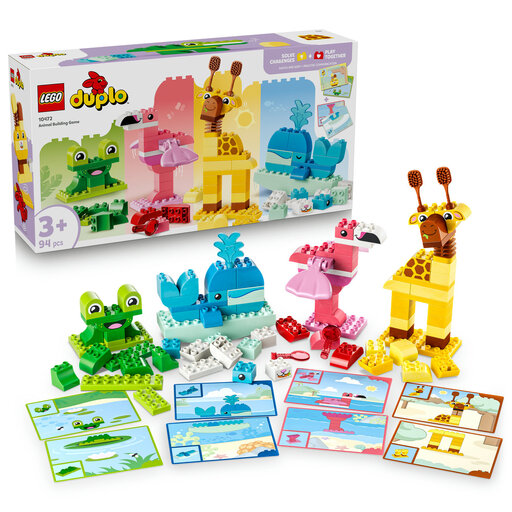
Why it suits this profile: A good fit for children aged 3 and over who enjoy building, pairing animals and making up rules or stories together.
The cards offer a clear starting point, while children can also create their own combinations. Check that all the pieces are put away after play.
94 bricks, picture cards and eight possible animal figures. The set works without batteries and is suitable for playing alone or together.
We’ve put together a complete, up-to-date list of products that meet these strict selection criteria and current European safety requirements.
Choose toys with large, sturdy parts and simple actions, such as spinning, pressing, tapping or making music. An activity table or compact musical toy could be a good fit, as long as you check the minimum age, stability and sound settings.
How long a toy remains in use depends on its material, how often it’s played with and how the child develops. Toys with different types of play, detachable parts or expandable building options may hold a child’s interest for longer. Check regularly for damage and store small parts somewhere dry.
It depends on the product. Electronic activity tables, pianos and drum sets often run on batteries, which aren’t always included. Building sets and many role-play toys don’t need power. Check the battery and power information before buying.
