
Vandaag of morgen in huis

Kwaliteit gegarandeerd

Welkomstaanbiedingen ontgrendelen: GRATIS bezorging | Tot 80% korting | Gratis 30 dagen JoyPlus-proefperiode
Download de app
A toy box full of items does not automatically mean that a child will play with them for long. When choosing educational toys for children, there is more to consider than colourful packaging or a long list of features. Parents and grandparents want something that is suitable for the child’s age, safe to use and unlikely to end up forgotten in a cupboard after a few weeks.
An activity table with lights, music, buttons and sounds may look appealing. However, a young child may lose interest if there is no clear way to explore independently. So do not just look at the number of play areas. Focus especially on how the toy is used: can a child press, turn, build or sort without constant help?
Baby toys, toddler toys and toys for children aged 3 and over require different features. Small parts that are suitable for a preschool child may be dangerous for a baby. Conversely, a simple toy for a baby may offer little challenge to a 5-year-old.
Always check:
Terms such as “Montessori”, “sensory” and “developmental” do not automatically describe a proven effect. According to the product descriptions provided by some brands, certain play activities may contribute to skills such as fine motor control, imagination or understanding cause and effect. This is not a guarantee of how every child will develop.
Instead, assess the specific features: are there knobs to turn, shapes to fit, building blocks, musical instruments or role-play elements? This will help you compare products more objectively.
The age recommendation is an important starting point, but it is not the only criterion. A set with 83 building pieces, such as LEGO DUPLO Bluey 10459, is intended for children aged 3 and over and contains small parts. The manufacturer states that children should be supervised while building and warns of a choking hazard.
For babies and young toddlers, larger parts that are easy to grip are more practical. For developmental toys for children aged 6 to 36 months, stable shapes, rounded edges and straightforward controls are useful points to consider.
Product pages may provide information about ABS plastic, BPA-free materials, rounded edges and CE or EN71 marking. Check that this information actually applies to the product and read the warnings as well.
A CE mark is not an independent quality award. It is a declaration that the responsible party states that the product meets the relevant European requirements. Also look out for:
For example, the Connetix Ball Run product information states that the magnets are embedded with metal rivets. It also recommends checking the tiles, tubes and connectors regularly for damage.
Interactive toys and musical toys often run on batteries. Check whether batteries are included and whether the volume can be adjusted. A volume control or silent mode can be useful in a flat, during quiet times or when travelling. This makes the sound adjustable, but it is not a medical guarantee of hearing protection.
Maintenance also matters. Many plastic toys can be cleaned with a damp cloth. Parts that must not be placed in water should be kept dry. With magnetic construction toys, it is sensible to check carefully for cracks and loose parts.
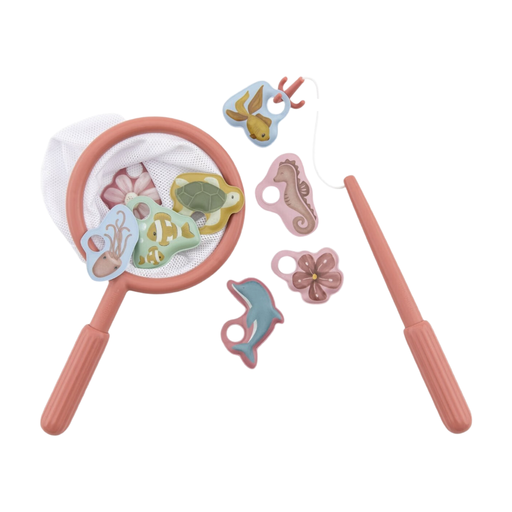
Why it suits this profile: A simple battery-free game for children aged 3 and over. Suitable for playing at home, a playdate or as a birthday gift for children.
The product information states a clear minimum age, supervision requirements and a warning about small parts. No batteries are needed.
Stated dimensions of 55 x 23 x 17 cm, colourful fish pieces and suitability for indoor and outdoor play.
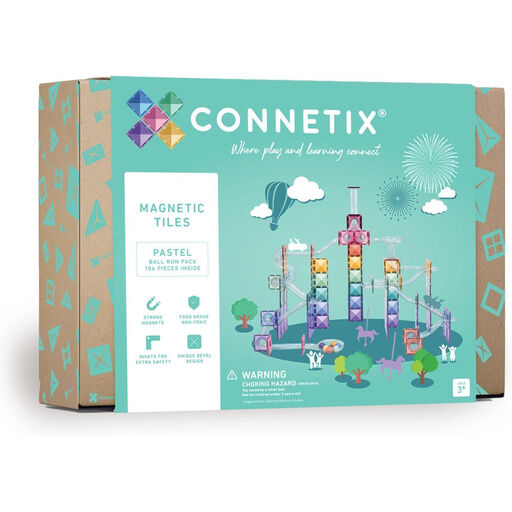
Why it suits this profile: For families looking for open-ended construction toys that allow children to build and adapt new tracks again and again.
The set has a specified contents list of 106 pieces, works without batteries and advises checking the magnetic parts as part of regular maintenance.
106 pieces, transparent tubes, wooden balls and suitability from age 3; adult supervision is recommended.
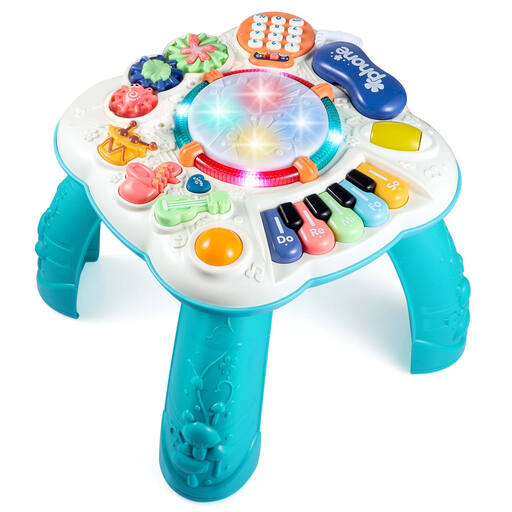
Why it suits this profile: For parents looking for one compact product for different play sessions between 6 and 36 months.
According to the product description, the table has six play areas, volume control and removable legs for floor play.
Stated dimensions of approximately 30 x 30 x 31 cm, ABS material, rounded edges and batteries are not included.
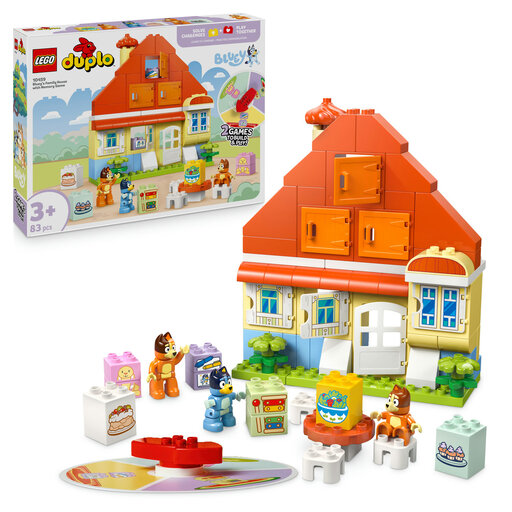
Why it suits this profile: A combination of building, imaginative play and a memory game for toddlers and preschool children aged 3 and over.
The play options are clearly described: build a house, act out scenes and find cards or figures during the memory game.
83 pieces, three figures and a 2-in-1 design combining a building game with a memory activity.
We have put together a complete, up-to-date list of products that fully meet these strict selection criteria and the applicable European safety regulations.
As well as age, consider how the child likes to play:
Also check whether the parts can be stored in one place. A storage bag or compact design reduces the chance of a set becoming incomplete.
For a 1-year-old, large, sturdy parts and simple actions are usually practical. Think of turning, pressing, tapping and listening. Always check the minimum age and choose musical toys with adjustable volume.
Lifespan depends on the material, use and maintenance. Construction toys can grow with a child for longer when they can be used in several ways. Regularly check each product for cracks, loose parts and damaged edges. Electronic toys may also depend on batteries and switches.
No. The price does not automatically indicate how much a child will learn or how often the toy will be used. A simple fishing game can be valuable for fine motor skills and taking turns, while a larger building set may be best suited to children who enjoy designing for longer periods. So compare features, age suitability, safety and expected play value rather than just the number of pieces.
