
Vandaag of morgen in huis

Kwaliteit gegarandeerd

Welkomstaanbiedingen ontgrendelen: GRATIS bezorging | Tot 80% korting | Gratis 30 dagen JoyPlus-proefperiode
Download de app
Educational toys can challenge children to move, build, count, listen or play together. Yet the word “educational” on a packet tells you very little about the actual play value. A product with lots of buttons isn’t automatically suitable for a baby, and a construction set with many pieces can actually cause frustration if the magnets are weak or the age recommendation is wrong.
With this buying guide, you can make more informed choices from educational toys, such as baby toys, toddler toys, Montessori toys, magnetic building blocks and educational games.
Some products are promoted for a wide age range, for example from 6 months to 3 years. The play format then needs to grow with the child. Check whether the pieces are suitable for the youngest age and whether the toy still offers enough challenge later on.
Pay particular attention to:
Words like “Montessori”, “sensory” and “STEM” don’t always describe a fixed quality standard. According to a brand or seller’s own product information, certain features may contribute to, for example, fine motor skills, hand-eye coordination or imaginative play. That is no guarantee of a particular developmental outcome.
So look at verifiable features: the number of play modes, material, dimensions, pieces, age advice and safety warnings.
A product with lights, music and multiple buttons can look appealing. In a flat, however, a high volume can be inconvenient. With construction toys, what matters is whether the pieces click together easily and can be stored away. For children’s board games, the number of players, playing time and language of the instructions all count.
Choose toys that match the child’s motor abilities. Toys for ages 3 and up may contain small parts that are not suitable for younger children. Products with magnets require extra attention: swallowed magnets can be dangerous. Check regularly that magnets remain securely enclosed. Stop using the toy if any part becomes loose.
For babies and young toddlers, rounded edges, a sturdy construction and parts without loose small elements are practical points to consider. A CE marking indicates that the manufacturer declares the product meets relevant European requirements. Always check the specific warnings on the product page as well.
ABS plastic is sturdy and easy to wipe clean. For wooden or cardboard educational games, a dry storage place is important, as moisture can cause warping or damage. A soft play set with removable covers is practical when the toy is used daily.
Check what is actually included. With some sets, batteries or play balls are not included. That affects the total purchase cost.
Measure the available space beforehand. An activity table around 30 cm high needs a different spot than a large foam play set. Also check whether the parts fit in a box, carry bag or storage container.
For musical toys, a volume control and silent mode are useful features. The product description may mention hearing protection or sound development; treat this cautiously. According to the seller’s own information, a product may, for example, have a volume control. That makes the sound adjustable, but is not a medical guarantee.

Why this fits the profile: A clear educational game for young children that takes up little space and works without batteries.
The product information states a clear age of 2 to 5 years, 16 shapes and a playing time of approximately 15 minutes. No batteries are required.
16 cardboard shapes, four coloured cards and game information in Dutch.
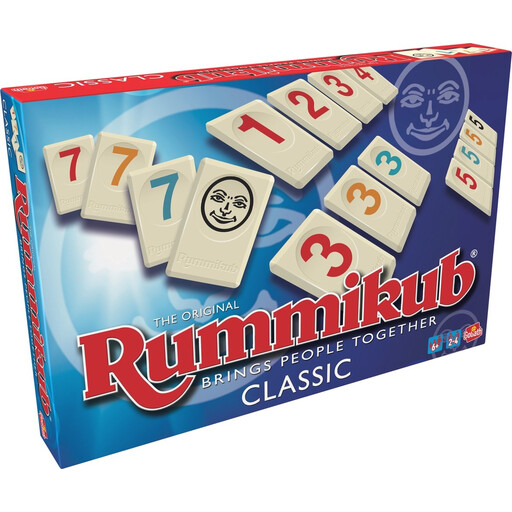
Why this fits the profile: Ideal for families looking for a game that brings multiple players together and allows for longer play sessions.
The specifications clearly state 2 to 4 players, 106 tiles, a playing time of approximately 60 minutes and a Dutch-language instruction manual.
No batteries, no assembly required and suitable for family games from the stated age of 7 years.

Why this fits the profile: For toddlers who mainly want to climb, crawl and move around in a fixed play space at home.
The product information mentions non-slip bases, Velcro fastenings and removable, machine-washable covers. The play balls are not included.
Foam blocks and a ball pit base in one set; the covers can be removed for cleaning.
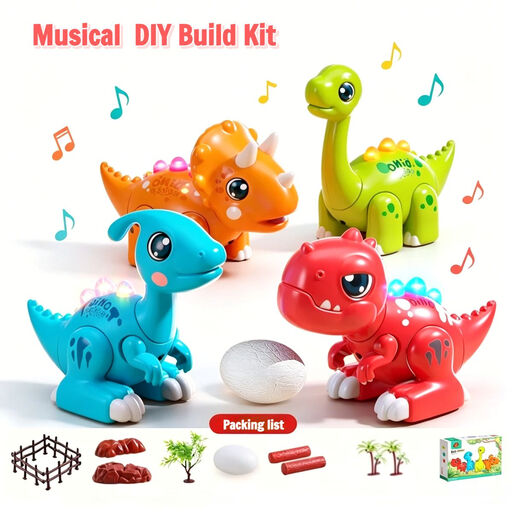
Why this fits the profile: A gift for children who love building, making up stories and playing with multiple figures.
The set states four dinosaurs, accessories for a play scene and an age range of 3 to 6 years. Check before use that all small parts are present.
Click-together construction, four dinosaur models and light and sound functions according to the product description.
We have put together a full, up-to-date list of products that fully meet these strict selection criteria and current European safety regulations.
No. Montessori toys are a specific approach with an emphasis on independent discovery, concrete materials and limited distraction. A product may be described by the seller as “Montessori-inspired”, but that doesn’t automatically mean it is part of an official Montessori method.
The lifespan depends on the material, use and storage. Check plastic regularly for cracks, magnetic parts for coming loose and wooden or cardboard games for moisture damage. Toys that are used daily need more maintenance than a board game that only comes out of the cupboard at weekends.
Many games don’t need batteries and have no ongoing costs after purchase. With musical toys, batteries may be needed, so check whether they are included. With a ball pit or play set, accessories such as play balls may be sold separately. Factor in those extras before you order a toy as a gift.
