
Vandaag of morgen in huis

Kwaliteit gegarandeerd

Welkomstaanbiedingen ontgrendelen: GRATIS bezorging | Tot 80% korting | Gratis 30 dagen JoyPlus-proefperiode
Download de app
Educational toys for children should offer more than bright colours or a long list of features. Parents and grandparents want something that is suitable for the child’s age, safe to use and unlikely to end up forgotten in a corner after a few days. However, there are some clear pitfalls. A toy may promise a great deal, but in practice it could be too loud, contain small parts or fail to match the child’s developmental level.
A toy with music, lights, buttons and multiple play modes may seem appealing. But for a baby, an overload of stimuli can be confusing. So don’t just look at the number of features; consider how a child will play with the toy. Can they press, turn, sort or build independently? This creates more opportunity for active discovery.
With musical toys, an adjustable volume is useful. Also check whether batteries are required and whether they are included. Batteries are not included with various activity tables, pianos and drum sets.
A toy labelled as suitable from 3 years is not automatically suitable for a younger toddler. Magnetic building blocks, modelling clay sets, race-track toys and many educational games contain small parts. These can pose a choking hazard.
Use the age recommendation as a starting point, but also consider the child’s skills. A three-year-old who loves building may be ready for magnetic tiles, while another child may benefit more from large, soft building blocks.
According to product information provided by some brands, their products may support fine motor skills, rhythm, spatial awareness or sensory discovery. This does not mean that a toy can independently guarantee a particular area of development. Treat these descriptions as possible play objectives and focus mainly on verifiable features: dimensions, material, number of parts, age recommendation and care requirements.
For baby toys and toddler toys, large parts that are easy to hold are important. For example, an activity table for 6 to 36 months may combine different actions, such as pressing keys, turning gears and tapping a drum. Check whether the legs can be removed if you also want to use the product on the floor.
From the age of 3, more types of play become available, such as:
Check whether the product page provides clear information about the materials and warnings. ABS plastic is mentioned for some of the selected products. Some suppliers also state that their products are BPA-free and have rounded edges and enclosed magnets. Treat this as product information, not as a general guarantee for every use.
Take extra care with magnetic products:
A CE mark and reference to EN71 appear in the descriptions of various products. These are relevant indicators for toys sold on the European market, but always check the current product information, warnings and supplied instructions.
Musical toys often run on batteries. Check the type and number of batteries, whether there is a volume control and whether the sound can be switched off. A remote-controlled robot may have a rechargeable battery, while a race track with lights and sound may require two AA batteries, for example.
Maintenance is also important. Cardboard educational games are generally only suitable for wiping clean with a dry cloth. Modelling clay should be stored properly after use. Soft building blocks with removable covers are more practical if they are used indoors frequently.
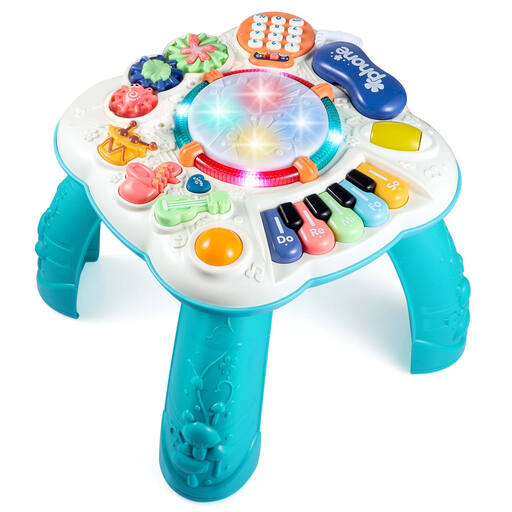
Why it suits this profile: According to the product description, this activity table combines six play zones and can be used with or without its legs. This makes it a versatile choice for babies and young toddlers.
The recommended age range of 6 to 36 months and the volume control are clearly stated. Batteries are not included, so remember to allow for the additional cost.
ABS material, rounded edges, a piano, drum, gears and toy telephone all in one product.

Why it suits this profile: This educational game is clearly laid out for children aged 2 to 5 and uses cards and shapes focused on colours and recognition.
The set contains 16 cardboard shapes, four coloured cards and game information in Dutch. No batteries or electronic stimuli are needed.
Compact size, suitable for one player, no assembly required and a short playing time of around 15 minutes.
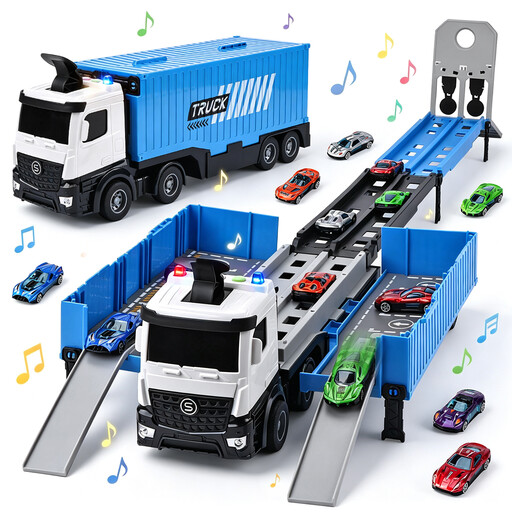
Why it suits this profile: For children aged 3 and over who enjoy active play, arranging vehicles and playing together. The set includes eight cars, a double track and a storage compartment.
The product information mentions small parts, direct adult supervision and the two AA batteries required. The track folds away for easy storage.
Two launch tracks, eight cars, traffic signs and a storage compartment in a product measuring 42.5 cm wide.
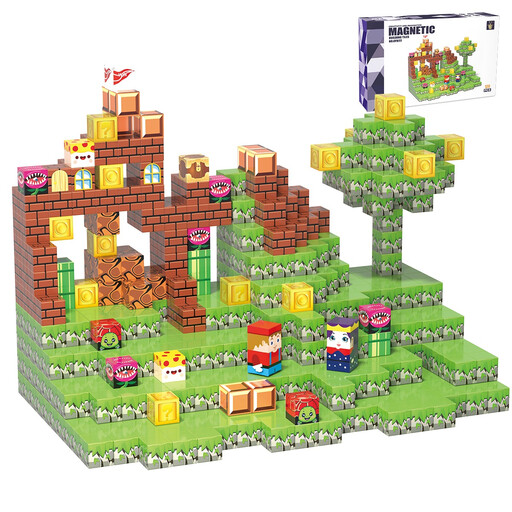
Why it suits this profile: This set is designed for children aged 3 and over who enjoy calm building activities. The woodland animal and nature themes help inspire imaginative play without batteries or sound.
The description mentions enclosed magnets, a storage box and explicit warnings. Check the tiles regularly and stop using them if magnets become detached.
120 tiles, a storage container, a project guide and hands-on play without power.
We have compiled a complete, up-to-date list of products that fully meet these strict selection criteria and the applicable European safety regulations.
Choose baby toys with large, securely attached parts and simple actions such as grasping, pressing, turning or listening. Sensory toys with soft colours, different textures or gentle sounds may be suitable, provided you follow the age recommendation and warnings. Always supervise children during play.
The lifespan depends on the material, use and maintenance. Check electronic components, seams, magnets, battery compartments and small accessories regularly. Put modelling clay, magnetic building blocks and puzzle pieces away after play. Damaged toys should be removed, even if the child still enjoys playing with them.
With musical toys, robot toys and race-track toys, batteries or recharging may require additional consideration. Check in advance whether batteries are included. A modelling clay set may require refills. Magnetic building blocks and educational games generally have no ongoing power costs, but individual parts can still get lost. This allows you to compare not only the purchase price but also how practical the toy will be to use at home.
