
Vandaag of morgen in huis

Kwaliteit gegarandeerd

Welkomstaanbiedingen ontgrendelen: GRATIS bezorging | Tot 80% korting | Gratis 30 dagen JoyPlus-proefperiode
Download de app
A musical activity table with lots of buttons, a cheerful baby walker or a soft climbing course: educational baby toys often look appealing. However, not every product is equally suitable for your child, home or daily routine. A toy that offers lots of features on paper may be too loud, unstable or quickly lose its appeal in practice.
As a Joybuy Product Recommendation Officer, I separate marketing language from verifiable product information. This helps you see what to look for in a baby activity table, baby activity centre, sensory baby toys and toys for 1-year-old or 2-year-old children.
A product with a piano, drum, phone, lights and shape pieces may seem versatile. But a 6-month-old baby plays differently from a 2-year-old toddler. So check:
An activity table with removable legs can be useful for longer. Your baby can first play with it on the floor and later use the table while standing. That does not automatically mean the toy will remain equally interesting to every child for the same length of time.
Musical baby toys can support rhythm, cause and effect and hand-eye coordination during play. The product description for a toy piano or drum may mention developmental benefits, but such claims come from the brand or seller and are not a guarantee of a particular learning outcome.
Look out for:
In a flat or during nap time, a mute setting is often more valuable than extra melodies.
A baby walker or push-along walker can provide support when pushing and pulling, but your child must be able to stand steadily independently and practise walking. Only use a push-along walker on a clear, level surface and always under supervision. Check the wheel resistance, stability and whether there are stairs or thresholds in your home.
A claim such as “helps promote correct posture” should be viewed as a statement from the brand’s product description. The product does not replace guidance from parents or carers.
The age shown on the packaging is a first filter, not a complete user guide. A product for 6 to 36 months may have different play modes, but also check its dimensions and height.
For a baby activity table, it is useful if:
For a baby walker, the wheelbase, weight and adjustable resistance are more important than the number of built-in games.
Check whether the product information specifies the material, such as ABS plastic, wood, MDF or foam. BPA-free says something about the stated composition, but you should also always check the general safety information and care instructions.
Pay particular attention to:
With foam toys, removable, washable covers are practical. Do check whether the balls are included with a ball pit, as some sets sell them separately.
A CE marking indicates that the responsible party declares that the product meets the relevant European requirements. EN71 refers to European toy safety standards, including requirements relating to mechanical properties, flammability and certain chemical aspects.
These markings do not tell you whether a child will enjoy the toy, how long the batteries will last or how stable a product will be in your particular home. So always check the instructions, warnings, age limit and information about the EU responsible person.
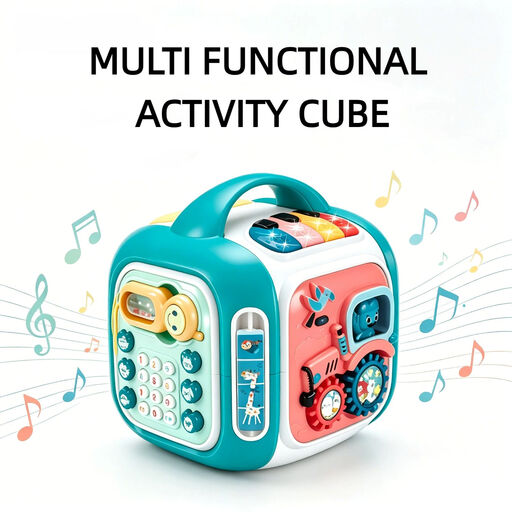
Why it suits this profile: A compact toy for use at home, on the go or when visiting friends and family. The cube takes up less space than a full-size activity table.
The product information lists 8 play modes in one compact design. This means you are not paying for a large piece of furniture if you mainly want seated, hands-on play.
Approximately 23 × 23 × 24 cm, with a carry handle and features including a piano, guitar, phone and gears. Batteries are not included.
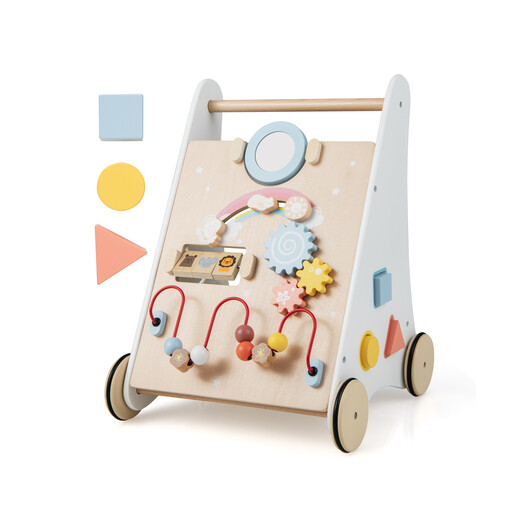
Why it suits this profile: Suitable for households looking for a wooden push-along walker with activities and valuing a clear, sturdy design.
The specified rubber rims on the wheels are designed to help reduce noise and slipping. Still, check the grip on your floor before use.
Wooden construction, rounded corners, storage compartment and multiple activities. The stated dimensions are 34,5 × 32,5 × 45 cm; suitable from 12 months.
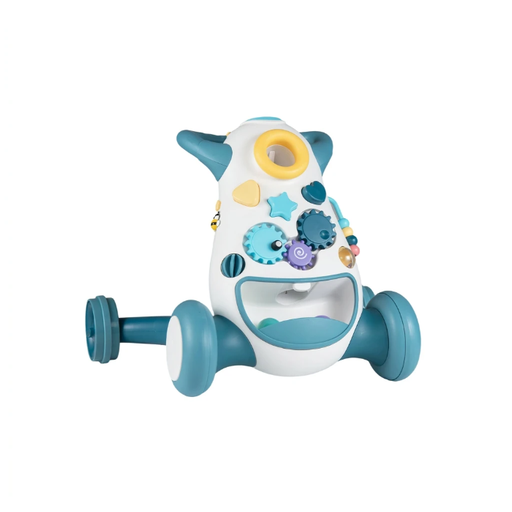
Why it suits this profile: For families looking for a baby walker with a play panel, shape sorter and adjustable wheel speed.
The product description mentions two speed settings on the rear wheels. This provides more adjustment options than a model with free-rolling wheels only.
2-in-1 design, light and music effects, three balls and three shape blocks. The stated age range is 10 to 36 months.
We have put together a complete, up-to-date list of products that fully meet these strict selection criteria and the applicable European safety regulations.
Choose toys that can be used while lying down or sitting, such as a simple sensory baby toy, an activity cube or a separate play panel. Look for large, securely attached parts, rounded edges and a clear supervision warning. Music and lights are optional extras; actions such as pressing, turning and grasping are more important for active play.
Not automatically. A child must have sufficient balance, and the walker must be stable on the floor. Only use a push-along walker under supervision, away from stairs, cables and hot surfaces. A baby walker is an aid for play and movement, not a guarantee that a child will learn to walk sooner.
This depends on the number of functions, play duration and battery type. Check whether batteries are included; they are not included with several of the products mentioned. A volume control, automatic shut-off and a mute setting can make the toy more practical to use. Remove the batteries when the toy will not be used for an extended period and follow the instructions on the packaging.
