
Vandaag of morgen in huis

Kwaliteit gegarandeerd

Welkomstaanbiedingen ontgrendelen: GRATIS bezorging | Tot 80% korting | Gratis 30 dagen JoyPlus-proefperiode
Download de app
Anyone who fishes specifically at sea knows that a lure is about more than an eye-catching colour. Its weight, diving depth, action and hook construction determine whether it is suitable for conditions from a boat, during offshore fishing or in deep water. With ECOODA saltwater lures, you can combine different techniques, but only if you match the model to your tackle and fishing location.
Choosing the wrong lure costs more than just money. A lure that is too light will not reach the desired depth, while one that is too heavy puts unnecessary strain on a light rod and reel. Below, you can read which features to check and which ECOODA models suit different fishing profiles.
Six available colours may sound appealing, but colour is not the only factor. In murky water, low light or greater depths, action, vibration and contrast can be more important than an exact imitation of a prey fish. Therefore, choose the right type and weight first. Use colour as an additional consideration.
A minnow lure with a long lip can dive deep while trolling, but the actual depth also depends on line length, speed, line diameter and current. The ECOODA Cyan Blue Minnow 165DD is listed as reaching a maximum depth of up to 10 metres. This is a product specification under certain conditions, not a guarantee that the lure will remain at exactly that depth at every speed.
A lure weighing 100 g, 120 g or 200 g requires a rod, reel, line and leader suitable for the job. Always check the rod’s casting weight and the recommended line strength. A lure that is well suited to large predatory fish is not automatically suitable for casting from the shore.
Also pay attention to the hooks. Salt water accelerates corrosion when the lure is stored while wet. Rinse the lure with fresh water after every session, allow it to dry completely and check the hook points and split rings.
Weight affects how quickly a lure sinks and how far you can cast it. A practical guide:
The number on the packaging does not tell the whole story. A compact 100 g lure may move through the water differently from a long, slender lure of the same weight.
A vibrating lure transmits noticeable vibrations through the rod when retrieved or lifted. This can be useful when actively searching for predatory fish. A flutter inchiku jig is particularly interesting when the lure makes a falling movement as it sinks. Pay attention to the product name and description, but also check how the lure should be retrieved.
A jerkbait is usually fished with short twitches and pauses. A minnow lure with a diving lip is primarily suitable for trolling. These techniques are not interchangeable: a deep-diving lure needs room to run at depth, while a sinking lure is controlled by the countdown and retrieve speed.
The ECOODA 165DD model is described as having a hard plastic body with SIKE 3509 5X #2 hooks. A body length of 165 mm, a weight of 64 g and a diving depth of up to 10 m are also listed. The “5X” specification describes the hook configuration according to the product information; nevertheless, check before use that the hook is suitable for your target fish, line and fishing area.
Rinse every hard lure with fresh water after use. Pay particular attention to:
Why this suits the profile: An 80 g jerkbait is easier to get started with than a very heavy model. The six available colours give you flexibility to adapt your choice to the water and light conditions.
The weight is clearly stated, so you can compare it with your rod’s casting weight instead of choosing based solely on colour or shape.
80 g weight; choice of six colours; suitable as a hardbait lure for active retrieves.
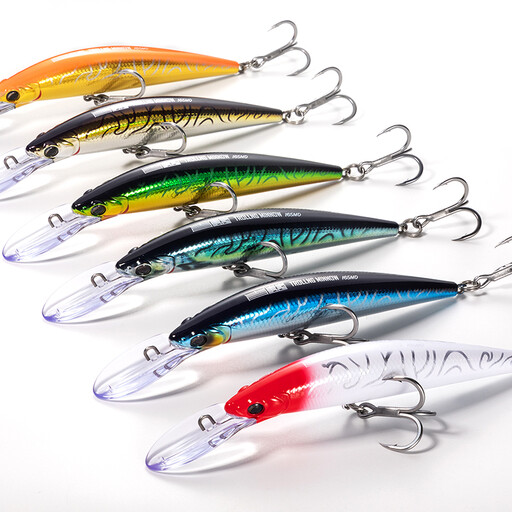
Why this suits the profile: This model is designed for trolling from a boat and for situations where you want to imitate a large prey fish at greater depth.
The product information lists specific dimensions, weight, hook type and maximum diving depth. This allows you to compare the model using verifiable features.
165 mm body length; 64 g weight; stated diving depth of up to 10 m; SIKE 3509 5X #2 hooks.
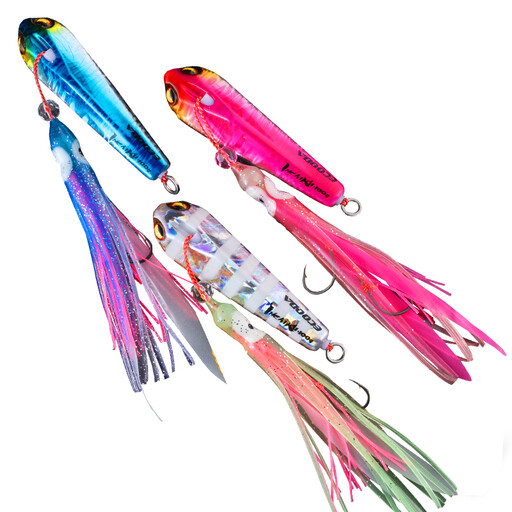
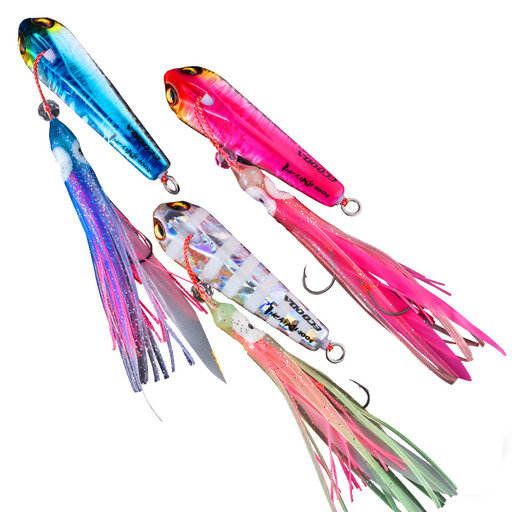
Why this suits the profile: The 120 g version is intended for anglers who want to jig vertically and adapt their choice to the depth and current.
The fixed weight makes it easier to compare several jigs objectively. However, check that your rod and reel are suitable for 120 g.
120 g weight; six available colours; inchiku design for jigging from a boat.
We have put together a complete, up-to-date list of products that fully meet these strict selection criteria and the applicable European safety regulations.
For trolling, you can compare the ECOODA Cyan Blue Minnow 165DD with a 165MD variant. The letters in the model name refer to the stated diving category, but always check the latest product specifications on the product page. According to the information provided, the 165DD is explicitly a deep-diving lure with a stated range of up to 10 metres.
For active casting or searching for predatory fish, the ECOODA AVANZATO 60 g Six-Color Vibrating Lure and the 60 g Flutter Inchiku Jig Lure are interesting categories to compare. A vibrating model is suited to an active presentation, while a flutter model focuses on movement as it sinks. The 100 g Silver Fish Inchiku Jig is another option when you need less weight than 120 g.
A 200 g model makes the most sense in strong currents, at greater depths or when using heavy boat tackle. In that case, check not only the lure itself, but the complete combination of rod, reel, main line, leader and swivel.
That depends on the depth, current and technique. For lighter casting, 60 g may be sufficient. When jigging vertically in deeper water, 100 g or 120 g is often more practical. A 200 g lure requires suitably heavy tackle. Use your rod’s casting weight as the first point of reference.
Rinse the lure with fresh water after every session. Dry it completely before placing it in a tackle box. Check the hooks, split rings, eyelets and any diving lips for damage or corrosion. According to the product information, the 165DD’s hooks should be checked specifically for rust and sharpness.
According to the product description, the ECOODA Cyan Blue Minnow 165DD is designed for trolling in offshore and deep-water conditions. For casting, you need to take its 165 mm length, 64 g weight and long diving lip into account. Check that your rod can cast this type of hardbait safely and that the desired fishing depth is achievable.
