
Vandaag of morgen in huis

Kwaliteit gegarandeerd

Welkomstaanbiedingen ontgrendelen: GRATIS bezorging | Tot 80% korting | Gratis 30 dagen JoyPlus-proefperiode
Download de app
As a motorcyclist, you know a quality helmet isn't a luxury. You need a helmet that's safe for the busy daily commute, yet comfortable enough for a long weekend tour. The search for an ECE 22.06 certified modular helmet is a logical next step. These helmets combine the flexibility of an open-face helmet with the safety of a full-face helmet, all while meeting the latest, more stringent safety standard.
This article is designed to guide your decision. We'll explain what to look for and highlight several popular options based on their specifications and features. This will help you make an informed choice that suits your riding style and budget.
The motorcycle helmet market is vast. To cut through the noise, it's helpful to focus on a few key features.
Since 2024, the ECE 22.06 standard has been the benchmark for all newly manufactured helmets in Europe. It replaces the older 22.05 standard and imposes significantly stricter requirements. An ECE 22.06 certified helmet is tested at more impact points and at various speeds. Rotational impact is also measured, which better simulates protection during an oblique impact. Accessories, such as an integrated motorcycle helmet with a sun visor, are now included in the testing. Choosing a 22.06 helmet means choosing a helmet approved according to the most current safety insights.
A flip-up motorcycle helmet is inherently practical. You can flip up the chin bar at a fuel stop or when you need to quickly ask for directions. But modern comfort goes further. An integrated sun visor is indispensable for changing weather conditions. With a single hand movement, you can adapt to bright sun without having to stop to put on sunglasses.
Additionally, a modular helmet prepared for Bluetooth is a smart choice for the modern rider. These helmets have recesses near the ears, allowing you to easily install a communication system for navigation, music, or a conversation with your fellow rider. This makes it an ideal touring helmet for long distances.
A helmet only protects properly if it fits perfectly. Always measure the circumference of your head (about 2 cm above your eyebrows) and compare it to the manufacturer's size chart. The outer shell is often made from a strong material like polycarbonate or, as with the models mentioned below, ABS (Acrylonitrile Butadiene Styrene). This material offers a good balance between strength and weight. The interior, the EPS shock absorber, is designed to absorb the energy of an impact.
Based on the criteria above, we have selected a few products that offer a great combination of safety, functionality, and price.
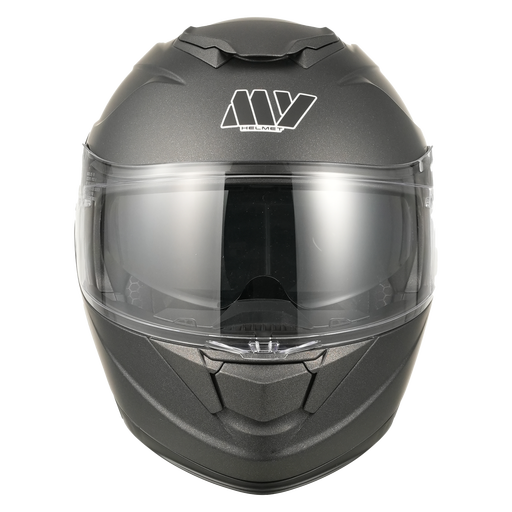
Why It Stands Out
The MY 935 helmet is an interesting model for riders looking for a complete helmet without the premium price tag. It meets the strict ECE 22.06 safety standard and combines it with the features most touring and commuting riders want: a flip-up chin bar, an integrated sun visor, and preparation for a Bluetooth system.
Features
Who Is This Helmet For?
This helmet is a suitable choice for the all-around motorcyclist—someone who uses their bike for daily commutes to work but also enjoys touring the country. If you value the latest safety standards and practical features like a sun visor and Bluetooth preparation, this model is worth considering.
Explore the available options:
Model: MY 935 Modular Helmet - Matte Titanium (Size M)
Model: MY 935 Modular Helmet - Matte Black (Size L & XXL)
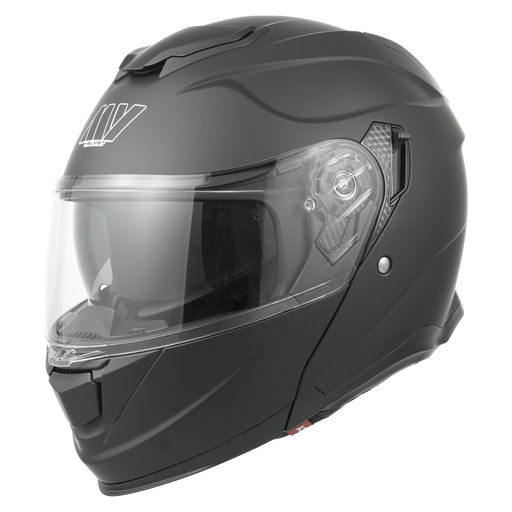
A modular helmet offers versatility, but perhaps another type of helmet better suits your motorcycle or personal style. For those seeking a more distinct look, there are options like open-face helmets that provide a classic sense of freedom.
Curious about an alternative style? Check out our selection of open-face motorcycle helmet with skull for a unique look.
The ECE 22.06 standard is significantly stricter than its predecessor. Helmets are tested at both higher and lower speeds, at 18 different impact points instead of 6. New additions include the test for oblique impact (rotational forces) and the mandatory certification of accessories like sun visors and official communication systems.
An ECE 22.06 certified helmet must meet very strict requirements. For a modular helmet, the chin bar is tested in both closed and open positions (P/J homologation). Although a full-face helmet is a single piece and thus has no structural weak point in its mechanism, a high-quality modular helmet offers a very high level of safety. For maximum safety, it is always recommended to ride with the chin bar closed.
