
Vandaag of morgen in huis

Kwaliteit gegarandeerd

Welkomstaanbiedingen ontgrendelen: GRATIS bezorging | Tot 80% korting | Gratis 30 dagen JoyPlus-proefperiode
Download de app
When you search online for eating and drinking peach, you’ll quickly come across a long list of juice, soft drinks, peaches in juice, jelly, sweets and Asian peach products. The packaging might give a fruity impression, while the product itself is actually mostly water, sugar, syrup or flavouring. With a few simple checks, you can avoid a purchase that doesn’t suit your needs.
Check the ingredients list and the percentage of peach or peach juice. A peach drink, for example, may contain only a small amount of peach concentrate. With peach drink and peach juice, the difference between juice, fruit drink and soft drink is important:
Also look at the nutritional value per 100 ml. For example, Huiyuan Peach Juice contains 43 kcal and 10 grams of sugar per 100 ml according to the product information. HTB Bongbong states 85 kcal and 19 grams of sugar per 100 ml. That difference matters when you plan to drink several glasses or cans.
A large bottle is practical for home, but once opened, fruit drinks usually need to be kept refrigerated and used within the stated period. A can or individual cup is more convenient for a single serving, but less suitable when you’re looking for a supply for several people.
With peaches in juice, also pay attention to the drained weight, the size of the pieces and the type of liquid. “In juice” is not the same as “in light syrup”. Del Monte lists peach halves in fruit juice with no added sugars; Key and g’woon list peaches in light syrup with sugar.
For peach baby food, you should always check the age indication, allergens and preparation instructions on the packaging. According to the product information, Nestlé Yogolino Peach is suitable from 6 months and contains milk and lactose. The product is a dairy snack with peach purée, not the same as a standard fruit purée.
Supervision is also important with sweets, mochi and jelly. Soft or chewy products can pose a different eating and swallowing risk for young children. Always follow the age recommendations and warnings on the packaging.
Start with the ingredients list. Pay attention to the order: ingredients listed first are generally present in larger quantities. Also check whether the product contains sugar, syrup, sweeteners, colourings or preservatives.
Examples from the range:
Compare the nutritional value per 100 ml or 100 grams, not just the total packaging. A 1.5-litre bottle can work out very differently in terms of sugar and energy compared to a small can. With syrup, you also need to consider the dilution ratio.
According to the product description, JENI Peach Syrup is intended to be mixed with water, sparkling water, cocktails or desserts. The stated nutritional values are approximately 270 kcal and 65 grams of sugar per 100 grams. Use the syrup as a flavour base and measure the amount if you want to limit the sugar content of your drink.
Check before purchase:
A jelly dessert like SHENG XIANG ZHEN White Peach Jelly is best served chilled, according to the product information. A tin of peaches can be opened and used straight away in yoghurt, baking or fruit salad. With a large pack, it’s handy to store any leftovers according to the label after opening.
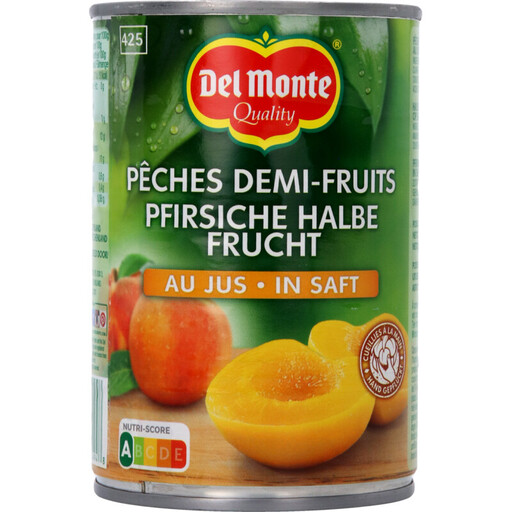
Why this fits the profile: A straightforward pack of peach halves that you can use straight away in yoghurt, desserts or fruit salad.
The product information lists peaches and clear pear juice as ingredients, with no added sugars.
415 g, peach halves, 52 kcal per 100 g according to the product information and none of the 14 main EU allergens listed.
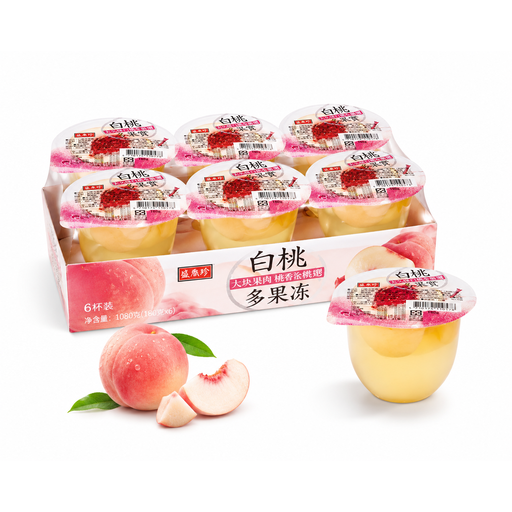
Why this fits the profile: For anyone looking for a chilled dessert in individual portions with recognisable pieces of white peach.
The fruit content of 8% is stated in the product information, so you can compare the composition rather than relying on the packaging alone.
6 individual cups of 180 g, with peach pieces and 75 kcal per 100 g according to the product information.
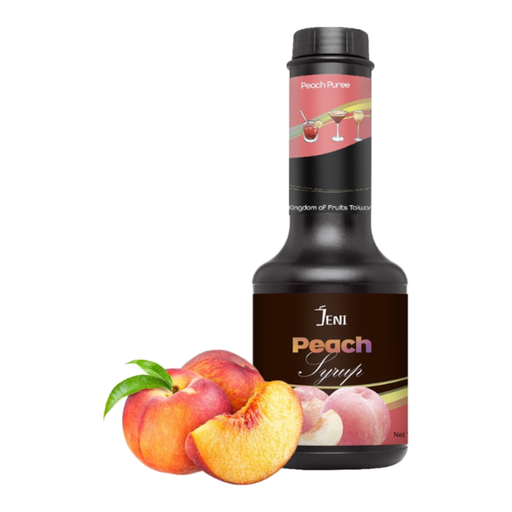
Why this fits the profile: Handy for households that like to make their own squash, sparkling peach drinks or desserts.
The packaging states that the syrup must be diluted before use. This means you can control the flavour and quantity yourself.
456 ml/600 g, suitable for water, sparkling water, cocktails and desserts; the stated composition contains no artificial colourings or preservatives, while the ingredients list on the label is definitive.
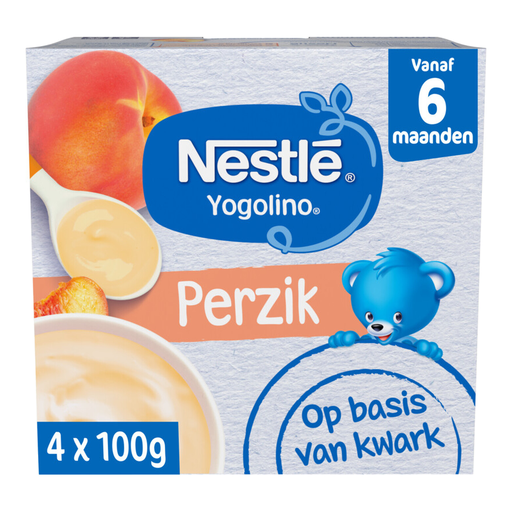
Why this fits the profile: A portion pack for parents looking for a soft dairy snack with peach that is labelled from 6 months.
The age indication, milk and lactose information and storage instructions are clearly included in the product details.
4 cups of 100 g, with no preservatives or colourings according to the product information; keep refrigerated for a maximum of 24 hours after opening.
We’ve put together a full, up-to-date list of products that fully meet these strict selection criteria and comply with current European safety regulations.
Peach juice generally refers to a product based on peach or other fruit juice. A peach drink may also contain more water, sugar, sweeteners, flavourings or other types of fruit. Check the fruit percentage and ingredients list for each product.
Store opened peaches in juice according to the label, usually refrigerated and tightly sealed. Use a clean spoon and check the smell, appearance and shelf life. Pour any leftovers into a sealed container if the packaging advises this.
Peach mochi is a sweet snack made with glutinous rice and a filling. Look at the sugar content, portion size and allergens such as milk or egg. For young children, the age recommendations and supervision during eating are important.
