For a small Easter lunch, it’s more helpful to choose crispbread by pack weight and number of pieces than by the ‘half loaf’ label. A 150–200 g pack can help keep leftovers to a minimum, while a larger pack may suit you if you need more crackers and can store the rest properly. Choose a type that goes well with your planned toppings, and check the label on the exact product if you have dietary requirements or allergies.
Who is this choice relevant to?
A small Easter table without lots of leftovers
If you’re having lunch with one or a few other people, you’ll want enough crackers for the toppings without having lots of opened crispbread left over. Compare the pack weight and number of pieces; Jumbo and Albert Heijn stock packs in a range of sizes.
Lunch with generous savoury toppings
If you’re serving egg, hummus, cheese or other generous toppings, consider which texture you prefer and how you’ll present the crackers. For seeded varieties, pay particular attention to sesame on the allergen label. Jumbo lists sesame in its Bolletje Meerzaden variety.
Guests with dietary requirements or allergies
A gluten-free option also needs to suit any other allergies. The Wasa Gluten- & Lactosevrij Sesame & Sea Salt listed by Jumbo contains sesame and carries warnings that it may contain milk, mustard and soya.
What should you look for when choosing?
First, decide how many topped crackers you’d like to serve at your small Easter lunch. Then choose a suitable texture and check the ingredients and nutritional information on the pack you plan to buy.
| What to consider |
What to check when buying |
Who it matters to |
| Quantity and storage |
Compare the pack weight and number of pieces. Check whether there are inner packs, and follow the storage instructions once opened. |
If I’m only making a few bites, I don’t want to be left with lots of opened crispbread. That’s why the amount needed would be the main consideration for around 36% of consumers. |
| Texture and toppings |
Consider whether you’d prefer thin crackers or a coarser type of crispbread, and choose to suit the toppings and how you plan to serve them. |
If I’m serving generous toppings, I want to decide in advance which texture will work best for my lunch. Texture would be the main reason for choosing a product for around 29% of consumers. |
| Ingredients and allergens |
Read the ingredients and allergen information for the exact variety. If you’re choosing a gluten-free option, check it for sesame and any other relevant warnings too. |
If a guest needs to avoid certain ingredients, a suitable label matters more than the flavour I want. This would be the main consideration for around 21% of consumers. |
| Nutritional information |
Compare things such as fibre and salt per 100 g. If you regularly use crispbread instead of bread, check the ingredients list to see whether baker’s salt is mentioned. |
If I eat crispbread instead of bread more often, I want to know what’s in the variety I’ve chosen. Around 14% of consumers would look at the nutritional information first. |
Common mistakes
-
Assuming ‘gluten-free’ means ‘allergen-free’
The Wasa Gluten- & Lactosevrij Sesame & Sea Salt listed by Jumbo contains sesame and may contain milk, mustard and soya. So a gluten-free label doesn’t answer every question about allergens.
Check the allergen information on the exact pack for each guest, rather than relying only on the text on the front.
-
Buying a large pack without working out how many bites you need
A 375 g pack containing 25 portions, as listed by Albert Heijn for its wholegrain crispbread, may be more than you want to open for a small lunch.
First, count how many topped crackers you’d like to serve. Choose a larger pack if you’ll use the leftovers too and can store them according to the instructions on the pack.
-
Treating all wholegrain and seeded varieties as the same
Ingredients vary from product to product. Albert Heijn lists wheat, rye and sesame in its wholegrain crispbread; the Bolletje Meerzaden listed by Jumbo also contains sesame.
Compare the ingredients and allergen information for each variety when buying for several guests.
-
Assuming all crispbread contains iodine
The Netherlands Food and Consumer Product Safety Authority explains that iodine compounds may be present in bread substitutes and other bakery products. According to the Netherlands Nutrition Centre, using baker’s salt in baking is not compulsory.
So don’t assume that a product contains iodised baker’s salt just because it belongs to this category; check the ingredients of the variety you’ve chosen.
Brands to compare
Wasa
Jumbo stocks Wasa products in a range of weights and types, including thin crackers and crispbread.
- Jumbo’s range includes 150 g Delicate Crackers and 200 g Original Crisp.
- The gluten- and lactose-free Sesame & Sea Salt variety listed there contains sesame and may contain milk, mustard and soya. Check the label for each variety.
Albert Heijn
Its own-brand range includes wholegrain crispbread, with the number of portions stated by Albert Heijn.
- Albert Heijn lists this pack as 375 g, with 25 portions of 15 g, which is useful if you’re planning your lunch one cracker at a time.
- The wholegrain variety contains wheat and rye, and lists sesame. Albert Heijn recommends storing it in a sealed tin once opened.
Jumbo
Its own-brand range includes crispbread in different pack sizes, so you can choose an amount to suit your lunch.
- Jumbo lists, among other products, 375 g Volkoren marked 5 x 5 pieces and 265 g seeded varieties.
- A label such as 5 x 5 pieces doesn’t tell you whether the groups are individually sealed to keep them fresh; check the pack for details.
ALDI / Goud Gebakken
ALDI lists both a standard wholegrain crispbread and a robust seeded variety.
- The product information lists a 375 g wholegrain pack containing 25 pieces, and a 265 g robust seeded variety.
- Check the ingredients and allergen information on the pack of the seeded variety you choose.
Lidl
Lidl describes a 264 g crispbread product available in sunflower seed and pumpkin seed varieties.
- The stated pack weight makes it easier to compare how much you’ll need for lunch.
- Check the ingredients and allergen information for the variety you actually choose.
Ryvita
Ryvita Original Crispbread is worth considering if you’re specifically looking for rye crispbread.
- On its UK product page, Ryvita lists wholemeal rye flour, rye flour and salt as ingredients in Original Crispbread.
- Rye contains gluten. When buying, check the label on the version available, including any allergen warnings.
Products for your Easter lunch
These Joybuy products include smaller packs of thin or delicate crackers, as well as a few larger packs of crispbread. Compare the weight with the number of bites you want to make, and check the number of pieces and ingredients on the pack you choose.
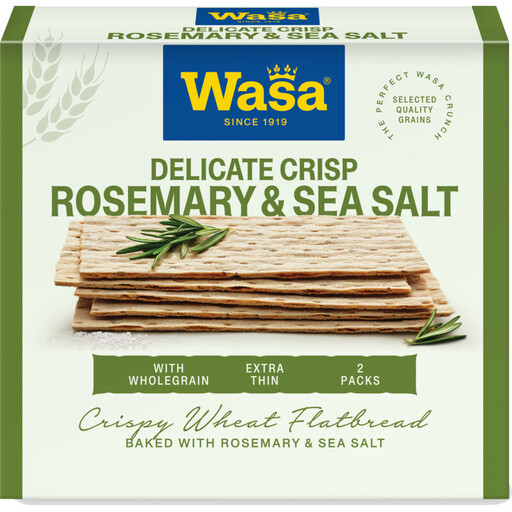 Image unavailable
Wasa Thin Crisp Rosemary & Salt, 190 g
A thin cracker for serving small, savoury bites. The pack weighs 190 g; check the packaging to see how many crackers it contains and which allergens are listed.
View at Joybuy
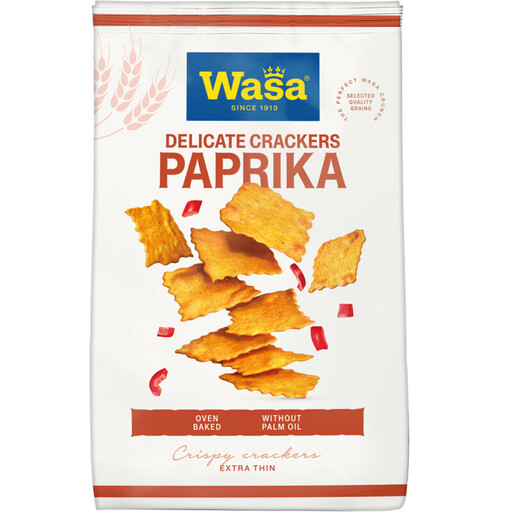 Image unavailable
Wasa Delicate Crackers Paprika, 150 g
These crackers are a good fit if you’re looking for a smaller pack with a paprika flavour for lunch. The pack weighs 150 g; check how many pieces it contains if you want to portion out the bites in advance.
View at Joybuy
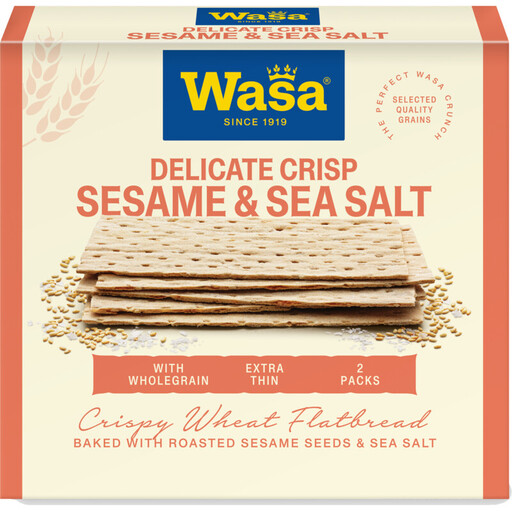 Image unavailable
Wasa Thin Crisp Sesame, 190 g
A thin sesame variety for a small lunch where you’d like to offer that flavour. The pack weighs 190 g; if you have allergies, check the full ingredients and allergen information.
View at Joybuy
 Image unavailable
Wasa Rustic Crispbread, 215 g
An option if you want crispbread as a base for toppings and would like to buy a little more than a 150–200 g pack. This pack weighs 215 g; check how many pieces it contains to plan how much to serve each guest.
View at Joybuy
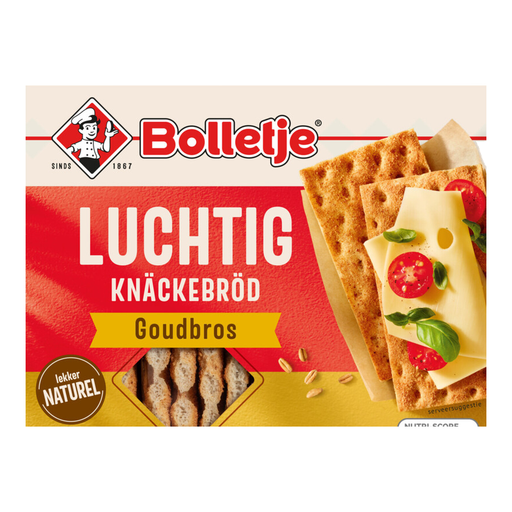 Image unavailable
Bolletje Light Crispbread Golden Crisp, 240 g
A crispbread option if you’d like to use a 240 g pack after Easter lunch too. Check the number of crackers, storage instructions and allergens on the packaging.
View at Joybuy
Frequently asked questions
Is there a standard half pack of crispbread?
It’s better to choose by weight and number of pieces than by ‘half loaf’. Jumbo and Albert Heijn stock a range of sizes, including 150 g and 375 g packs. Also check whether a larger pack has separate inner sections.
How should I store crispbread after Easter lunch?
Store opened crispbread in a dry, well-sealed container, following the instructions on the pack. For its wholegrain variety, Albert Heijn recommends storing it in a sealed tin once opened.
Is gluten-free crispbread also suitable for people with other allergies?
Not necessarily: the Wasa Gluten- & Lactosevrij Sesame & Sea Salt listed by Jumbo contains sesame and may contain milk, mustard and soya. Read the label on the exact variety and check it against the allergens your guest needs to avoid.
Does crispbread always contain iodine from baker’s salt?
No, you can’t tell from the product category alone. The Netherlands Food and Consumer Product Safety Authority explains that iodine compounds may be present in bread substitutes, while the Netherlands Nutrition Centre says that using baker’s salt in baking is not compulsory. If this matters to your choice, check the ingredients of the variety you’ve chosen.


