What should you look for when choosing?
For your Easter lunch, first decide whether flavour, nutritional information, ease of serving or allergens matter most to you. Then compare products on that basis using the packaging.
| What to consider |
What to check |
Who it matters to |
| Chocolate flavour |
The proportion of chocolate, any stated cocoa percentage and sugars per portion. |
I’m looking for a darker chocolate flavour and don’t want to rely on the product name alone. This flavour preference comes first for around 36% of consumers. |
| Nutritional information |
Wholemeal flour, fibre and sugars per 100 g and per slice. |
If the ingredients matter more to me than the chocolate flavour, I want to compare varieties using the same portion size. Around 29% of consumers prioritise this nutritional profile. |
| Serving and packaging |
Whether it’s sliced or unsliced, the pack size and number of slices; check current availability. |
When I’m serving several guests, I want to know in advance how I’ll portion the cake and how much I’ll need. This practical consideration comes first for around 21% of consumers. |
| Allergens |
Ingredients, allergen information and any warnings on the current packaging. |
If a guest has a relevant allergy, I need to check whether this particular variety is suitable before serving it. For around 14% of consumers, this is the first priority. |
Brands to consider
These brands offer different breakfast cake varieties and formats. Always compare the label on the specific cake you plan to serve.
Peijnenburg
Breakfast cake in a range of varieties, including wholemeal, bars and chocolate-style options.
- According to Peijnenburg, its wholemeal variety with no added sugars contains 17 g of fibre and 4.9 g of sugars per 100 g.
- The Chocolate Caramel Sea Salt variety listed by Jumbo contains 9% chocolate, but that isn’t a cocoa percentage.
Albert Heijn
Own-brand breakfast cake varieties, including an organic chocolate breakfast cake listed previously.
- Albert Heijn described that chocolate variety as a pack containing seven slices.
- The product page marked the variety as discontinued; check which options are currently available.
Jumbo
A range that includes different brands and formats of breakfast cake.
- The range includes breakfast cake bars and pre-sliced varieties.
- A product range overview doesn’t tell you whether the chocolate variety you’re looking for is available at your local shop.
Lidl
Tastino breakfast cake is an own-brand option to compare by packaging and ingredients.
- Lidl listed Tastino breakfast cake in packs of 465 to 550 g.
- The listed in-store offer ran until 4 October 2026; check what’s currently available for your Easter lunch.
ALDI
Own-brand options in both sliced and unsliced formats.
- ALDI lists a 550 g unsliced Goud Gebakken plain breakfast cake and a 485 g sliced Koek & Bakker wholemeal breakfast cake.
- These plain and wholemeal varieties don’t guarantee a dark chocolate flavour.
PLUS
Own-brand plain, wholemeal and bar varieties for comparing formats and labels.
- PLUS lists, among other options, sliced and unsliced plain breakfast cake and sliced wholemeal breakfast cake.
- Check the label on an individual pack if a dark chocolate flavour is your main priority.
Breakfast cake for a pre-sliced wholemeal option
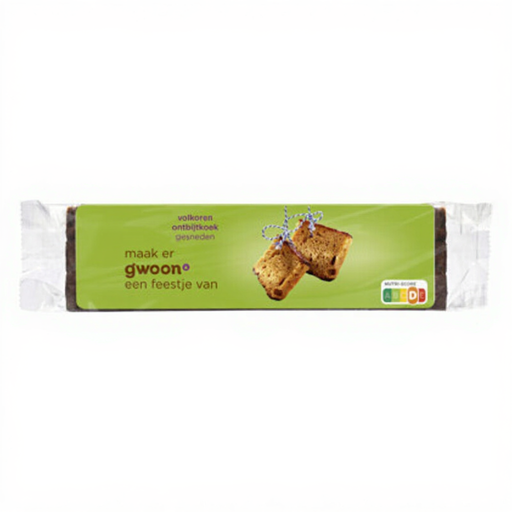
This Joybuy variety could suit you if you’re looking for pre-sliced wholemeal breakfast cake for Easter lunch, rather than a cake with a confirmed dark chocolate profile.
 No image available
g'woon wholemeal breakfast cake, sliced, 485 g
A pre-sliced wholemeal option if you want to share the cake around the table and aren’t choosing it for a dark chocolate flavour.
485 g pack. If anyone has an allergy, check the current label: rye is listed, but the allergen information is inconsistent.
View at Joybuy
Frequently asked questions
Does chocolate breakfast cake automatically have a high cocoa content?
No. Jumbo listed Peijnenburg Chocolate Caramel Sea Salt as containing 9% chocolate, but didn’t give an overall cocoa percentage. If cocoa content matters to you, look for a specific cocoa statement on the packaging.
How do I compare regular breakfast cake with a no-added-sugar variety?
Compare the nutritional information per 100 g and per slice, and read the ingredients. Peijnenburg lists 4.9 g of sugars and 17 g of fibre per 100 g for its wholemeal variety with no added sugars. These figures apply to that variety, not to all breakfast cake.
Where can I find allergen information when buying breakfast cake for guests?
According to the Netherlands Food and Consumer Product Safety Authority, allergen information for pre-packed breakfast cake is on the label. For unpackaged products, the information must be made available in another way. Ask before choosing a product for a guest with an allergy.
Can I tell from the name ‘breakfast cake’ whether it contains iodised baker’s salt?
No. The product name doesn’t tell you which type of salt was used in that particular cake. Check the ingredients list; Brood.net explains that not all bakery products are made with iodised baker’s salt.
Can I use an earlier supermarket offer to plan my Easter lunch?
Base your shopping on what’s currently available in store. Lidl’s listed Tastino offer ran until 4 October 2026; check which pack is available closer to your Easter lunch.


