
Listeners in a noisy living room
If household noise distracts you from a recital, start by checking the fit and the seal of the ear tips. The Consumentenbond describes sealed in-ear earphones as a way to reduce ambient noise.


Start with earphones that create a good seal: well-fitting in-ear earphones can help block out ambient noise, while ANC is worth considering for persistent low-frequency hum. Then compare the piano sound with recordings you know and your own playback device. Choose wired or wireless based on your connection, the convenience you want and wearing comfort. A codec or noise cancellation alone is no proof that a recital will sound more natural.
If household noise distracts you from a recital, start by checking the fit and the seal of the ear tips. The Consumentenbond describes sealed in-ear earphones as a way to reduce ambient noise.
If you’re particularly interested in the attack, quiet passages and how the sound develops, use familiar recordings to assess settings and fit. A codec name isn’t a listening test; ear shape and personal preference also play a part, as SoundGuys explains.
For a long listening session, comfortable ear tips and a fit that stays comfortable matter. For wireless earphones, the stated playback time per charge is also relevant. If you’d rather not rely on a battery, consider a wired connection.
A good choice if: you want to listen wirelessly and tackle persistent low-frequency hum too.
Bear in mind: fit is still important and the battery needs charging; ANC doesn’t work in the same way for every type of noise.
A good choice if: you want to tailor familiar piano recordings to your own hearing.
Bear in mind: settings and codecs are no proof of more natural piano sound; also check that your playback source supports the features you want.
A good choice if: you want to listen without relying on your earphones’ battery and have a compatible connection or adapter.
Bear in mind: this option has no active noise cancellation, and the fit partly determines how much sound is blocked out.
For piano recitals at home, the type of noise, the seal and wearing comfort are good starting points. Then compare the sound using the same familiar recording and check that the earphones are compatible with your listening device.
| What to consider | What to look for | Who will find this most important? |
|---|---|---|
| Ambient noise | Compare different ear tip sizes and listen with ANC on and off while the noise that bothers you at home is present. | If noise masks quiet passages, first find out whether a good seal is enough or whether ANC makes a difference in your situation. Around 36% of consumers say peace and quiet at home is their top priority. |
| Piano sound | Listen to a familiar recording at a similar volume; compare settings first without EQ, then with a deliberate adjustment. | If you’re mainly assessing the attack and quiet passages, familiar recordings can help you tailor your settings to your own hearing. Around 29% of consumers put piano sound first. |
| Fit for long sessions | Check which ear tip sizes are available and try each ear separately; assess comfort and the seal over a longer period of wear. | If you want to listen to a whole recital, ear tips that stay comfortable matter more than a seal that only feels good for a short time. Around 21% of consumers prioritise long-term wearing comfort. |
| Connection and battery | Check the connection on your playback device; for wireless models, compare music playback time per charge with ANC on. | If you don’t want to charge a battery, wired in-ear earphones may suit you, provided the connection is compatible. If you choose wireless, factor in playback time per charge. Around 14% of consumers prioritise connection and ease of use. |
Noise cancellation isn’t equally effective against every type of sound. Poorly fitting in-ear earphones can also provide less passive isolation.
Start with the right ear tips and compare ANC on and off while listening to the noises that distract you at home.
Ear shape, listening preferences and surroundings all affect how a recording sounds. A technical specification alone can’t tell you how your favourite recital will sound.
Compare the same familiar recordings and check that both your playback source and the earphones support the codec you want.
Playback time per charge and total time including the charging case relate to different ways of using your earphones. A flat battery can interrupt a long listening session.
For each model, compare the stated music playback time per charge with ANC on against the length of your listening sessions.
In the Netherlands, ACM ConsuWijzer notes an exception to the cooling-off period for hygiene products that have been removed from their packaging. This is separate from your rights if a product is faulty.
Before trying them on, check how the seller handles seals and returns. Don’t confuse the cooling-off period with your statutory remedies for a faulty product.
The WF-1000XM6 is worth comparing if you’re looking for wireless in-ear earphones with ANC and an ambient sound mode.
AirPods Pro 3 are worth considering if you want to compare ANC, Transparency mode and a choice of ear tip sizes.
The MOMENTUM True Wireless 4 is an option to compare if you want to combine ANC with adjustable sound.
The wired SE215 is a passively isolating option to consider if you have a 3.5 mm source or a suitable adapter.
The Liberty 5 is another wireless ANC option to compare for its features and fit.
This selection includes wired earphones and wireless in-ear models with ANC, including options with adjustable sound settings.
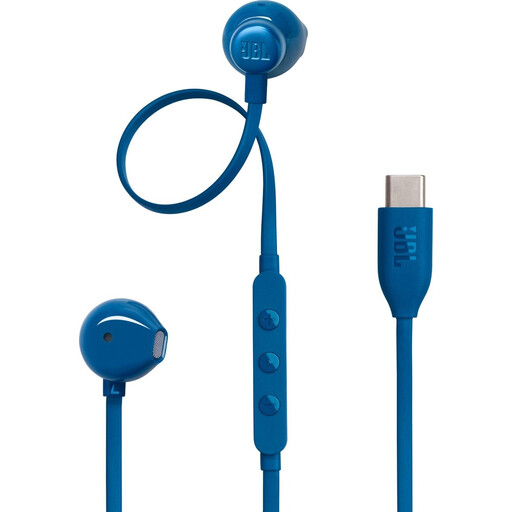 No image available
A wired option for a USB-C playback source; the product information lists three EQ presets for choosing your sound setting.
Your playback source must support USB-C.
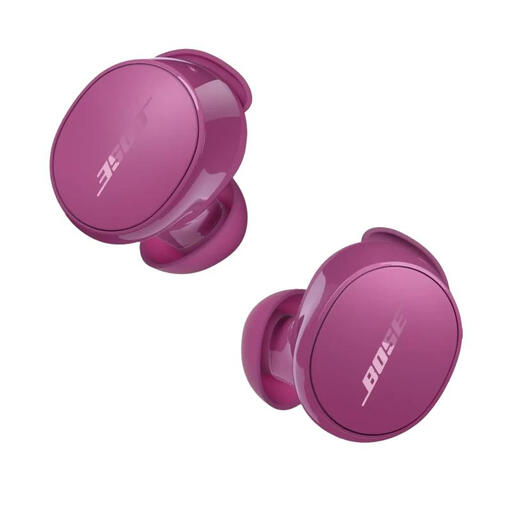 No image available
A wireless option with ANC and a mode that lets in ambient sound; the product information also lists adjustable sound profiles in the Bose app.
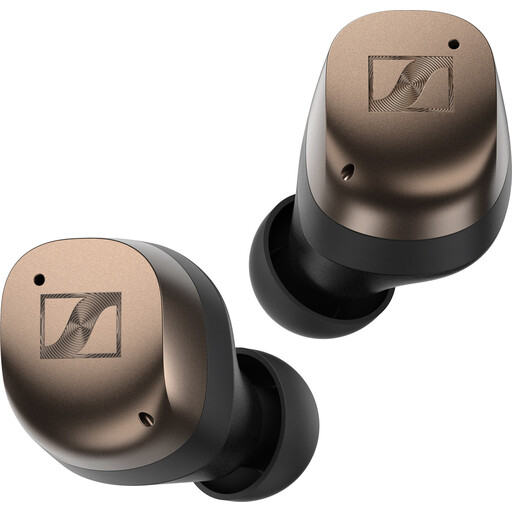 No image available
A wireless option for combining ANC with adjustable sound; the product information lists sound personalisation and adaptive 5-band EQ.
Check which settings work with your playback device, and try the ear tips to assess comfort and the seal.
 No image available
A wired option if you don’t want to charge an earphone battery but still want noise cancellation.
Check that your playback source has a compatible USB-C connection.
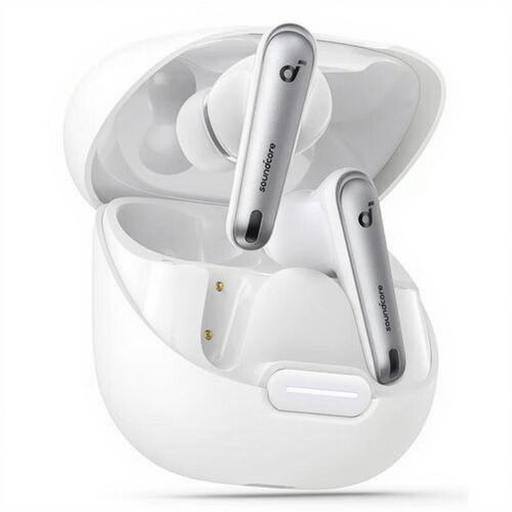 No image available
A wireless ANC option to compare if you want to tackle household noise and assess the fit with different ear tips.
Don’t expect complete silence: ANC isn’t equally effective against every type of noise. Well-fitting in-ear earphones can also reduce ambient noise passively. Try the seal and ANC with the type of noise that bothers you at home.
Try the supplied ear tip sizes in each ear and check that the tips are secure. Follow the instructions for your chosen model; Sony warns that an incorrectly fitted ear tip can affect sound quality, noise cancellation and how securely the earphones stay in place.
It’s better to use a good seal or ANC to avoid the need to listen at a higher volume. The World Health Organization gives an average of 80 dB for up to 40 hours a week as an example of safe listening exposure for adults; this isn’t a guarantee for every individual situation.
Online purchases in the Netherlands generally come with a 14-day cooling-off period after delivery, but ACM ConsuWijzer notes an exception for hygiene products that have been removed from their packaging. This is separate from remedies for faulty products; the Dutch government states that there is no fixed statutory guarantee period of exactly two years. Check the rules on seals and returns before trying them on.
Bluetooth earphones are covered by the rules for radio equipment. For products subject to the requirements, the manufacturer must, among other things, apply the required CE marking and draw up an EU declaration of conformity before the product is sold. This doesn’t confirm that every individual listing meets the requirements; check the documentation for the exact version. This Bluetooth requirement doesn’t automatically apply to in-ear earphones that are wired only.