
Listeners who want to hear every word
You want to follow Dutch stories clearly, so you're looking for easy-to-understand voices and pause and volume controls that are simple to reach.


Start with earphones that work with the device storing your local audio files and feel comfortable enough to wear for a whole story. Wired listening means you don't have to charge your earphones or pair them via Bluetooth. Wireless models give you more freedom to move around, but need charging. If you're listening on the go, also consider how much of your surroundings you can still hear.
You want to follow Dutch stories clearly, so you're looking for easy-to-understand voices and pause and volume controls that are simple to reach.
You want a fit that stays comfortable throughout a whole story. With wireless earphones, battery life per charge is also a factor.
You want to listen without a cable, while still being able to hear sounds around you when it matters.
First, check that your phone or computer supports the audio connection you want to use. Then consider clarity, fit and how much you need to hear your surroundings.
| What matters when buying | What to look for | Who it's most important for |
|---|---|---|
| Speech clarity | If possible, listen to a familiar speech recording and check how easy it is to pause and adjust the volume. | When I want to follow a story, I want voices to sound clear and be able to pause easily. Around 36% of consumers put speech clarity first. |
| Comfort | Check which ear tip sizes are available and consider whether you prefer a snug, sealing in-ear fit or a less enclosed design. | For a long story, I want my earphones to stay comfortable without the fit distracting me. Around 29% of consumers make comfort their top priority. |
| Connection and playback | Check your phone or computer's audio connection and whether your playback app supports your file format. With wireless models, compare listening time per charge, excluding the case. | I want to play my local files from my own device and know in advance whether the connection will work. Around 21% of consumers prioritise device compatibility. |
| Awareness of your surroundings | Check whether the fit or a transparency mode suits the way you'll use your earphones. In traffic, keep the volume low or use one earphone. | When I'm listening on the go, I want to follow a story without losing awareness of my surroundings. Around 14% of consumers prioritise staying aware of their surroundings while listening. |
Total playback time, including the charging case, isn't the same as the time you can use your earphones continuously. The Consumentenbond also points out that the small batteries are generally not replaceable.
Compare the stated listening time per charge with the features you actually use.
You'll have to interrupt your listening session if your earphones need to be charged in the case along the way.
Sony specifies that the IER-EX15C requires a compatible USB Audio Class 1.0 device. Controls may also work differently depending on the device, operating system or app.
Check audio support on your exact source device and, if possible, test both the sound and the buttons with your playback app.
If the connection doesn't work with your device, you'll need another way to listen.
A snug fit or noise cancellation doesn't mean you'll be able to hear warning sounds in traffic. Turning the volume up to drown out background noise isn't a suitable solution.
Choose a level of isolation that suits the situation. The Dutch government advises keeping the volume low or using one earphone in traffic.
Sony offers wired USB-C earphones and fully wireless models as two different ways to listen.
According to Apple, the EarPods (USB-C) are a wired option for compatible iPhone, iPad and Mac models.
The Tune 310C USB is a wired USB-C in-ear option with in-line controls.
The Galaxy Buds3 FE are a wireless option with ANC and features for use with Galaxy devices.
This selection includes wired USB-C earphones, fully wireless in-ear models and an open-ear design for listening to local stories from a phone or computer.
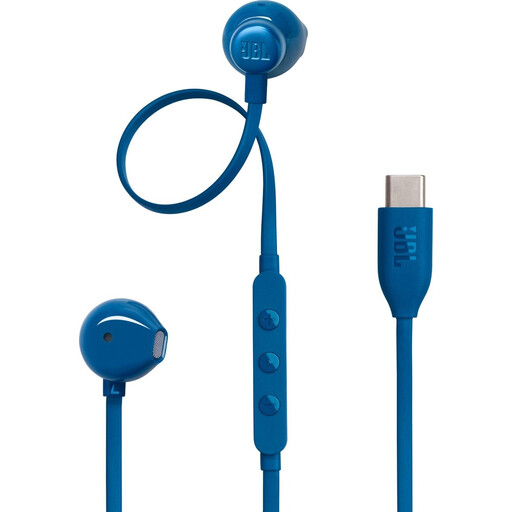 Image unavailable
A wired option if you want to listen to local stories without pairing via Bluetooth or charging your earphones along the way.
Check that your source device supports USB-C audio.
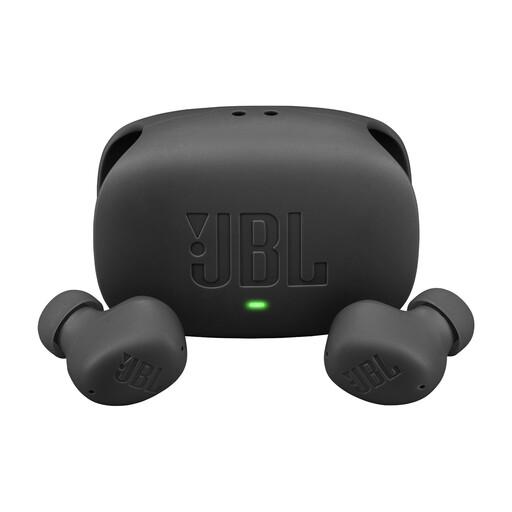 Image unavailable
A wireless option for playing audio from your phone or computer.
The stated total playback time also includes charging via the case, so don't compare it with uninterrupted listening time per charge.
 Image unavailable
A wireless in-ear option for playing audio from a Bluetooth source device.
Bluetooth 5.4.
 Image unavailable
A wireless in-ear option for listening from paired Galaxy devices.
The product name mentions ANC. The features described via Galaxy Wearable are for Android, so their availability depends on your device.
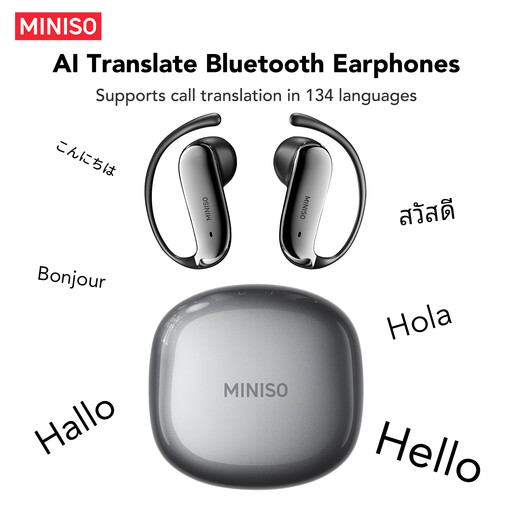 Image unavailable
An open-ear option if you're looking for a less enclosed design for audio from a Bluetooth source device.
Bluetooth 6.0.
No. Use a compatible app to play the local file on your phone or computer, then send the audio to your earphones via a wired connection or Bluetooth. Check that your device and playback app support the file format. Files on your device are different from storage in the earphones.
First, check whether your source device supports USB audio. Sony specifies USB Audio Class 1.0 for the IER-EX15C and says that controls may work differently depending on the device, operating system or app. You can also control playback or volume on the source device.
Keep the volume low and take breaks. The World Health Organization gives 80 dB for up to 40 hours a week as an example of safe exposure; at higher sound levels, safe listening time is shorter. This is health advice, not a product specification or a guaranteed limit for every individual.
For a faulty product, ACM ConsuWijzer says the seller is responsible for providing an appropriate solution under the legal guarantee; a manufacturer's warranty doesn't replace this right. Online purchases usually come with a 14-day cooling-off period from delivery, but ACM lists exceptions, including certain hygiene products that have been removed from their packaging. If you're unsure, ask how this exception applies to the specific earphones before opening the packaging.
According to the Dutch government, you can listen to music hands-free while driving, but you mustn't hold an electronic device. Keep the sounds around you audible by turning the volume down or using one earphone.