If conversations and office noise are disrupting your language lessons, well-fitting in-ear earphones with adjustable noise cancellation may help. Choose an open-ear design if you need to be able to hear your colleagues while listening. The Consumentenbond highlights the importance of speech reproduction and fit, while Sony warns that noise cancellation does not completely eliminate voices.
Who are these earphones for?
Listening between conversations
You want to follow spoken language lessons while colleagues are talking nearby. Consider speech reproduction, fit and noise isolation, but don't expect ANC to eliminate every voice. The Consumentenbond discusses speech when testing earphones; Sony explains the limitations of noise cancellation.
Office worker who needs to be approachable
You need to be able to hear colleagues and want to switch listening modes quickly, or wear an open-ear design. Bear in mind that an open-ear design also lets in more office noise. Shokz describes the open-ear design of the OpenFit 2.
Listening to longer lessons
You listen to several lessons during the working day, so you want to consider wearing comfort, listening time per charge and a suitable volume. The WHO recommends keeping the volume under control and keeping an eye on how long you listen for.
What should you look for when choosing?
In-ear earphones with active noise cancellation
Choose these when: conversations and office noise are disrupting your lesson, and you can temporarily shut yourself off from your surroundings.
Trade-off: voices may still be audible; fit and an ambient sound mode are important too.
Open-ear earphones
Choose these when: you need to stay approachable while listening and your surroundings are quiet enough.
Trade-off: you will also hear more of the office noise that could disrupt your lesson.
In-ear earphones without active noise cancellation
Choose these when: the seal provided by well-fitting eartips is sufficient for your working environment.
Trade-off: how much ambient noise they block also depends on the fit.
The table compares the main buying priorities for people listening to language lessons in a busy office.
| What to consider |
What to look for when buying |
Who is this important for? |
| Understanding speech |
Listen to a spoken lesson excerpt and assess the fit; voices may still be audible even with ANC. |
If conversations drown out words in my lesson, I prioritise speech clarity; around 38% of consumers say this is their most important buying priority. |
| Being able to hear colleagues |
Consider how often you need to be approachable; compare an open-ear design with an ambient sound mode that you can switch on quickly. |
If I need to respond to colleagues regularly during a lesson, staying approachable matters most; around 23% of consumers put this need first. |
| Wearing comfort and listening time |
Check which eartip sizes or wearing styles are available, and compare listening time per charge in your preferred listening mode. |
For anyone who wants to listen to several lessons in a row, comfortable wear and sufficient listening time are essential; around 23% of consumers name this as their main buying priority. |
| Switching between devices |
Check that multipoint is available on the exact model, and see which features the companion app supports on your phone. |
If I use both a work laptop and a phone, I want to switch easily between them; around 16% of consumers give this feature top priority. |
Common selection mistakes
-
Assuming ANC will make conversations disappear
Changing voices may still be audible, even when you are trying to follow spoken lesson material.
Compare a spoken excerpt using the eartips you plan to wear, and assess the passive seal separately from ANC. Sony warns that noise cancellation does not completely suppress all sounds.
-
Confusing microphone noise reduction with noise isolation for the listener
A microphone feature for calls does not mean that it will reduce the office noise you hear during a lesson.
Check whether a specification refers to sound you hear or to the microphone during phone calls. This distinction is especially important with open-ear models.
-
Mistaking battery life including the case for one listening session
The earphones need to be in the case while they charge. ANC can also affect the stated listening time per charge.
Compare figures using the same ANC setting, and check the listening time per charge for the earphones themselves. Sony lists up to 8,5 hours with noise cancellation on and up to 12 hours with noise cancellation off for the WF-C710N.
-
Assuming you can always return a product after opening and trying it on
An exception to the cooling-off period may apply to an opened hygiene product; this depends on the packaging and the circumstances.
Read the returns information before opening the product and check whether the seal matters. Treat your statutory right to a product of satisfactory quality separately from returning it because you don't like the fit. ACM ConsuWijzer explains the cooling-off period and exceptions.
Brands to consider
Sony
According to Sony, the WF-C710N combines active noise cancellation, an ambient sound mode and multipoint. This could be useful if you switch between a lesson on your laptop and using your phone.
- Sony lists up to 8,5 hours of music playback per charge for the WF-C710N with noise cancellation on.
- This is a manufacturer's figure, not a measurement for lesson use. Sony also warns that ANC does not suppress all sounds.
Apple
According to Apple, AirPods Pro 3 offer active noise cancellation, Transparency mode and conversation awareness. Assess them with the devices you will actually use to play your lessons.
- Apple states that they offer up to 8 hours of listening time per charge with ANC on and come with five sizes of silicone tips.
- These model specifications do not prove that spoken lessons will be easier for every listener to understand.
Google
According to Google, Pixel Buds Pro 2 combine active noise cancellation with a Transparency mode. They may suit you if you want to switch between focusing and staying approachable.
- Google lists Bluetooth pairing with devices including laptops and iOS devices.
- Additional requirements apply to access all features, including an Android phone and a Google Account. Check the requirements for the features you want to use.
Samsung
Samsung presents the Galaxy Buds4 Pro as featuring Adaptive EQ and improved active noise cancellation.
- These features are part of Samsung's own announcement.
- Samsung's claims about sound and comfort have not been independently assessed for Dutch language lessons or your personal fit.
Shokz
The OpenFit 2 is an open-ear alternative for anyone who needs to be able to hear their colleagues.
- Shokz describes an open-ear design with physical controls.
- The open-ear design also means you can hear office noise. The call noise cancellation described by Shokz applies to the microphone, not to blocking the sounds you hear.
Joybuy products
This Joybuy selection features in-ear earphones for language lessons. For each model, consider the listening mode, connection and fit that suit your working situation.
 No image available
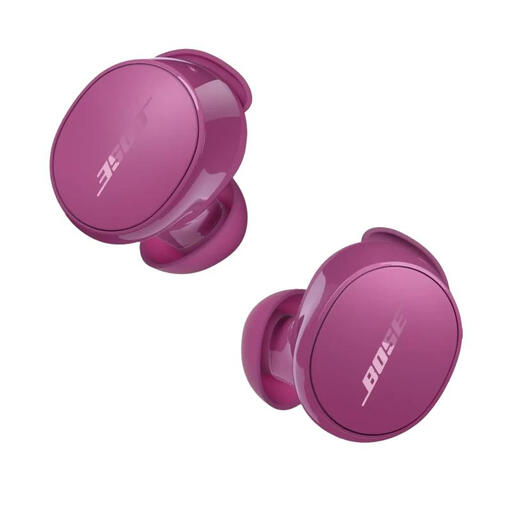
Bose QuietComfort Earbuds Rosewood Mauve
An option for switching between noise isolation and ambient sound during lessons.
The product information lists ANC, an Aware mode and Bluetooth multipoint.
The product information lists up to 8,5 hours of listening time per charge; check the battery life for the listening mode you choose.
View at Joybuy
 No image available
Bose Noise Cancelling Wired Earbuds, Black
A wired in-ear option if you play lessons on a device with a compatible USB-C connection.
The product information lists USB-C, in-line controls, and several sizes of eartips and stability bands.
Noise cancellation does not necessarily eliminate all voices; also check how the eartips fit.
View at Joybuy
 No image available
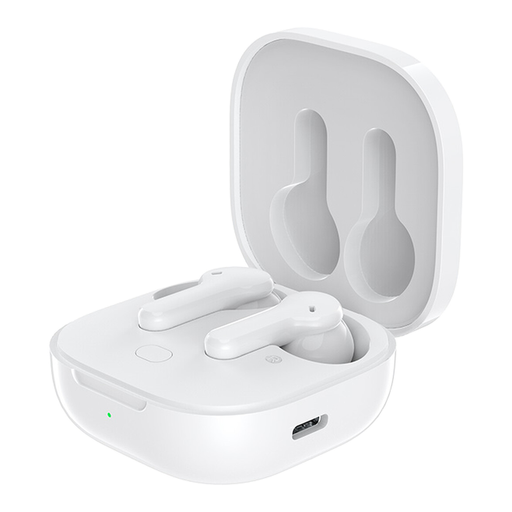
QCY-QT13-White
An in-ear option for lessons on an Android or iOS device.
The product information lists Bluetooth 5.4 and compatibility with Android and iOS.
View at Joybuy
 No image available
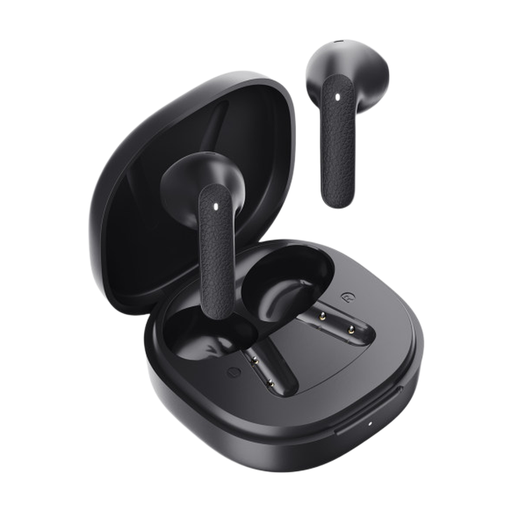
QCY Air-Grey
An in-ear option for anyone who wants to plan a listening session without charging partway through.
The product information lists Bluetooth 5.4, compatibility with Android and iOS, and up to 7 hours of playback per charge.
View at Joybuy
 No image available
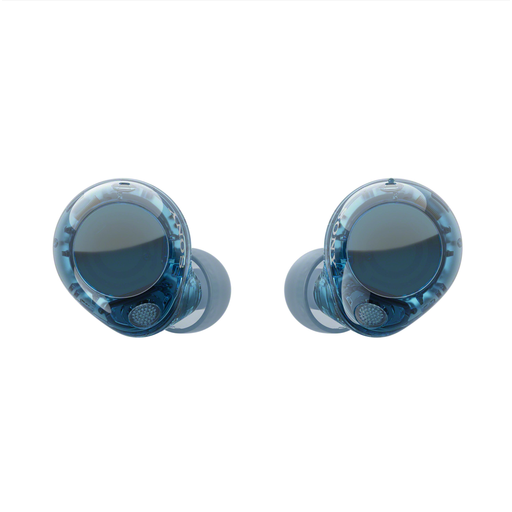
Sony WF-C710N, Glass Blue
An option if you want to switch between noise cancellation and ambient sound during a lesson.
The product information lists ANC, an ambient sound mode, controls for switching listening modes and multipoint.
Sony lists up to 8,5 hours of music playback per charge with noise cancellation on. Voices may still be audible even with ANC.
View at Joybuy
Frequently asked questions
Will noise-cancelling earphones make talking colleagues disappear?
No. Active noise cancellation does not guarantee that talking colleagues will disappear. Sony explains that noise cancellation does not completely suppress all sounds, so also assess the seal and how well you can hear a spoken lesson.
How can you switch between a lesson and talking to colleagues?
Check whether the model has an ambient sound mode and how to operate it. According to Sony, the WF-C710N has this mode. An open-ear model leaves your ear canal uncovered, but you will also hear more office noise.
How should you care for sealing eartips?
Follow the cleaning instructions for your exact model and make sure the tips are fitted carefully. Sony warns that, with certain supported eartips, wear or incorrect fitting can reduce sound quality and noise cancellation; this advice does not automatically apply to every brand.
How can you avoid listening too loudly in a busy office?
The WHO recommends keeping the volume under control and monitoring how long you listen for. The WHO advises setting your device volume to no more than 60% and gives 80 dB for a maximum of 40 hours per week as an example; this is not a statutory Dutch volume limit or a guarantee for every individual.
What rights apply when buying earphones online in the Netherlands?
For most consumer purchases made at a distance, there is a statutory 14-day cooling-off period from the date of delivery. ACM ConsuWijzer lists an exception for hygiene products that have been removed from their packaging; whether that exception applies to a particular pair depends on the packaging and circumstances. The retailer is also your point of contact if a product is faulty. According to the Dutch government, there is no fixed statutory warranty period in the Netherlands.


