
Dialogue listener
You listen to short scenes repeatedly and mainly want to follow the spoken words. Try your own recording to see whether you can make out quieter lines. The Consumentenbond discusses differences in comfort between earbuds.


If you mainly listen while sitting in a noisy room, well-fitting in-ear earbuds with adjustable noise cancelling are a sensible choice. If you want to hear announcements and other sounds around you while on the move, consider open-ear earbuds or a transparency mode. Test how clearly you can hear speech using your own theatre recording, and for wireless models, check the battery life per charge rather than just the total with the charging case.
You listen to short scenes repeatedly and mainly want to follow the spoken words. Try your own recording to see whether you can make out quieter lines. The Consumentenbond discusses differences in comfort between earbuds.
You practise between sessions in a distracting environment and want to balance noise reduction, comfort and listening time. The Consumentenbond discusses comfort, while Sony Netherlands lists different battery life figures for the WF-C710N with and without noise cancelling.
You move around campus and want to hear announcements or traffic. Compare open-ear earbuds with a transparency mode that’s easy to switch on. The Dutch government advises keeping your surroundings audible while driving.
| What to consider | What should you check? | Who should prioritise this? |
|---|---|---|
| Following dialogue | Test quiet and fast-paced lines using your own recording; check that pausing and replaying are easy. | If I’m studying spoken lines, I want to be able to follow my own recording clearly at a normal volume. Around 31% of consumers prioritise speech clarity. |
| Reducing distractions | Try the fit and check how easily you can switch between noise cancelling and transparency mode. | If you often practise in a noisy shared space, you’ll want fewer distractions without shutting out your surroundings completely. Around 25% of consumers give peace and quiet top priority. |
| Hearing your surroundings | Compare an open-ear fit with an easily accessible transparency mode; keep the volume low while on the move. | When moving between rooms, I want to keep hearing announcements and traffic. Around 19% of consumers make awareness of their surroundings their main priority. |
| Comfort during repeated use | Try the available ear tip sizes and assess how they feel during a listening session of your own. | For short sessions throughout the day, I want earbuds that feel comfortable and stay in place. This is the most important consideration for around 13% of consumers. |
| Battery life and connection | Compare battery life per charge with the total including the case, and check your device’s connection or wireless compatibility. | If I don’t want to recharge or reconnect partway through, I focus on uninterrupted use. Around 12% of consumers prioritise battery life and ease of use with their device. |
Total battery life with the charging case isn’t the same as how long the earbuds themselves can play audio continuously.
Compare the stated battery life per charge and check the conditions it was measured under, such as whether noise cancelling was on.
The WF-C710N is a model you can use to compare noise cancelling, transparency mode and multipoint for shorter listening sessions.
The Tune Beam 2 offers an in-ear option with adjustable noise cancelling and Smart Ambient, while the Sense Lite is an open-ear alternative. These are different models, not features of every JBL earbud.
The Liberty 4 NC are wireless in-ear earbuds you can consider for comparing adaptive noise cancelling, adjustable EQ and multipoint.
According to Sennheiser, the MOMENTUM True Wireless 4 offers adaptive noise cancelling, several ear tip sizes and adjustable sound.
The Buds Pro 2 offer a different approach, with a dial you can set up to control playback.
Here you’ll find wireless in-ear earbuds with noise cancelling, wired in-ear earbuds and open-ear earbuds. The right option mainly depends on where you listen and whether you want to keep hearing your surroundings.
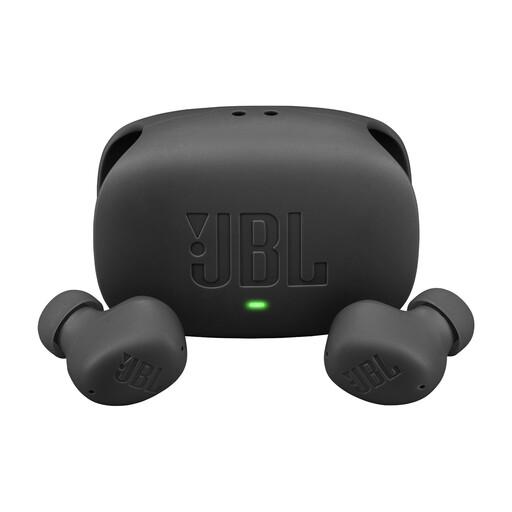 No image available
A wireless in-ear option if you want to switch between noise reduction and ambient sound while practising.
The description lists ANC, Smart Ambient and multipoint for connecting to two devices.
The stated playback time is 10 hours per charge with ANC off.
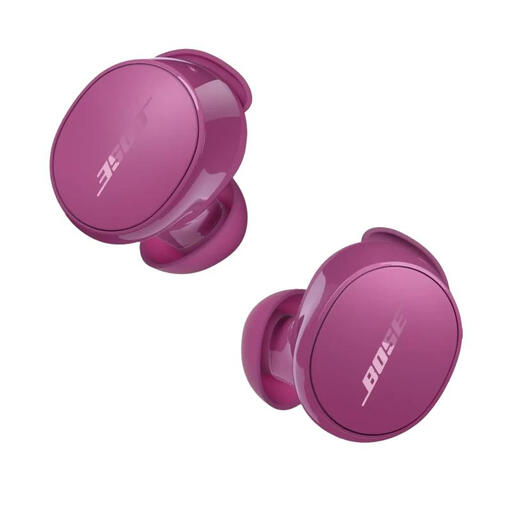 No image available
An in-ear option that lets you switch between a noise-reducing listening mode and one that lets ambient sound through.
The description lists Quiet and Aware modes, multipoint and several ear tip sizes.
The stated battery life is up to 8.5 hours per charge.
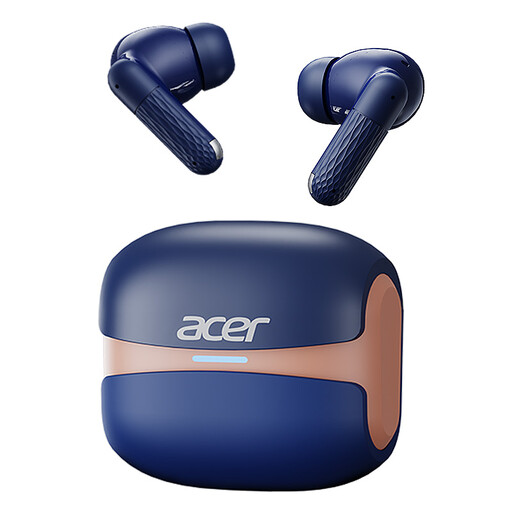 No image available
A wireless in-ear option if you want to listen from a Bluetooth device without a cable.
The product title lists Bluetooth 5.4.
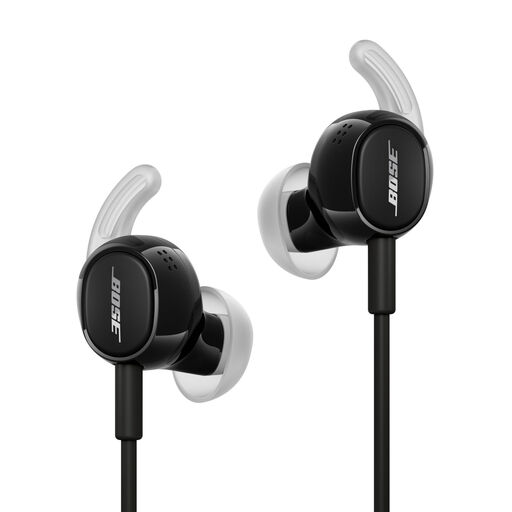 No image available
A wired option if you don’t want to charge your earbuds and the cable connection is compatible with your device.
The description lists a USB-C connection, noise cancelling and in-line controls.
Requires a device with a compatible USB-C audio connection.
 No image available
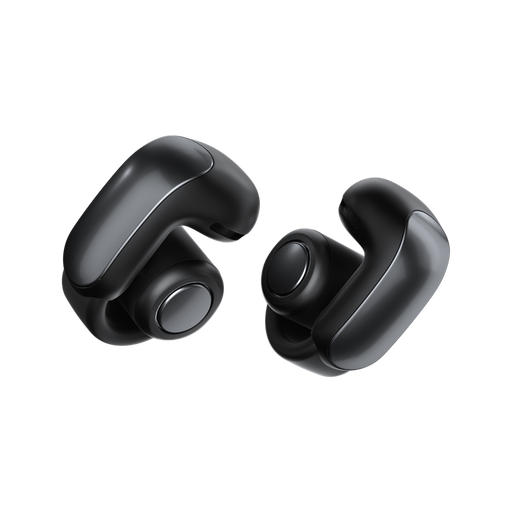
An open-ear option if you want to keep hearing your surroundings while listening.
The description lists Bluetooth 5.3 and up to 7 hours of playback per charge.
The open-ear design doesn’t block the ear canal.
No. Use noise cancelling mainly when background noise is bothering you. Switch to transparency mode if you need to hear someone or an announcement, and check how to change modes on your model.
Choose an open-ear model or use transparency mode, and keep the volume low. The Dutch government advises keeping your surroundings audible while driving, so stay alert to traffic and announcements.
The World Health Organization recommends keeping the volume low, taking listening breaks and ensuring a good fit. In noisy situations, noise cancelling may reduce the need to turn up the volume. The organisation gives an average of 80 dB for up to 40 hours a week as an example, not a guarantee for every individual situation.
If a product is faulty, contact the seller. According to the Dutch government, there’s no fixed statutory warranty period in the Netherlands; what you can expect depends, among other things, on the product and the information provided. Normal wear and tear or damage caused by you doesn’t automatically mean repairs will be free of charge.
Try the available ear tip sizes and listen to quiet lines in your own recording, first with noise cancelling off and then on. Also check how easily you can pause and replay a line.