
Attentive poetry listener
Wants to understand spoken Dutch poetry clearly without turning up the volume to drown out sounds at the table.


Choose noise-isolating in-ear earbuds if sounds at the study table distract you, or a more open-fitting pair if you want to keep hearing your fellow students. Wired earbuds may suit you if you’d rather not manage a charging case, provided your device supports audio through the connection. None of these features alone proves that a particular model will make Dutch poetry easier to understand.
Wants to understand spoken Dutch poetry clearly without turning up the volume to drown out sounds at the table.
Listens while studying but still wants to notice what others at the table say.
Alternates between extended listening and studying, and pays attention to fit, connectivity and listening time.
Best if: sounds at the table disrupt your listening and you don’t need to respond straight away.
Bear in mind: a noise-isolating fit and ANC won’t guarantee that voices disappear; use ambient mode or take the earbuds out if needed.
Best if: you want to hear more of what’s going on around you, or find a sealed fit uncomfortable.
Bear in mind: more outside noise will get through; check that you can hear the poetry comfortably without turning up the volume.
Best if: you listen on one device, don’t want to manage a charging case and have the right audio connection.
Bear in mind: a cable can get in the way on a crowded study table; check in advance that your device outputs audio through the connection.
Start by checking how clearly you can hear at a modest volume, then decide how important it is for you to stay in touch with your fellow students.
| What to consider | What should you check? | Who is this most important for? |
|---|---|---|
| Understanding spoken words | Listen to a familiar speech clip and check whether you can follow the words clearly at a modest volume. | If my main priority is following the poetry without turning up the volume, I look at speech reproduction and fit. Around 29% of consumers making this choice put clear speech first. |
| Reducing table noise | Compare the seal with ANC on and off, and check whether there’s an ambient mode. | When sounds at the table distract me from the poetry, I want to know how much outside noise the fit and settings let through. Around 23% of this group put noise isolation first. |
| Staying approachable | Compare an open fit with a noise-isolating model in ambient mode; don’t assume every mode will let you hear conversations. | If I want to respond to comments at the table while listening, I take staying connected with others into account. Around 18% of consumers put this first. |
| Comfort while studying | Check the fit and available tip sizes; compare listening time per charge with the length of your study session. | For a longer study session, I want a fit that stays comfortable. Around 18% of this group put long-wear comfort first. |
| Connectivity and charging | Check whether your device supports audio over USB-C; for wireless models, compare listening time per charge in the mode you want to use. | If I want to avoid running out of charge or finding that the connection isn’t compatible, I check how the pair suits my device and listening habits. Around 12% put connectivity or charging first. |
How much noise you hear depends partly on the sounds around you and the fit. At a shared table, you may want to stay connected.
Compare how clearly you can hear and how easy it is to stay approachable with ANC on and off, and with ambient mode if available.
The stated playback time per charge may differ from the total with the charging case, and from the time available in another listening mode.
Check the earbuds’ own listening time using the setting you plan to use while studying, such as ANC on.
A USB-C connection on the earbuds doesn’t automatically mean every playback device outputs audio over USB-C.
Before buying, check that your device supports audio through the connection used by the model you’ve chosen.
The features mentioned apply to the product lines and models described; they’re not an endorsement of an entire brand or an indication of availability.
The WF-C710N is a wireless, noise-isolating option; the IER-EX15C is a wired USB-C alternative.
AirPods 5 are worth considering if you’re looking at an open-fit design.
Galaxy Buds4 and Buds4 Pro are separate models; the Pro is worth considering if you’re specifically looking for a noise-isolating design.
Liberty 5 is a wireless, noise-isolating model to compare if ANC and listening time per charge matter to you.
The Tune Beam 2 is an in-ear model that can serve as a point of comparison if noise isolation is your main priority.
These product options cover wired listening and wireless in-ear earbuds, including models with noise cancelling and a semi-in-ear design.
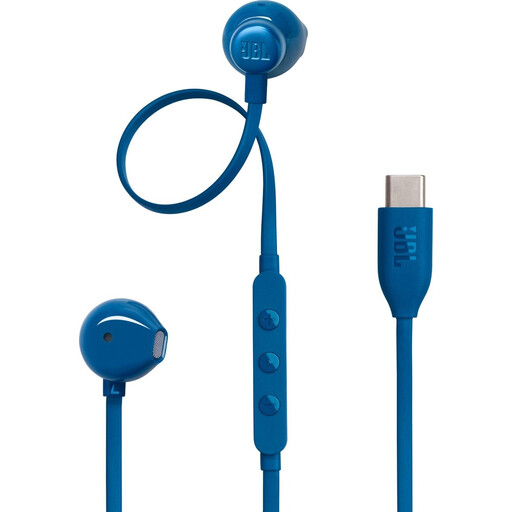 No image available
A wired option if you don’t want to charge your earbuds; bear in mind that a cable may get in the way on the study table.
The product information lists a USB-C connection and a vocal EQ preset. Check that your device supports audio over USB-C.
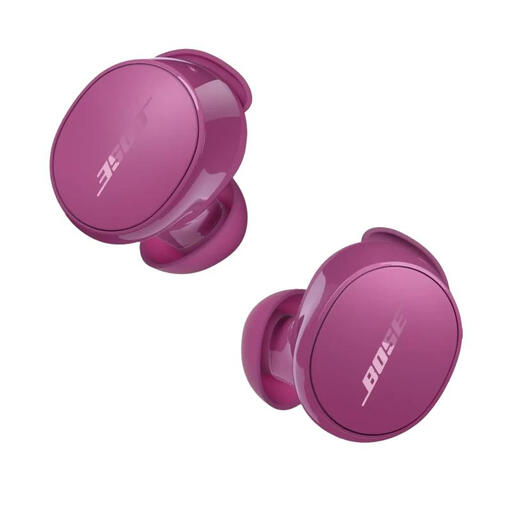 No image available
A wireless option to consider if you want to switch between sound settings while listening.
The product description mentions noise cancelling and Quiet and Aware modes. Check for yourself how much table noise you can still hear with your chosen setting.
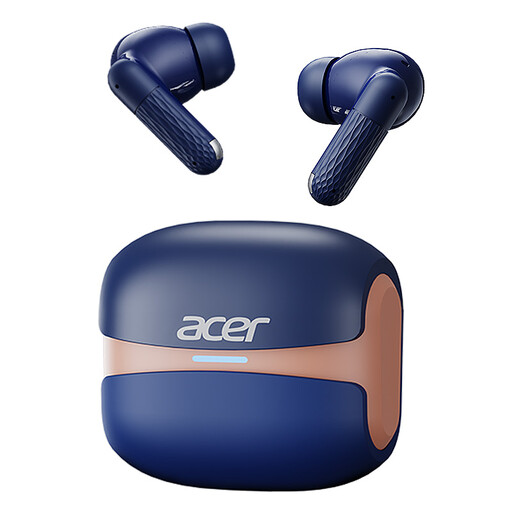 No image available
A wireless in-ear option if you don’t want a cable running across the study table while you listen.
The product name mentions Bluetooth 5.4 and a Type-C charging case.
 No image available
A wireless in-ear option to consider if you want the option of using active noise cancelling.
The product name describes True Wireless in-ear earbuds with active noise cancelling. ANC alone won’t guarantee that voices at the table disappear.
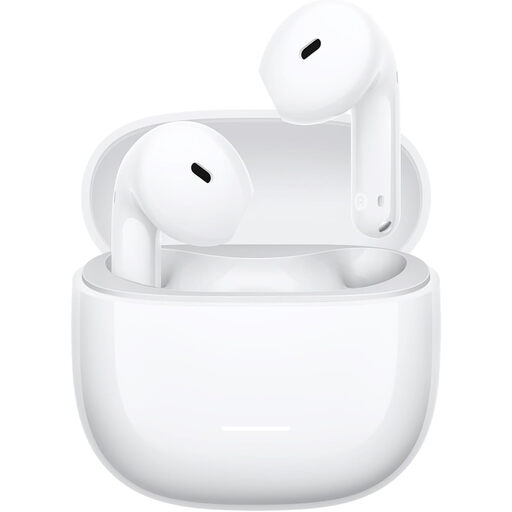 No image available
A semi-in-ear design to consider if you’d rather not use noise-isolating silicone tips at a shared table.
The product description lists up to 7 hours of playback per charge and 37 hours in total with the charging case.
No, noise cancelling isn’t always necessary. Start by choosing a fit that lets you hear speech comfortably. Noise-isolating in-ear earbuds can reduce outside noise, but won’t guarantee that voices at the table disappear. If you want to respond often, also compare a more open fit or an ambient mode.
Check the fit and take listening breaks. The World Health Organization advises keeping the volume low and suggests a maximum of 60% of the device’s maximum as a practical setting; the risk also depends on how long and how often you’re exposed to loud sound. This is listening advice, not a legal volume limit.
Compare the earbuds’ listening time on a single charge in the mode you’ll actually use. Sony Netherlands specifies up to 8.5 hours with noise cancelling on and 12 hours with it off for the WF-C710N; these figures aren’t the same as total listening time including the charging case.
If a product is faulty, contact the seller. According to the Dutch government, the seller must offer a solution under the statutory guarantee. The Netherlands has no fixed statutory guarantee period for all products; a manufacturer’s guarantee is in addition to your statutory rights.
For many purchases made remotely from a business, the Dutch government says you have a 14-day cooling-off period. Check the applicable terms and any exceptions before opening the packaging or using the product; this does not establish the rules for specific in-ear packaging.