Who are these earbuds for?

Listening at a noisy table

This listener wants to follow spoken lecture material while others are talking nearby. A good seal can help you avoid turning the volume up repeatedly; the WHO recommends well-fitting or noise-cancelling headphones to reduce the need to do so in noisy environments.

Student who wants to chat

This listener is replaying a recording but wants to be able to respond to their tablemates easily. Compare an open design with a noise-isolating model that lets you switch on ambient mode; Sony describes both types in its product information.

Student with long listening sessions

Consider comfort and the battery life of the earbuds themselves. If you switch between devices, check whether the model you’re considering supports multipoint. The Consumentenbond distinguishes between listening time per charge and total listening time with a charging case.

What should you look for when choosing?

What to consider What should you check? Who is this important for?
Following speech Look at the type of earbuds, the fit and how adjustable the noise cancelling or ambient sound is. If I want to keep following the recording while people are talking at the table, I’m looking for a fit that suits me and provides enough isolation. Around 36% of consumers prioritise following speech over hearing table noise.
Staying available to talk Compare an open design with the ambient mode controls on a noise-isolating model. If I want to respond to fellow students quickly, I want to be able to hear them without repeatedly taking an earbud out. Around 29% of consumers prioritise staying in direct contact with their tablemates.
Comfort For in-ear earbuds, check the available tip sizes and whether the fit stays comfortable; you could also compare an open design. For long study sessions, I want earbuds that feel comfortable to wear. Around 21% of consumers put fit and comfort first.
Battery life and switching Compare listening time per charge, not just the total time with the case; also check the connection and multipoint support. If I want to finish a study session or switch between devices, I’ll consider the battery life and connections offered by the model I choose. Around 14% of consumers give this the highest priority.

Common buying pitfalls

  • Confusing battery life with the case for continuous listening time

    Total use time, including recharging in the case, is not the same as the earbuds’ listening time per charge.

    Compare the stated hours per charge for the listening mode you use, and keep this separate from the total time with the case.

    For a longer session, you may need to recharge the earbuds in the case partway through.

  • Expecting open earbuds to block sound as well as in-ear earbuds

    An open design keeps you in touch with your surroundings, including conversations that could distract you from a recording.

    Choose open earbuds if staying available to talk is the priority. Otherwise, compare the fit and seal of in-ear earbuds, and check whether they have an ambient mode.

  • Confusing an extended warranty package with your statutory rights

    In the Netherlands, statutory rights exist alongside any additional commercial warranty, as ACM ConsuWijzer explains.

    Check what an additional package covers and how it relates to your statutory rights with the retailer.

Brands to consider

Sony

Sony describes the WF-1000XM5 as noise-isolating in-ear earbuds with ambient mode and multipoint. The LinkBuds Open have an open ring design.

  • Ambient mode and multipoint on the WF-1000XM5 are product specifications stated by Sony.
  • An open design lets conversations at the table through too. Sony’s noise-cancelling claims are not an independent test of how clearly you can hear lecture recordings.

Apple

Apple describes the AirPods Pro 3 as noise-isolating earbuds with active noise cancellation and Transparency mode.

  • Apple lists five sizes of silicone tips and up to 8 hours of listening time per charge with active noise cancellation enabled.
  • The stated maximum listening time applies under the conditions specified. Also check that the controls and features work with your playback device.

JBL

JBL describes the Tune Buds 2 as wireless in-ear earbuds with Adaptive Noise Cancelling and Smart Ambient.

  • JBL states up to 48 hours of use with the charging case.
  • This total time is not directly comparable with listening time per charge. It is not an independent measure from JBL of how clearly you can hear speech at a study table.

soundcore

According to soundcore, the Liberty 4 NC combines adaptive noise cancellation with multipoint.

  • soundcore states 10 hours per charge and 50 hours with the case.
  • Battery life is stated by the manufacturer; the noise reduction figure is not an independent result for conversations alongside a lecture recording.

Joybuy products

This selection includes wireless in-ear earbuds for listening and talking at the table, as well as a wired USB-C model. Compare the fit, ambient sound controls and connection type with your listening needs and playback device.
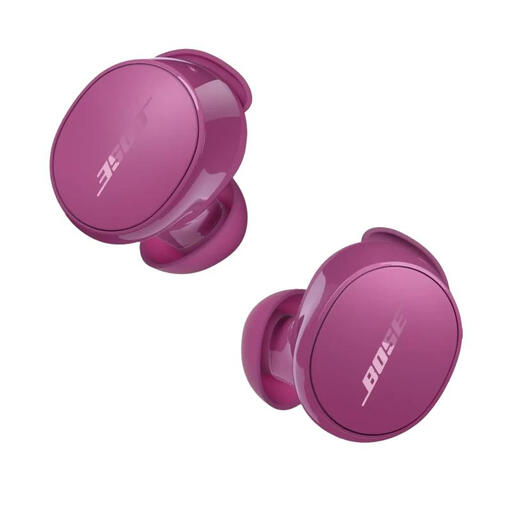
Bose QuietComfort Earbuds, Rosewood Mauve

Bose QuietComfort Earbuds, Rosewood Mauve

A wireless in-ear option for anyone who wants to switch between isolation and ambient sound while listening.

The product information lists active noise cancellation, Aware mode and multipoint. Stated battery life: up to 8.5 hours per charge; IPX4.

View at Joybuy

Bose Noise Cancelling Wired Earbuds, Black

Bose Noise Cancelling Wired Earbuds, Black

A wired option that means you don’t have to charge the earbuds while listening. Check that your device has a compatible USB-C audio connection.

USB-C connection, in-line remote and microphone.

View at Joybuy
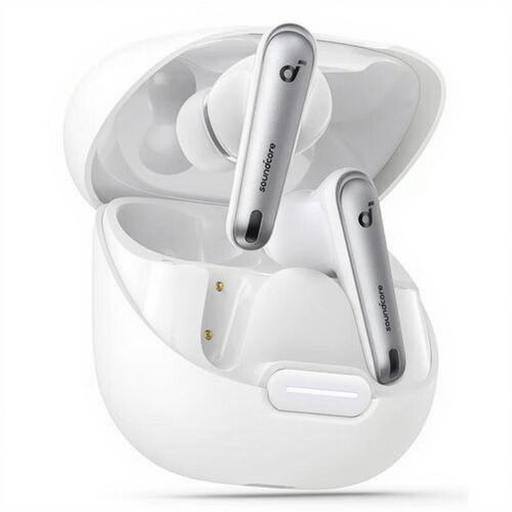
soundcore Liberty 4 NC, White

soundcore Liberty 4 NC, White

A wireless in-ear option for anyone who wants to switch between ambient sound and isolation while listening.

soundcore lists active noise cancellation, multipoint and up to 10 hours of listening time per charge.

View at Joybuy
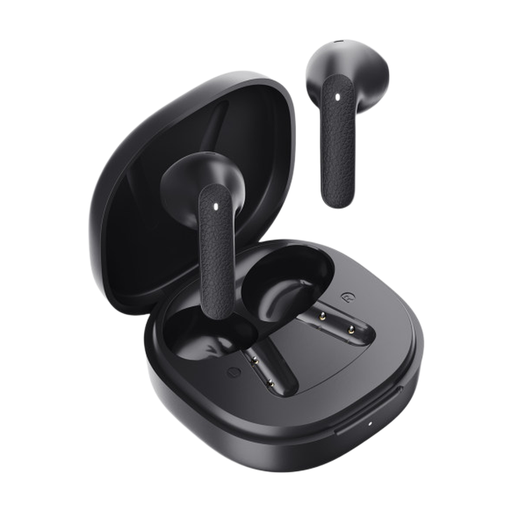
QCY Air-Grey earbuds

QCY Air-Grey

A wireless in-ear option for anyone who wants to factor the stated listening time per charge into the length of a study session.

Bluetooth 5.4; stated battery life of 7 hours per charge; compatible with Android and iOS.

View at Joybuy
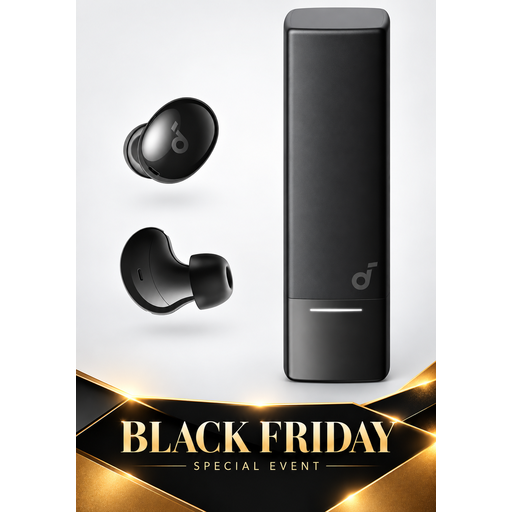
soundcore A30i by Anker

soundcore A30i by Anker

A wireless option for anyone who wants to switch between devices while replaying a recording. Check that multipoint is compatible with your devices.

Bluetooth 5.4 and multipoint are listed.

View at Joybuy

Frequently asked questions

Should you always choose noise-cancelling earbuds at a shared study table?

No. If your main priority is following the recording while others are talking, compare noise-isolating in-ear earbuds and how they fit. If talking directly to others matters more, an open design may suit you better, though it will provide less isolation.

What’s the difference between battery life per charge and total time with the case?

Battery life per charge is the stated listening time before the earbuds themselves need recharging. Total time with the case also includes the extra charges provided by the case; the Consumentenbond recommends looking at these figures separately.

How do you choose earbuds for long listening sessions?

Look for a fit that stays comfortable, enough listening time per charge and a volume that isn’t unnecessarily high. The WHO points out that the risk to your hearing depends on both sound level and listening time. In noisy environments, a good fit or noise cancelling can help reduce the need to turn the volume up.

When is an open design a better choice than noise-isolating in-ear earbuds?

An open design is a better choice if you want to hear your tablemates without switching modes. It also blocks less of their conversations, so compare it with noise-isolating in-ear earbuds with ambient mode if you sometimes want to talk while listening but prefer more isolation at other times.

What should you check when choosing wired earbuds?

Check that the earbuds’ connection is compatible with the audio connection on your playback device. A wired connection means you don’t have to charge the earbuds, but it doesn’t provide active noise cancellation or a switchable ambient mode by itself.
