
Listener in a quiet library
You want to follow a recorded sermon at a shared reading table without people next to you hearing it.


For a quiet reading room, well-fitting, noise-isolating in-ear earbuds are a sensible first choice if you want to limit sound leakage. However, the seal and comfort vary by model and by ear, as the Consumers’ Association notes. Look for ANC when background noise is drowning out the recording; the WHO recommends well-fitting, noise-cancelling headphones to help you avoid turning up the volume in noisy environments. If you’re listening to a long sermon, compare the earbuds’ own playtime in the listening mode you use, rather than just the total time with the case.
You want to follow a recorded sermon at a shared reading table without people next to you hearing it.
You want to follow the words without turning up the volume when there’s background noise.
You listen to longer recordings and are particularly interested in comfort and playtime per charge.
Start with fit and sound leakage. Make ANC a priority only if background noise makes the recording difficult to hear.
Choose this option: if you mainly want to listen at a low volume in an already quiet space.
Bear in mind: the seal and comfort vary from ear to ear, so ear tip size and fit still matter.
Choose this option: if persistent background noise drowns out the recording, or if you sometimes want to hear an announcement using an ambient mode.
Bear in mind: ANC is no substitute for well-fitting ear tips and may reduce playtime per charge.
Choose this option: if you don’t want anything in your ear canal and can follow the recording at a low volume.
Bear in mind: you’ll still hear your surroundings, and sound may leak out. Be particularly careful to check this in a quiet space.
| What to consider | What should you check? | Who is this important for? |
|---|---|---|
| Sound leakage | Check the seal and ask someone sitting next to you to listen while you play the recording at your usual low volume. | When I’m at a shared reading table, I want to stop others from hearing my recording. That’s why sound leakage is the top priority for around 36% of consumers. |
| Speech clarity | Try a similar spoken-word recording at a low volume. If needed, check the fit, ANC and ambient mode. | I want to follow every word without constantly turning up the volume. Speech clarity is the main concern for around 29% of consumers. |
| Comfort | Compare the available ear tip sizes or an open design, and assess the fit during a typical listening session. | For a longer recording, I want earbuds that stay comfortable. Comfort while listening is the main priority for around 21% of consumers. |
| Playtime per charge | Compare the earbuds’ playtime in the ANC mode you use with the length of the recording. | I want to finish a long recording without putting the earbuds back in the case part-way through. Around 14% of consumers prioritise playtime without a charging break. |
An open design can let sound escape. Shokz says leakage may be more noticeable in quiet spaces; a claim of reduced leakage doesn’t guarantee that someone next to you won’t hear anything.
Consider this option if you’d rather not put earbuds in your ear canal. At a low volume, check whether other people can hear the recording.
The extra listening time provided by the case isn’t the same as uninterrupted playtime from the earbuds. You can’t use them while they’re charging in the case.
Compare playtime per charge in the mode you use with the length of your recording.
A charging break can interrupt a longer listening session.
ACM ConsuWijzer notes an exception for certain hygiene products that have been removed from their packaging. Whether that exception applies to a particular purchase must be assessed on a product-by-product basis.
Before opening the product, check the seller’s returns information and any security seals. Returns because you’ve changed your mind are separate from your legal rights if a product is faulty.
If a relevant hygiene exception applies, it may affect your right to cancel the purchase.
The WF-C710N is worth comparing if you’re looking for noise-isolating in-ear earbuds with ANC and an ambient mode.
JBL says the Tune Buds 2 combine a noise-isolating design with Adaptive Noise Cancelling and Smart Ambient.
The Fairbuds 2 are an in-ear option for anyone who values replaceable parts as well as listening to audio.
The OpenFit Air is an example of an open-ear design for anyone who finds in-ear earbuds uncomfortable.
The AirPods Pro 3 are another in-ear option to compare if you’re looking for ANC, Transparency mode and a choice of ear tip sizes.
These earbuds are suited to listening to spoken-word audio. Compare the fit, features for managing background noise and playtime per charge.
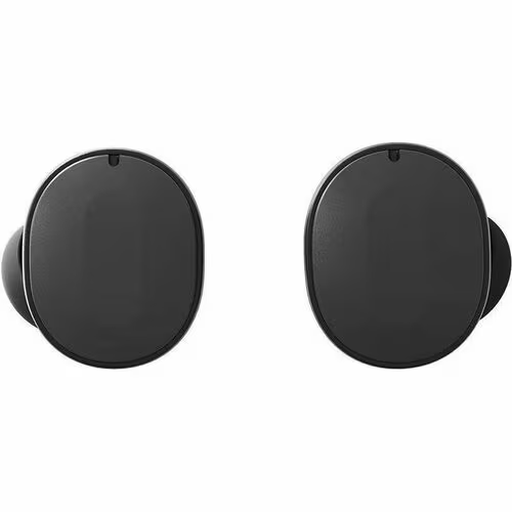 No image available
An in-ear option with ANC to compare for longer recordings; quoted playtime varies depending on the ANC mode.
Up to 8 hours per charge with ANC off; Fairphone quotes up to 6 hours with ANC on. The batteries in the earbuds and case are replaceable.
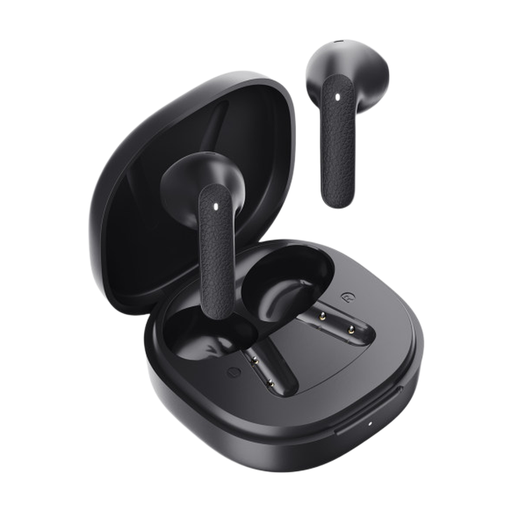 No image available
The quoted playtime per charge can help you work out whether the earbuds will last through a recording without needing to recharge.
The product information lists 7 hours of playtime per charge for the earbuds and 35 hours in total with the case. It also lists Bluetooth 5.4 and IPX4.
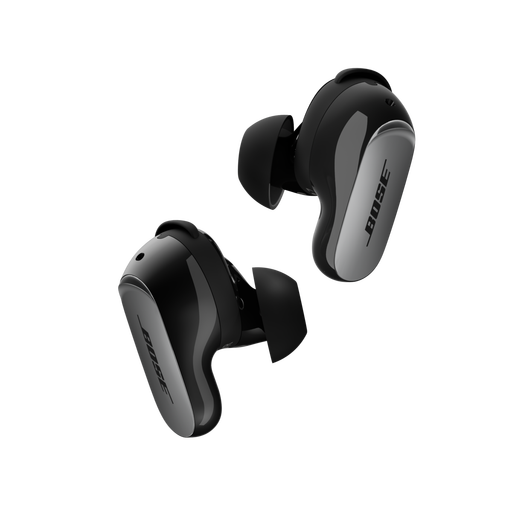 No image available
An in-ear model with ANC and a mode that lets in ambient sound, worth comparing if background noise is affecting your listening experience.
The product information lists a fit kit with three sizes of ear tips and up to 6 hours of listening per charge.
 No image available
ANC and quoted playtime per charge are useful points to compare if you listen to spoken-word recordings.
The product information lists active noise cancelling, multipoint, Bluetooth 5.4 and up to 7 hours of listening per charge.
 No image available
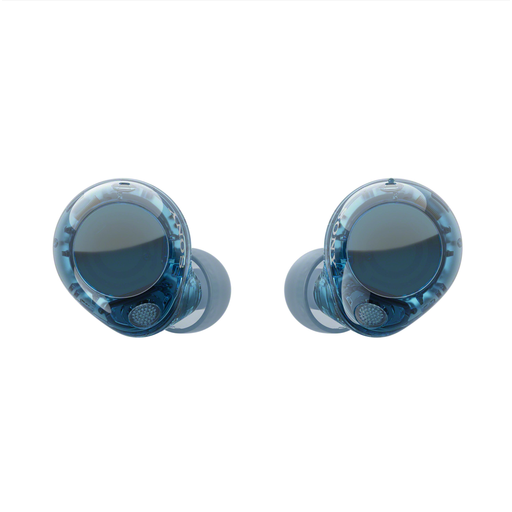
Noise-isolating in-ear earbuds with ANC and an ambient mode to compare if you want to switch between blocking out and hearing your surroundings.
Sony quotes up to 8.5 hours of playtime with noise cancelling on, and up to 12 hours with it off. The specifications also list multipoint.
No, not always. First check whether well-fitting, noise-isolating ear tips make the recording clear at a low volume. ANC can help when background noise is distracting, but how well it works in your library will depend on the conditions.
Connect them to your device via Bluetooth before playing anything, check the audio output and start at a low volume. If you’re using an open-ear model, ask someone sitting next to you to check whether they can hear the recording.
Compare the earbuds’ quoted playtime per charge in the ANC mode you use, rather than just the total time with the case. Sony quotes up to 8.5 hours with noise cancelling on for the WF-C710N; Fairphone quotes up to 6 hours with ANC on for the Fairbuds 2. These are separate manufacturer specifications, not results from a like-for-like test.
According to ACM ConsuWijzer, online purchases often come with a cooling-off period of up to 14 days after delivery, with exceptions for certain hygiene products that have been unpacked, among others. You also have a legal guarantee from the seller if a product is faulty; a manufacturer’s guarantee does not replace this. Before opening your purchase, check which returns terms apply.
That depends on the rules of the library or branch. Check the local rules before listening; general information doesn’t determine what’s allowed at every location.