
Listener in a noisy rehearsal room
Wants to follow spoken words without turning the volume up unnecessarily. The WHO recommends well-fitting earbuds and notes that noise cancellation can help reduce the need for higher volume in a noisy environment.


Start with your own recording and listening environment. See whether you can follow the spoken words at a comfortable volume, rather than focusing only on how much noise cancellation a model promises. Noise-isolating in-ear earbuds may suit you better if background noise is distracting; an open-ear design may be a better fit if you want to stay approachable. Then compare fit, pause controls and listening time per charge.
Wants to follow spoken words without turning the volume up unnecessarily. The WHO recommends well-fitting earbuds and notes that noise cancellation can help reduce the need for higher volume in a noisy environment.
Listens just before choir rehearsal, but wants to hear what others are saying and pause the recording quickly. Open-ear earbuds let in surrounding sounds; on some models, ambient modes can help you switch over for a brief conversation.
Plays short passages several times, so personal comfort, easy-to-reach controls and listening time per charge matter. Fit is personal, so check that the design feels comfortable in your ears.
Choose this option: if background noise distracts you in the rehearsal room and you find ear tips comfortable.
Bear in mind: a close fit can make it harder to respond to other choir members straight away; check how to pause playback or switch on an ambient mode.
Choose this option: if you would rather not use silicone ear tips and chat with the group between listening sessions.
Bear in mind: a more open fit lets in more background noise and may not feel as secure for everyone.
Choose this option: if staying approachable is your priority, especially in a quiet rehearsal room.
Bear in mind: your ear canal stays clear, but there is no passive isolation from background noise.
| Feature to consider | What to look for when buying | Who is this important for? |
|---|---|---|
| Speech clarity | If possible, listen to a recording of your own with both quiet and powerful lines at a comfortable volume; assess speech reproduction and noise isolation separately. | If I want to follow quiet passages without constantly turning up the volume, speech clarity is my priority; around 36% of consumers say it is their most important consideration. |
| Staying approachable | Compare open-ear designs with an adjustable ambient mode, and check whether you can pause playback easily without using your phone. | Just before rehearsal starts, I want to hear what the group is saying; around 29% of consumers prioritise staying approachable. |
| Fit and controls | Check the wearing style or available ear tip sizes, and try pausing and resuming playback with the device you use. | If I replay the same lines, I want my earbuds to feel comfortable and pausing to be easy; around 21% of consumers focus mainly on fit and controls. |
| Listening time and running costs | Compare listening time per charge under the same usage conditions, and check what is included in the box and whether any warranty terms apply. | For a longer rehearsal, I want to know how long I can listen without recharging and what costs might arise later; around 14% of consumers prioritise battery life and additional costs. |
Charging the earbuds in the case means you cannot use them while they are charging.
Compare the stated listening time per charge with the length of your own session, and check which usage settings the figure refers to.
ANC targets background noise; speech clarity also depends on the recording, the fit and the audio reproduction.
Try a recording of your own speech and assess the speech reproduction and noise isolation separately.
Staying approachable and blocking out background noise are different priorities. In a busy room, background noise can make quiet passages harder to follow.
Choose open-ear earbuds mainly if staying in touch with the group comes first; in a noisy room, also compare noise-isolating ear tips with an easily accessible ambient mode.
A manufacturer's warranty or paid warranty plan does not replace your statutory right to a product that meets legal requirements.
Check what an extra plan actually covers, and read the returns terms separately. The Government of the Netherlands explains statutory guarantees in the Netherlands and the rules for distance purchases.
The WF-C710N is a noise-isolating model with ANC and adjustable ambient sound, designed for listening and then talking.
According to JBL, the Tune Buds 2 combine noise-isolating earbuds with ANC, Ambient Aware and TalkThru.
AirPods 4 are available with or without ANC, so check which version you choose.
According to Shokz, the OpenFit 2 is an open-ear model with an ear hook and physical buttons, for anyone who wants to stay approachable while waiting.
The Galaxy Buds3 FE are a separate model to assess for controls and device compatibility.
This selection includes open-ear earbuds for anyone who wants to keep hearing background sounds, as well as noise-isolating in-ear earbuds with ANC for listening when background noise is distracting. It also includes a QCY model whose product information mentions audio and podcasts.
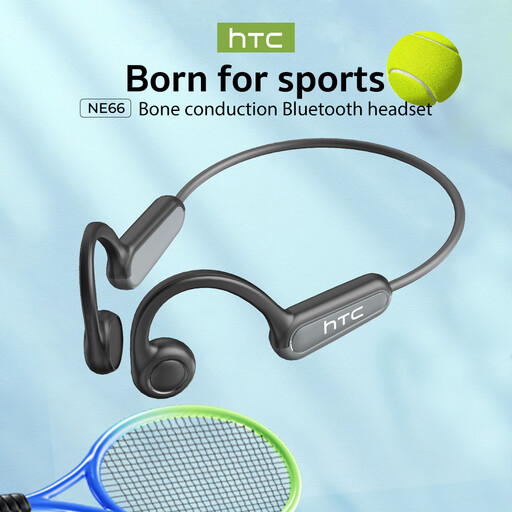 No image available
The open-ear design suits anyone who wants to keep hearing background sounds before rehearsal; check whether quiet passages remain clear in your space with a recording of your own performance.
Bluetooth 5.4; IPX5.
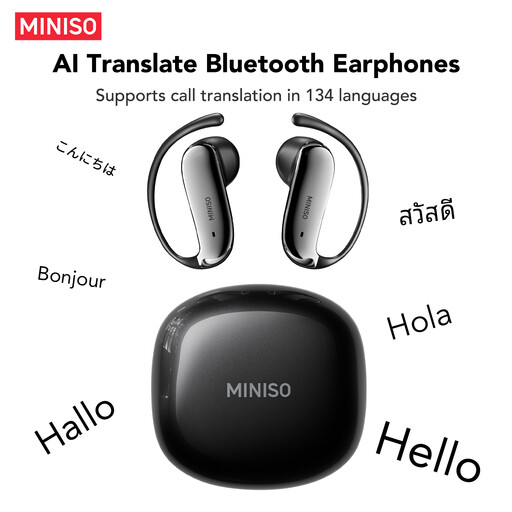 No image available
The open-ear design suits anyone who wants to stay in touch with the group while listening; try a recording of your own to see whether you can follow it clearly in your surroundings.
Bluetooth 6.0; OWS open-ear design.
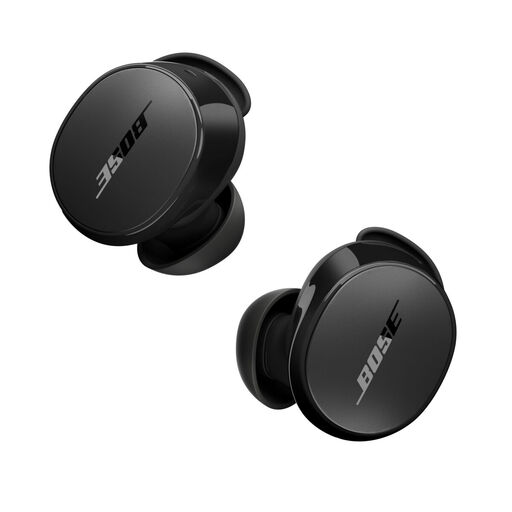 No image available
These noise-isolating in-ear earbuds with ANC and Aware mode offer options for listening and hearing background sounds; compare the modes with your own recording and rehearsal room.
The product information lists touch controls for play and pause, and up to 8.5 hours per charge.
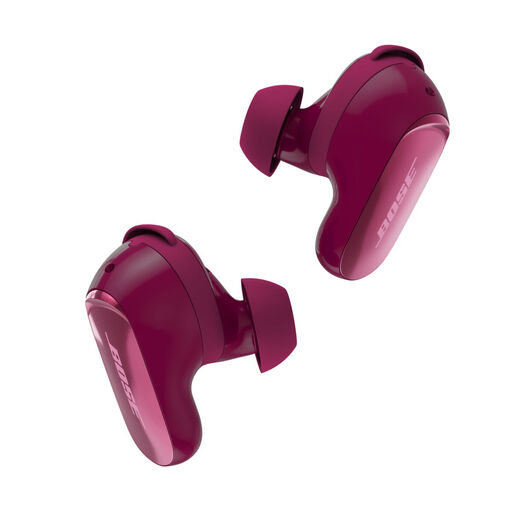 No image available
Noise-isolating ear tips and ANC are suited to listening when background noise is distracting; check that the fit remains comfortable when worn repeatedly.
The product information lists nine sizes of ear tips, stability bands and up to 6 hours of playback per charge.
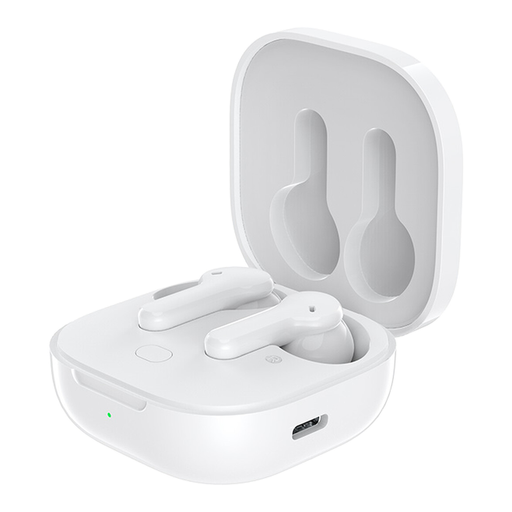 No image available
The product description mentions music and podcasts; try a poetry recording of your own to see whether the sound and fit work for your listening sessions.
The description mentions an ergonomic fit and built-in controls.
No, ANC is not essential. The WHO says that well-fitting earbuds and noise cancellation can help reduce the need for higher volume in a noisy environment; volume and listening time also matter independently. The WHO gives 80 dB for up to 40 hours a week as an example of safe listening, not as a guaranteed setting for any particular model.
Before rehearsal, check the pause controls and any ambient mode on the model you use. Sony describes adjustable ambient sound and Voice Passthrough for the WF-C710N; JBL lists TalkThru for the Tune Buds 2. These features vary by model.
Follow the cleaning instructions for your specific model before cleaning the ear tips or casing. Also check that the instructions apply to the materials and parts of your version.
For a standard online purchase from a business, you generally have 14 days to change your mind; before buying, check whether an exception applies and which returns terms are in force. You are also entitled to a product that meets legal requirements in the Netherlands. There is no fixed statutory guarantee period for every product; a manufacturer's warranty or paid extension does not replace your statutory rights. The Government of the Netherlands explains these rights.
No. Radio equipment placed on the EU market is subject to the Radio Equipment Directive (2014/53/EU). A CE mark is the manufacturer's declaration of compliance, not an approval from an EU body. Check the conformity information for the specific model; a mark on its own does not prove that every individual listing is compliant.