
Listeners who want clear speech
You want to follow the museum talk at a modest volume, so fit and seal are your main priorities.


Well-fitting, sealed in-ear earbuds are a sensible first choice if you want to hear a museum talk clearly while keeping sound leakage to a minimum. Open-ear earbuds are better suited to situations where you want to stay aware of your surroundings and the leakage at your chosen volume is acceptable. The Consumers’ Association explains that silicone in-ear tips seal the ear canal, while Shokz warns that open-ear sound can be audible to others in a quiet space, especially at higher volumes. Also check how the talk is played and whether your earbuds’ connection is compatible with that device.
You want to follow the museum talk at a modest volume, so fit and seal are your main priorities.
You’re listening among other visitors and want to check whether they can hear the audio, especially with an open-ear design.
You want to be able to hear people or announcements while listening, and weigh this against the more open design.
First check how the talk is played and which fit feels comfortable. Then compare how much isolation, awareness of your surroundings and ease of use you need.
| Consideration | What to look for when buying | Who is this important for? |
|---|---|---|
| Hearing speech clearly | Compare ear-tip sizes and fit. Consider ANC mainly if there is distracting background noise. | If I want to follow spoken content at a modest volume, I first look for a good seal. Around 36% of consumers prioritise speech clarity. |
| Not disturbing others | Test the talk at your usual, modest volume and ask someone sitting next to you whether they can hear it. Shokz warns that open-ear sound can be noticeable in a quiet space. | When I’m among other visitors, I want to avoid them hearing my audio. Around 29% of consumers prioritise keeping things quiet for those around them. |
| Comfort and awareness of your surroundings | Check whether the ear tips feel comfortable. If needed, compare them with open-ear earbuds or an ambient mode on a model that has this feature. | If I want to listen comfortably and hear people nearby, those needs matter more to me. Around 21% of consumers prioritise comfort and being able to hear others. |
| Connection and battery life | Ask how the specific talk is played. Then check Bluetooth or the connection type and, for wireless models, the battery life per charge in your preferred mode. | To avoid the talk not working with my device or being interrupted, I check the connection and battery life first. Around 14% of consumers prioritise these points. |
An open design leaves your ear canal unobstructed, but the sound can be particularly noticeable in a quiet library.
Test how audible it is at your usual volume, and don’t rely on privacy claims alone when choosing.
Battery life per charge can vary between listening modes, and you can’t use earbuds while they’re in the charging case.
Compare the stated battery life per charge in the mode you plan to use, not just the total including the case.
A tour may be played on your own phone or on another device. USB-C audio also only works if the device supports it.
First check what the specific talk plays on, then choose the connection type you need.
The WF-C710N and WF-1000XM5 are examples of wireless in-ear earbuds with ANC and an ambient sound mode.
The Tune Buds 2 are wireless in-ear earbuds with ANC and Smart Ambient; the Tune 310C USB is a wired option for a device that supports USB-C audio.
The OpenFit Air are an open-ear option with ear hooks for anyone who wants to keep their ear canals unobstructed.
AirPods models vary in their combination of ANC, Transparency mode and listening time.
This selection focuses on in-ear earbuds for personal museum audio, including wireless ANC models and a wired USB-C option.
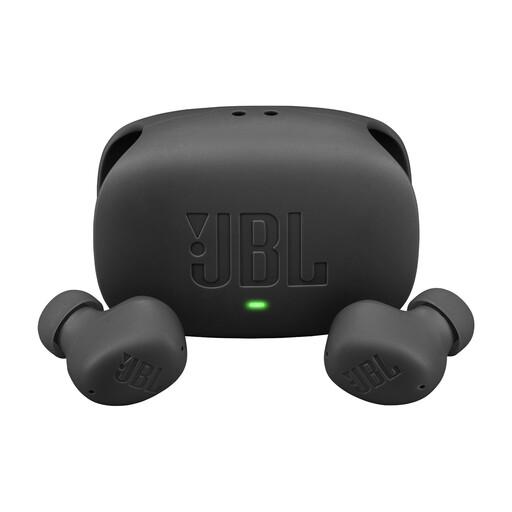 No image available
A wireless in-ear option for anyone weighing up noise reduction against awareness of their surroundings.
The product information lists ANC, Smart Ambient and multipoint connectivity.
 No image available
A wired in-ear option if your device supports USB-C audio and you don’t want to stop to recharge.
The connection is USB-C; check that your device supports audio. The cable limits your freedom of movement.
The product information lists several ear-tip sizes and stability bands.
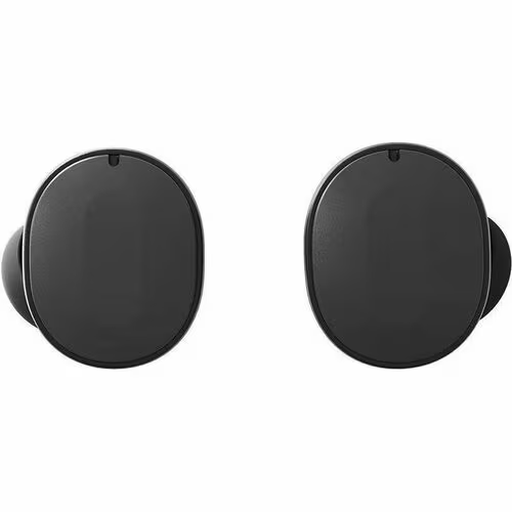 No image available
A wireless in-ear option for anyone who wants to listen to museum audio via Bluetooth and have the option of using ANC.
The product information lists hybrid ANC and up to 8 hours of playback per charge with ANC off; up to 40 hours with the case is the stated total including the case.
 No image available
A wireless in-ear option for anyone looking for ANC and a connection to more than one device.
The product information lists Smart Noise Cancellation and multipoint connectivity.
 No image available
A wireless in-ear option for anyone who wants to switch between noise reduction and ambient sound.
The product information lists ANC, an ambient sound mode and multipoint. Sony Netherlands states that it offers up to 8.5 hours of continuous music playback per charge with NC on.
Not necessarily. First check whether you can hear the talk clearly at a modest volume with well-fitting earbuds. ANC can help with distracting background noise, but it doesn’t replace a well-fitting ear tip.
It depends on the tour. For example, Singer Laren recommends using your own earbuds for its audio tour. Ask the relevant provider whether the talk is played on your own device or one they provide, then check the connection type.
Start at a modest volume and check whether someone sitting next to you can hear the audio. Shokz warns that sound leakage from open-ear earbuds increases at higher volumes and may be more noticeable in quiet spaces.
Compare the stated battery life per charge with ANC on, in the mode you plan to use. The total time including the case isn’t the same as uninterrupted listening time.
ACM ConsuWijzer states that you usually have a 14-day cooling-off period after delivery, with exceptions including certain unsealed hygiene products. Before buying, check whether an exception applies to the specific product and its packaging. Separately, if a product doesn’t meet what you could reasonably expect when used normally, you have a right to a statutory guarantee; a manufacturer’s warranty doesn’t automatically limit this right.