
Listeners to recordings
You want to follow spoken history at a low volume without disturbing the quiet surroundings. Pay attention to the fit and whether sound leaks out; the Consumentenbond explains that in-ear models with tips seal the ear canal.


For a recorded lecture, earbuds are suitable if you can follow speech clearly at a low volume without disturbing others. Choose a secure-fitting in-ear pair if you want to reduce background noise, an open design if you want to remain approachable, or a wired option if your device supports USB-C audio. Fit and recording quality are also important considerations.
You want to follow spoken history at a low volume without disturbing the quiet surroundings. Pay attention to the fit and whether sound leaks out; the Consumentenbond explains that in-ear models with tips seal the ear canal.
You listen on your own but want to be able to hear a member of staff or an announcement. An open design or ambient mode may suit you, although it offers less isolation than a sealed in-ear pair.
You want to listen to a full lecture in comfort and compare listening time per charge with a wired option. The Consumentenbond points out that figures which include the charging case are not the same as uninterrupted listening time.
First decide whether you want to hear the room around you. Then consider fit, sound leakage and listening time at the settings you use.
| What to consider | What should you check? | Who is this important for? |
|---|---|---|
| Clear speech and minimal sound leakage | Compare the fit and speech reproduction; at your usual listening volume, check whether someone sitting next to you can hear the recording. | If I want to follow spoken history at a low volume without disturbing others, I pay particular attention to clarity and sound leakage. Around 36% of consumers prioritise this. |
| Comfort | Check the design and the available ear-tip sizes; fit varies from person to person. | If I want to listen to a full lecture, comfort matters more to me than extra features. Around 29% of consumers put comfort first. |
| Staying approachable | Choose between an open design and a sealed in-ear pair with ambient mode; check for sound leakage too. | If I want to hear a member of staff or an announcement while listening, I want to stay connected to my surroundings in the library. Around 21% of consumers prioritise this. |
| Connectivity and listening time | Check whether your device supports Bluetooth or USB-C audio; for wireless models, compare listening time per charge. | If I want to avoid charging breaks or connection issues during a recording, I pay attention to the connection type and battery life. Around 14% of consumers consider this their top priority. |
A total that includes the case does not tell you how long the earbuds themselves play before they need recharging. The Consumentenbond makes this distinction for wireless earbuds.
Compare listening time per charge and check which setting is being used, such as active noise cancellation.
An open design lets more background noise from the library in, but does not contain sound from your listening in the same way as a sealed in-ear pair.
At your usual, modest listening volume, check whether someone sitting next to you can hear the recording.
According to the Government of the Netherlands, there is no fixed statutory warranty period in the Netherlands. If a product is faulty, the retailer remains your point of contact.
Check what additional protection an extended warranty actually provides.
Sony offers both sealed wireless in-ear models and open earbuds for listeners who want to stay aware of their surroundings. These are different listening options, not a proven ranking of quality.
The Tune Buds 2 are a sealed wireless option for anyone who wants to switch between reducing background noise and staying more aware of their surroundings.
The AirPods 4 with active noise cancellation combine an earbud design with Transparency mode. Check in advance which features work with your playback device.
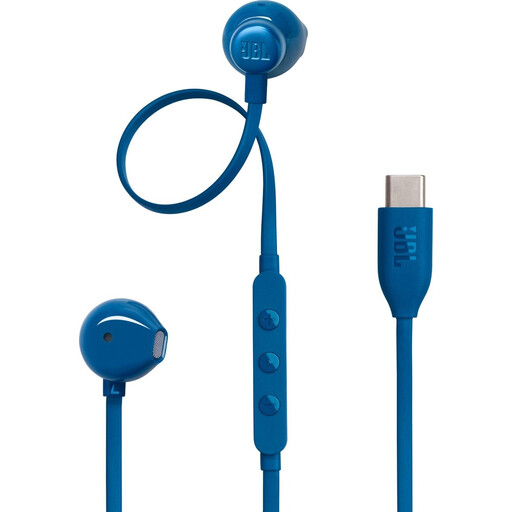
The wired Earbuds with a USB-C connector are an option if you do not want to use Bluetooth or rely on an earbud battery.
This selection includes wired USB-C earbuds and wireless models, including sealed in-ears and an open-ear design for listening on your own.
 No image available
A wired option for listening without Bluetooth pairing, provided your device supports USB-C audio.
The product information lists a microphone and in-line controls, including a vocal EQ preset.
 No image available
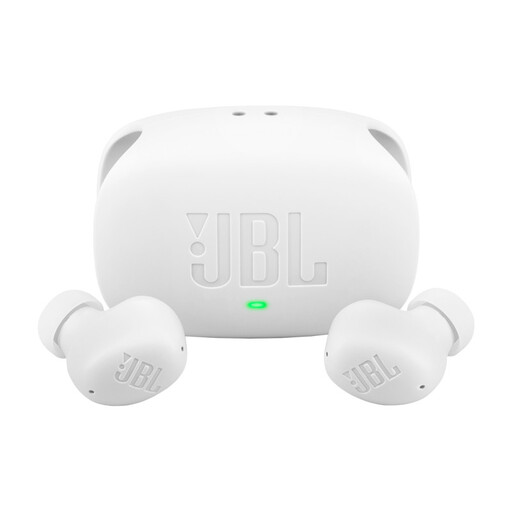
A wireless option if you want to switch between noise cancellation and ambient sound.
The product information lists Active Noise Cancelling and Smart Ambient. The stated maximum playback time is 10 hours per charge with ANC off.
 No image available
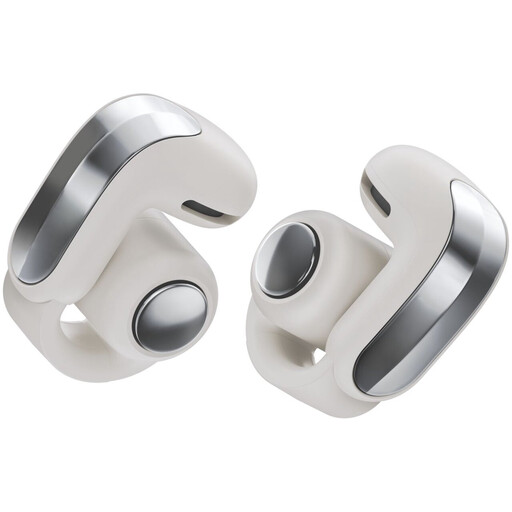
The open-ear design lets in ambient sound, but does not offer the same isolation as a sealed in-ear pair.
Joybuy lists up to 9 hours of listening time, or up to 5 hours with Immersive Audio switched on.
 No image available
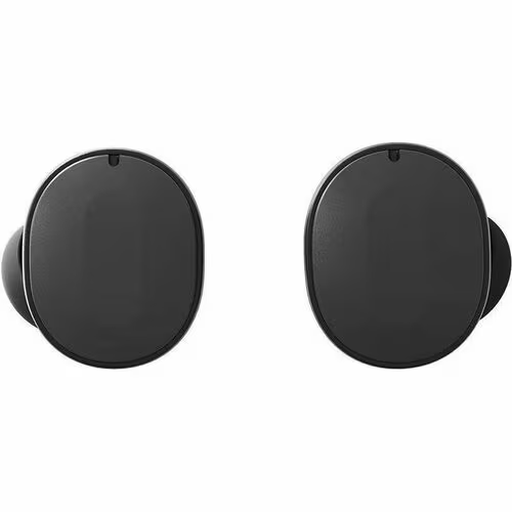
A wireless in-ear option with hybrid active noise cancellation for anyone looking to reduce background noise while listening to a recording.
Joybuy lists up to 8 hours per charge with ANC off; the product information mentions replaceable parts.
 No image available
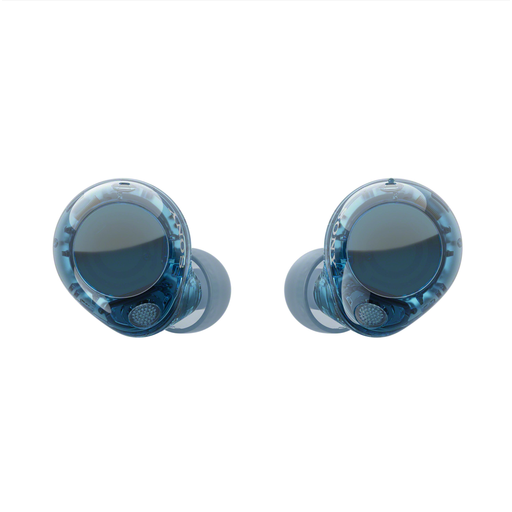
A sealed wireless in-ear pair with noise cancelling and an ambient mode for anyone who wants to stay connected to the room while listening.
Sony specifies up to 8.5 hours of music playback with noise cancelling switched on and up to 12 hours with noise cancelling off.
Not necessarily. A well-fitting sealed in-ear pair may already reduce background noise; active noise cancellation is an extra consideration if noise is genuinely distracting you. Compare speech reproduction and check that other people cannot hear the recording.
Start at a low volume and choose a suitable ear tip or an open design, depending on how much of your surroundings you want to hear. Check the charge or USB-C audio connection in advance. The World Health Organization points out that both sound level and listening time matter when it comes to hearing risk.
Not always: figures that include the charging case also count the time the earbuds spend charging in the case. The Consumentenbond makes this distinction. Apple specifies up to 4 hours per charge for AirPods 4 with active noise cancellation; the maximum 20 hours including the case refers to a different measure of use.
According to the Government of the Netherlands, the retailer is your point of contact if a product is faulty. There is no fixed statutory warranty period in the Netherlands; the rights that apply depend on the product and the circumstances.