First, choose a fit that lets you follow speech clearly at a low volume. Sealed in-ear earbuds can reduce background noise, while open designs let more sound in; neither guarantees that you won’t hear or disturb other people. Check your library’s rules too, especially if you want to repeat phrases aloud.
Who are these earbuds for?
Listeners who want to follow speech precisely
If you replay listening exercises or try to pick out differences in pronunciation, a comfortable fit and clear sound matter more than extra music features. The World Health Organization points out that both volume and listening time matter.
Library visitors who don’t want to disturb others
In a shared study space, you’ll want to avoid making noise or practising aloud where others can hear you. Rules vary between library branches, so check the rules at the one where you study.
Long-session listeners with a clear fit preference
For longer study sessions, the choice between silicone earbuds that seal the ear canal and a looser fit can make a big difference. Think about which style you can wear comfortably while following the lesson at a low volume.
What should you look for?
The first decision is whether you want to seal the ear canal. This affects how much background noise you hear, but doesn’t in itself determine how clearly you’ll hear a speech exercise.
Sealed in-ear earbuds
Choose these if: you want to reduce background noise and find silicone earbuds comfortable. Check the fit and listen to your practice materials at a low volume.
The trade-off: a sealed fit may feel less comfortable if you prefer to keep your ear canals clear, and you may hear less of your surroundings. Some models have an ambient sound mode.
Open or non-sealing earbuds
Choose these if: you don’t want silicone tips in your ear canals or would like to stay more aware of your surroundings.
The trade-off: According to the Consumers’ Association, non-sealing models let in more background noise. They may be less suitable if there’s noise at your study table, so check that speech remains clear at a low volume.
| What to consider |
What to check when choosing |
Who should give this extra thought? |
| Speech clarity |
Try your own learning materials with a good fit, and start at a low volume. |
If I want to hear differences in pronunciation without constantly turning the volume up, clarity comes first. An estimated 36% of consumers have this as their main buying priority. |
| Avoiding disturbance |
Check the library rules and see whether sound can be heard at close range. |
In a shared reading room, I want to listen without disturbing others; I can practise speaking aloud somewhere else. Around 29% of consumers put avoiding disturbance first. |
| Fit and background noise |
Consider whether you find a sealed fit comfortable; for in-ear models, check which ear tips are included. |
If a sealed ear tip feels uncomfortable, I want to be able to choose a looser fit and still follow my practice. Around 21% of consumers put comfort first. |
| Listening time and connectivity |
Compare listening time per charge in the mode you use; test pairing and controls with your phone or laptop. |
For an uninterrupted study session, I want to know whether the earbuds will last long enough and work with my device. An estimated 14% of consumers put session length and connectivity first. |
What to watch out for when choosing
-
Assuming an ANC label proves that conversations will be reduced
The presence of noise cancelling alone doesn’t tell you how well a particular model reduces distractions from speech. Fit and background noise also play a part.
Check how clearly you can hear your practice materials at a low volume. If you have a specific performance expectation, look for a relevant independent test.
-
Confusing total battery life with the charging case for listening time per charge
Apple quotes up to 4 hours per charge for AirPods 5 with ANC, and up to 5 hours per charge for the version with a wireless charging case. That’s different from the total time, which includes the case.
Compare the quoted listening time per charge in the mode you use with the length of your study session.
-
Assuming that repeating phrases aloud in the reading room is the same as practising at home
Earbuds don’t make your voice inaudible to other visitors. Rotterdam Library and Noord-Veluwe Library ask visitors to avoid causing noise disturbance; the rules at your branch determine what’s allowed there.
Use the reading room for silent listening exercises and ask where you can practise speaking.
-
Assuming that an opened product can always be returned
ACM ConsuWijzer notes an exception for hygiene products that have been removed from their packaging. This makes it important to check the product’s specific returns policy.
Check the terms and conditions before opening the packaging.
Brands to consider
Sony
The WF-C710N is an in-ear option with noise cancelling and an ambient sound mode.
- Sony quotes up to 8.5 hours of listening time from the earbuds, plus a further 21.5 hours from the case. These are manufacturer figures, not a guaranteed duration for every listening session.
- These figures don’t tell you how clearly you’ll hear speech in a library; judge that for yourself using your practice materials and checking the fit.
Apple
AirPods 5 are an open-ear option with ANC; Apple distinguishes between a standard case and a version with a wireless charging case.
- With ANC enabled, Apple quotes up to 4 hours of listening time per charge for AirPods 5 and up to 5 hours for the version with a wireless charging case.
- The open fit means you’ll need to check speech clarity and whether others can hear the sound. Apple’s performance figures are manufacturer claims, not the result of an independent library test.
soundcore
According to soundcore, the Liberty range includes both the in-ear Liberty 5 and the semi-in-ear Liberty Buds.
- The different fits make the range worth considering if you want to choose between sealed earbuds and a looser-fitting option.
- Manufacturer claims about comfort or noise cancelling aren’t the same as an independent test in a library. Check the exact version and fit.
Samsung
The Galaxy Buds FE are an in-ear option with ANC and features that work with Samsung Galaxy devices.
- Samsung links certain translation features to a compatible Galaxy phone, an account and, in some cases, a language pack.
- These features aren’t needed to play ordinary language exercises; availability depends on the language and device.
Earbuds at Joybuy
These Joybuy options include earbuds for language practice, with both open-ear models and models described as in-ear. For each model, check the fit and how clearly you can hear speech at a low volume.
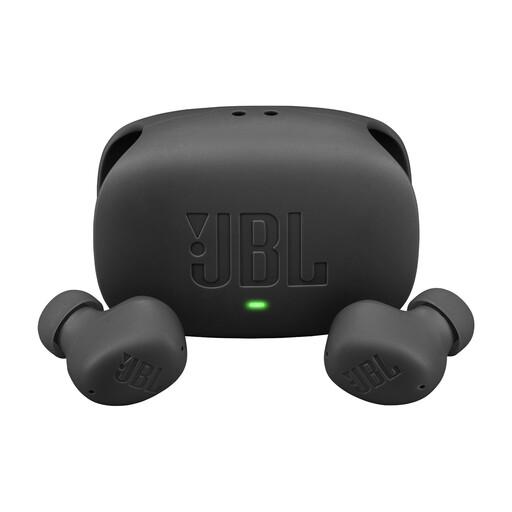 Image unavailable
JBL Wave Buds 2, Black
An option to consider for listening in a shared space. Check that you can hear your practice audio clearly at a low volume and whether others can hear it.
View at Joybuy
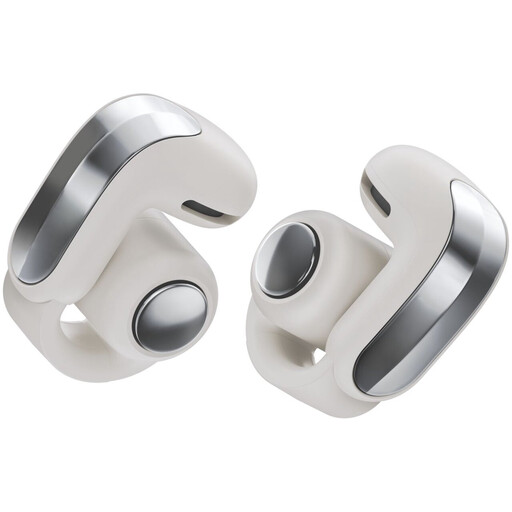 Image unavailable
Bose Ultra Open Earbuds 2nd Gen, White
The open-ear design is an option if you don’t want to seal your ear canals. You’ll still hear background noise, so check that you can follow speech exercises at a low volume.
View at Joybuy
 Image unavailable
Sony LinkBuds Clip, Wireless Open-Ear Earbuds, Lavender
The open-ear fit leaves your ear canals clear. In a quiet space, check that you can hear the lesson clearly at a low volume without disturbing others.
View at Joybuy
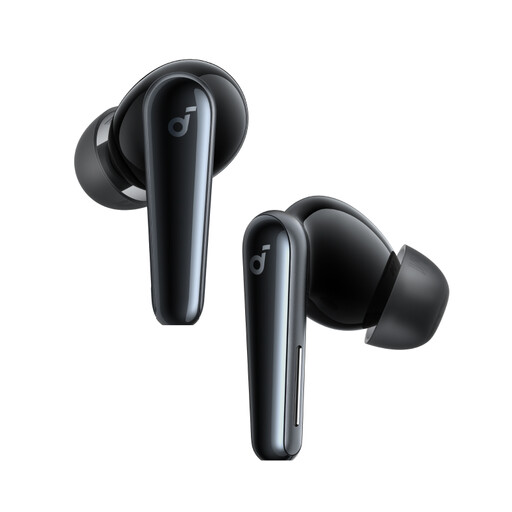 Image unavailable
soundcore Liberty 5 Wireless In-Ear Headset, Black
A wireless in-ear option to compare if you’re looking for a sealed fit. The product name mentions Bluetooth and USB Type-C; check that the fit is comfortable and your learning materials sound clear.
View at Joybuy
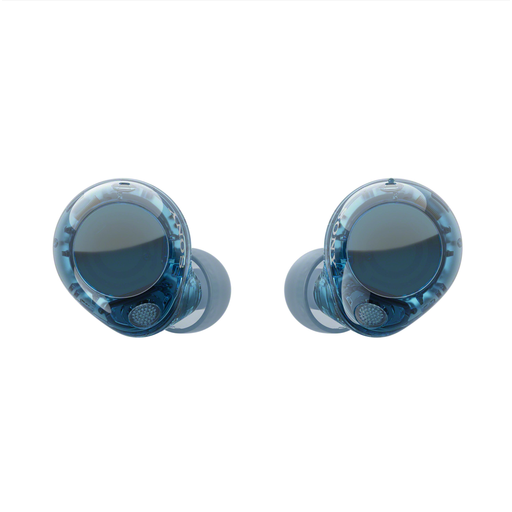 Image unavailable
Sony WF-C710N, Glass Blue
The product name mentions noise cancelling. If this matters to you, still check that speech in your practice materials remains clear at a low volume and that the fit suits your study session.
View at Joybuy
Frequently asked questions
Do I need ANC for a quiet library?
Not necessarily. Start by considering fit, clarity and a low volume. ANC can reduce background noise, but its presence doesn’t prove that every model will block out speech distractions.
How can I use earbuds without disturbing others?
Keep the volume low, pause if someone speaks to you and check your library’s rules before repeating phrases aloud. Rotterdam Library allows listening as long as it doesn’t cause noise disturbance; Noord-Veluwe Library also asks visitors to avoid disturbing others. These are rules set by individual branches, not a nationwide rule for every library.
How can I listen responsibly when practising through repetition?
Keep the volume low and pay attention to how long you listen without a break. According to the World Health Organization, sound level, listening time and exposure to loud noise all matter. Take breaks and, where available, use a feature that tracks your sound exposure.


