Start with earbuds that fit comfortably and let you follow speech at a moderate volume. Also check whether someone sitting next to you can hear them. Sealing in-ear earbuds can help if background noise drowns out your lesson, while open earbuds let you hear your surroundings but need extra checks for sound leakage in a quiet study area. Wired earbuds mean you don’t have to charge them, provided the connection is compatible with your device.
Who are these earbuds suitable for?
Listeners who want to understand speech
You follow spoken language lessons and want to make out the words without constantly turning up the volume. So look for a comfortable fit and clear speech, not just good music playback. The Dutch Consumers’ Association includes speech samples in its testing method for headphones and earbuds.
Visitors to a quiet study area
You want to make sure other library users can’t hear your lesson. On the quiet floors of Amsterdam Public Library, earbuds are only allowed if other people can’t hear them. Check the rules at your own library.
Those listening for long periods
You’re following a lesson for an extended period and want a fit that stays comfortable and enough listening time for your session. Wired earbuds may be an option if they’re compatible with your device and you want to avoid charging them.
What should you look for when taking language lessons in the library?
Sealing in-ear earbuds
Choose this option: if background noise drowns out your lesson and you find a sealing fit comfortable.
Bear in mind: they need to fit well. For wireless models, compare the listening time in the mode you plan to use.
Open earbuds
Choose this option: if you want to stay aware of your surroundings or don’t find in-ear earbuds comfortable.
Bear in mind: open earbuds don’t automatically prevent others from hearing your lesson. Check how they sound where you plan to listen.
Wired earbuds
Choose this option: if you don’t want to charge your earbuds and your device has a suitable audio connection.
Bear in mind: the cable limits your freedom of movement, and not every USB-C port supports audio.
| What to consider |
What should you check? |
Who is this important for? |
| Understanding speech |
If possible, listen to a speech sample and check whether you can follow the lesson at a moderate volume. |
When I follow spoken lessons, I want to make out the words without constantly turning up the volume. Around 36% of consumers say that understanding speech is their top priority. |
| Sound heard by others |
Check your library’s rules and, at the volume you usually use, see whether someone sitting next to you can hear the lesson. |
In a quiet study area, I want to make sure my lesson doesn’t distract other library users. Around 29% of consumers put limiting the sound others can hear first. |
| Comfort |
Compare how each type sits in your ear and check which sizes of ear tips are included. |
For a long study session, I want a fit that stays comfortable; what feels comfortable varies from person to person. Around 21% of consumers say long-term comfort is their top priority. |
| Listening time and connection |
Compare the battery life per charge with the length of your session. For wired models, check whether your device supports the audio connection. |
If I want to follow a lesson without stopping to recharge, the battery life needs to be long enough. With a wired model, my device needs to be compatible. Around 14% of consumers prioritise uninterrupted use or device compatibility. |
Pitfalls when buying earbuds for the library
-
Mistaking battery life including the charging case for listening time per charge
A quoted total listening time may include recharging the earbuds from the case along the way. This means a listening session could be shorter than you expect based on the total figure.
Compare the quoted battery life of the earbuds themselves, in the listening mode you plan to use, with the length of your session.
-
Assuming open earbuds are automatically suitable for a quiet study area
Open models let in background noise, but that doesn’t tell you whether other people can hear your lesson. Amsterdam Public Library only allows earbuds on its quiet floors if other people can’t hear them.
Check the rules at your own library and, at the volume you plan to use, see whether someone sitting next to you can hear the sound.
-
Buying wired USB-C earbuds without checking your device
A USB-C connection doesn’t automatically mean your device supports audio through that port. Apple lists specific compatible devices and software versions for the EarPods (USB-C).
Before you choose, check compatibility with your exact device and, where relevant, its software version.
-
Assuming you can always try them on after opening and still return them under the cooling-off period
The Netherlands Authority for Consumers and Markets (ACM) lists exceptions to the online cooling-off period for certain unsealed hygiene products. This doesn’t mean that every opened product is automatically excluded.
Read the terms for the specific product before opening it. Keep the cooling-off period separate from your rights if a product is faulty.
Brands to consider for this choice
Sony
Sony offers both sealing in-ear earbuds and an open design, to suit different listening preferences.
- Sony states that the WF-C710N offers up to 8.5 hours of continuous music playback with noise cancelling on.
- Sony describes the LinkBuds Open as having an open ring design that lets you hear your surroundings.
- These product features don’t tell you whether a model will feel comfortable or be inaudible to others in your library.
JBL
The JBL Tune Buds 2 are a sealing wireless option with features that let you switch between letting in ambient sound and using noise cancelling.
- JBL lists Adaptive Noise Cancelling and Smart Ambient for the Tune Buds 2.
- The quoted maximum of 48 hours is total playback time, not one uninterrupted lesson on a single charge.
Apple
The wired EarPods (USB-C) are an option if you want to avoid charging and have a compatible device.
- Apple lists volume and playback controls on the cable.
- Check the compatible devices and software versions listed by Apple. The design doesn’t seal the ear like in-ear earbuds with silicone tips.
soundcore
The Space A40 is an example of a compact wireless in-ear model with adaptive noise cancelling.
- soundcore states that battery life is up to 50 hours, including extra charges from the case.
- That total isn’t uninterrupted listening time on a single charge. A noise reduction claim alone doesn’t tell you how easy it will be to understand a lesson in your library.
Earbuds for language lessons at Joybuy
This selection includes wired USB-C earbuds, wireless in-ear earbuds and open earbuds. Choose the style that suits your needs for a seal, awareness of your surroundings and charging. With open models, always check whether other people can hear your lesson.
 No image available
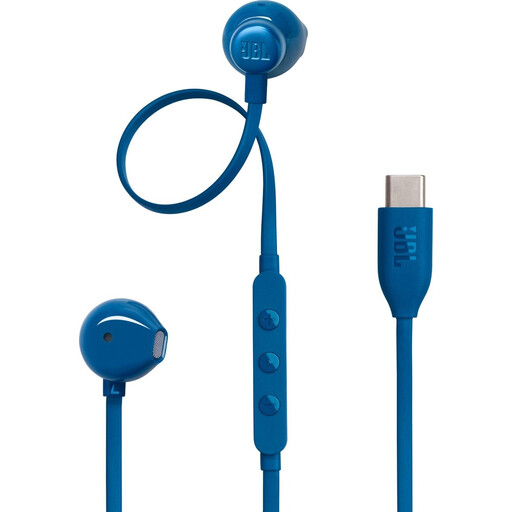
JBL Tune 305C wired USB-C earbuds, blue
Suited to anyone who wants a wired connection to avoid charging their earbuds. Check that your device supports USB-C audio.
The product description lists a built-in microphone and playback and volume controls on the cable.
View at Joybuy
 No image available
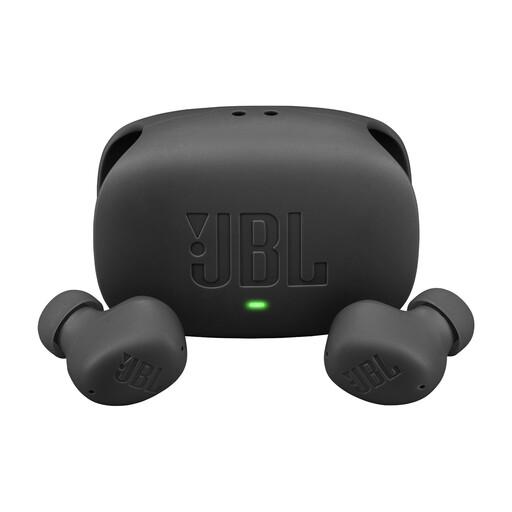
JBL Wave Buds 2, black
Suited to anyone who wants to listen wirelessly and choose between noise cancelling and letting in ambient sound.
The description lists ANC and Smart Ambient. Quoted playback time: 10 hours from the earbuds and up to 40 hours including the charging case, with ANC off.
View at Joybuy
 No image available
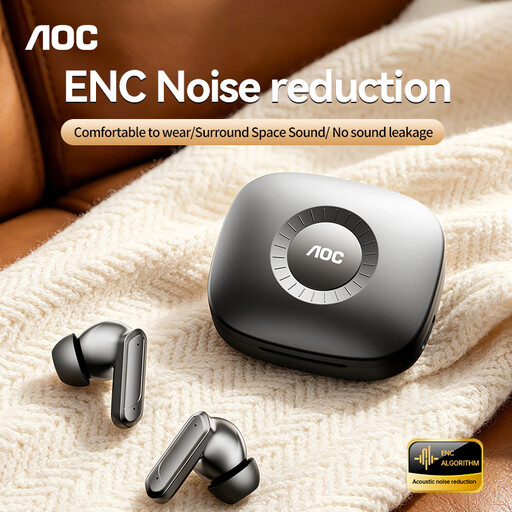
AOC ACT1661 wireless in-ear earbuds
Suited to anyone looking for wireless in-ear earbuds. Check that they feel comfortable for a longer listening session.
The product description lists Bluetooth 5.4, touch controls, Type-C charging and a total usage time of 20 hours with the charging case.
View at Joybuy
 No image available
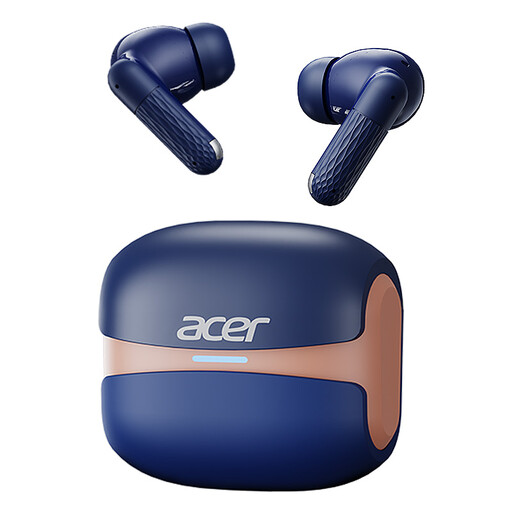
Acer OHR548 wireless in-ear earbuds
Suited to anyone looking for wireless in-ear earbuds and wanting to follow a lesson without a cable.
The product description lists Bluetooth 5.4, touch controls and a Type-C charging port for the case.
View at Joybuy
 No image available
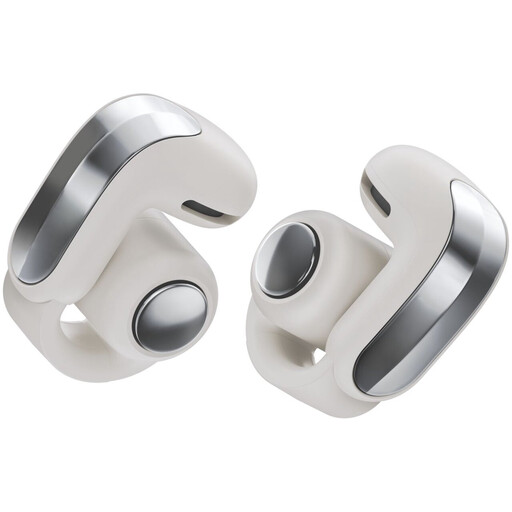
Bose Ultra Open Earbuds 2nd Gen, white
Suited to anyone who wants to stay aware of their surroundings. Check that other people in the library can’t hear your lesson.
The open design lets in ambient sound. The product description lists up to 9 hours of battery life, or 5 hours with Immersive Audio switched on.
View at Joybuy
Frequently asked questions about using earbuds in the library
Can you listen to a language lesson with earbuds on a quiet floor?
On the quiet floors of Amsterdam Public Library, you can only do so if other people can’t hear your earbuds or headphones. These are the library’s own rules, not a rule that applies to every library. Check the guidance at your own branch, especially if you need to repeat the lesson aloud.
Do you always need ANC in a quiet library?
No. Start with a comfortable fit and check that you can understand speech at a moderate volume. ANC can reduce background noise, but battery life depends on the listening mode you use. Compare the quoted listening time with the length of your session.
How can you stop your earbuds running out of battery during a long lesson?
Compare the quoted listening time of the earbuds themselves with the length of your lesson. A total time that includes the charging case may count recharging along the way. For wireless models, also check the quoted listening time in the mode you plan to use.
Do wired USB-C earbuds work with every device that has a USB-C port?
Not necessarily. Check whether your device supports audio via USB-C and whether it’s listed in the compatibility information for the model you’ve chosen. For example, Apple lists specific devices and software versions for the EarPods (USB-C).
How can you keep the volume at a suitable level during a long study session?
Keep the volume down and take regular listening breaks. The World Health Organization gives a limit of 40 hours per week at an average of 80 dB as an example, and stresses that listening time drops quickly at higher sound levels.


