
The detail-focused listener
You want to check quiet words and details in interviews without constantly turning up the volume. A comfortable fit and good noise isolation are important.


If you mainly want to listen back to quiet interview details on your own, start with well-fitting in-ear earbuds. ANC can reduce noise around you, but it won’t remove noise from the recording itself. If you need to talk to your group between clips, compare open-ear earbuds with a model that has an ambient mode. With wired earbuds, also check whether your device supports USB-C audio and which functions the controls operate.
You want to check quiet words and details in interviews without constantly turning up the volume. A comfortable fit and good noise isolation are important.
You listen just before or between group discussions and want to respond to others without having to take your earbuds out each time.
You pause and replay clips on a phone or computer, and want to check in advance that the connection, controls and playback software all work together.
A good fit if: you want to listen on your own and then quickly hear the sounds around you again.
Keep in mind: fit varies from person to person, and ANC won’t remove noise already present in the recording.
A good fit if: you want to respond to group members regularly while listening.
Keep in mind: you’ll still hear the sounds around you, which may drown out quiet parts of an interview.
A good fit if: you want to listen without relying on an earbud battery, using a device with compatible USB-C audio.
Keep in mind: the cable restricts your movement, and a USB-C port alone doesn’t guarantee audio compatibility.
A good fit if: an ambient mode and connection to multiple devices matter to you, but ANC isn’t essential.
Keep in mind: check that they provide enough isolation for the place where you’ll be listening.
| What to consider | What to look for when buying | Who is this important for? |
|---|---|---|
| Hearing speech clearly | Consider the fit and seal; compare ANC only for noise in your listening environment. ANC won’t remove noise from a recording. | If I want to follow quiet words in a noisy room, I focus mainly on fit and noise isolation. Around 36% of consumers say hearing speech clearly is their top priority. |
| Staying available | Compare an open design with an ambient mode. With open-ear earbuds, distracting sounds remain audible too. | Just before rehearsal, I want to hear instructions from group members without constantly taking my earbuds out. Around 29% of consumers prioritise staying available. |
| Replaying and connecting | Check USB-C audio compatibility and which controls operate your player. VLC offers bookmarks; Audacity has a playback speed control. | If I regularly pause and replay a phrase, I want to make sure the connection and controls work with my device. Around 21% of consumers prioritise replaying and device connectivity. |
| Comfort and battery life | Compare the stated playback time per charge at the same volume setting; don’t count the charging case as listening time for the earbuds. Fit is still a personal matter. | When preparing for a longer session, I want to listen comfortably without having to recharge partway through. Around 14% of consumers care most about long-wearing comfort and battery life. |
Consumentenbond warns that stated total figures may include the charging case. The actual playback time per charge is therefore a more useful comparison for a single preparation session.
Compare the earbuds’ own playback hours using the same setting, for example with ANC on or off. Manufacturer figures apply to the models and settings specified.
ANC is designed to reduce sounds around the listener; it can’t remove noise already present in the recording.
Listen to a tricky clip in your own playback software. Audacity documents a feature for adjusting playback speed, while VLC offers bookmarks to help you find specific points in a file.
An open design lets in ambient sound. That helps you stay in touch with your group, but conversations in the room may mask quiet parts of an interview.
Choose this option mainly if staying available matters more to you than noise isolation; otherwise, compare a sealed model with an ambient mode.
A matching plug doesn’t prove that a device will work with wired USB-C earbuds. JBL specifically asks you to check your device’s audio compatibility; Apple lists the system requirements for its EarPods (USB-C).
Before buying, check your exact device and which functions the earbud controls support.
The WF-C710N and WF-C510 offer a wireless in-ear option with an ambient mode; the WF-C710N also has ANC. Sony lists multipoint for both models.
The Tune 310C USB is a wired USB-C option; the Tune Beam 2 is a wireless model with ambient sound and conversation features.
The OpenFit 2 is an open-ear option with ear hooks for anyone who wants to stay aware of their surroundings while listening.
EarPods (USB-C) are a wired option with controls for compatible devices listed by Apple.
This selection includes wired USB-C earbuds, wireless in-ear models with ambient sound features, and an open-ear option to help you stay in touch with your group while listening back.
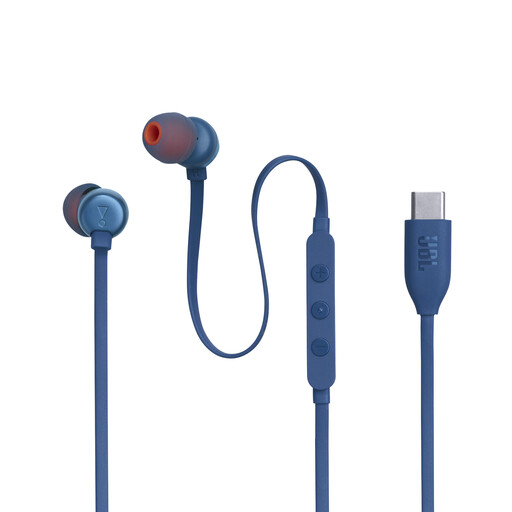 Image unavailable
A wired option for replaying clips when you want to use the controls on the cable.
USB-C connection, in-ear design, three-button controls and a Vocal-EQ preset. JBL recommends checking your device’s USB-C audio compatibility.
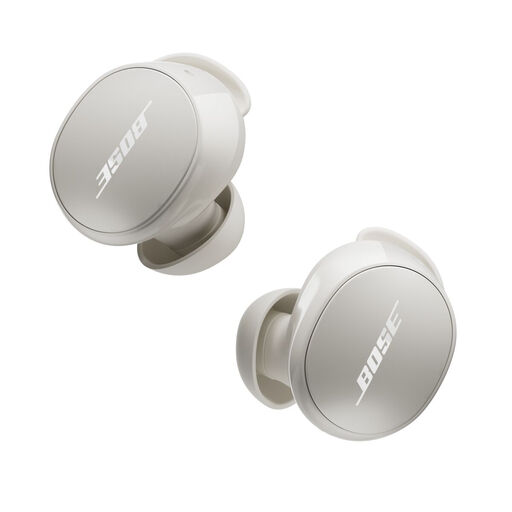 Image unavailable
A wireless in-ear option if you want to switch between a mode that reduces ambient noise and one that lets it through while listening.
The product information lists Quiet and Aware modes, plus multipoint for connecting to multiple devices.
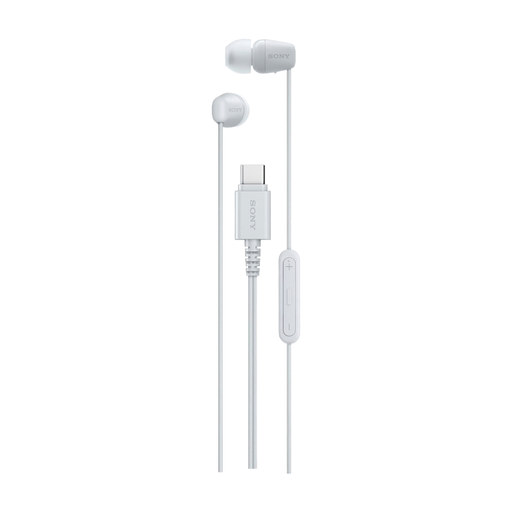 Image unavailable
A wired option if you want to control clips on a device with compatible USB-C audio.
USB-C connection, microphone and remote control. The product information lists playback, pause and volume controls; check that your device supports USB-C audio.
 Image unavailable
A wireless in-ear option that lets you switch between ANC and an ambient mode while listening.
The product information lists multipoint, touch controls and IPX4. ANC reduces noise around you, but won’t remove noise from the interview recording.
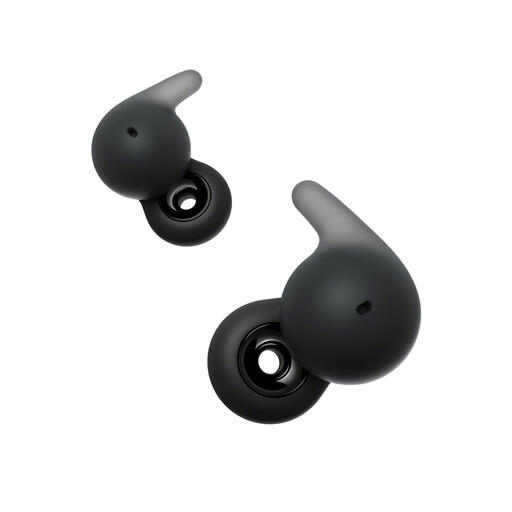 Image unavailable
An open-ear option if you want to keep hearing ambient sounds and be able to talk to others while listening back.
The product information lists multipoint and Wide Area Tap controls. The open design lets in ambient sound, which may mask quiet speech in a noisy room.
No. ANC is designed to reduce noise in your listening environment; it won’t remove noise already present in the recording. Try listening to a difficult clip with playback software: Audacity documents a playback speed control, while VLC offers bookmarks to help you find points in an audio file.
Keep the volume low and take breaks. The World Health Organization gives an average of 80 dB for up to 40 hours per week as an example for adults; at higher sound levels, safe listening time decreases. Your phone’s volume setting doesn’t tell you exactly how many decibels reach your ears.
Not necessarily. For the Tune 310C USB, JBL recommends checking your device’s USB-C audio compatibility. Apple lists system requirements for EarPods (USB-C), so check compatibility and controls for other devices too.
According to ACM ConsuWijzer, statutory warranty is separate from any manufacturer’s warranty; if a product is faulty, the seller is responsible for providing an appropriate solution. For online purchases, you generally have a cooling-off period of up to 14 days after delivery. Before opening the packaging, check whether a statutory exception applies to your purchase and which return conditions are in force.