
Listeners enjoying longer stories
If you listen to a story straight through, you can weigh up fit and listening time per charge against a wired connection that doesn’t rely on its own earbud battery.


First, choose a fit that stays comfortable for a whole story, then check that the earbuds work with the device you downloaded your recordings to. Wired USB-C earbuds can save you from having to recharge the earbuds, provided the connection is compatible. Wireless models give you more freedom to move, but you’ll need to consider listening time per charge. A snug fit or noise cancellation can help reduce background noise, but when you’re out and about, stay aware of the sounds around you.
If you listen to a story straight through, you can weigh up fit and listening time per charge against a wired connection that doesn’t rely on its own earbud battery.
If you want to follow spoken stories without constantly turning up the volume, compare how snugly the earbuds fit and whether they offer noise cancellation.
If you want to listen while moving around, consider how securely the earbuds fit and whether you can still hear the sounds around you that matter.
| What to consider | What to look for | Who should give this more thought? |
|---|---|---|
| Clear speech | Compare how snugly the eartips fit and whether noise cancellation is available; assess comfort and awareness of your surroundings separately. | If background noise drowns out my story, I want to follow the spoken words without constantly turning up the volume. Around 25% of consumers say clear speech in noisy environments is their top priority. |
| Comfort for longer stories | Check which eartip sizes are included and whether the fit feels comfortable. A more open design blocks the ear canal less. | When I listen for a long time, I want a fit that stays comfortable. For around 25% of consumers, wearing comfort during long listening sessions is also the top priority. |
| Compatibility with your device | Check Bluetooth audio compatibility or, for USB-C earbuds, support for USB Audio Class 1.0. | I want to know in advance whether my phone, player and app will play downloaded stories through these earbuds. For around 19% of consumers, compatibility with the source device is the top priority. |
| Listening time per charge | Compare the stated listening time per charge in the mode you use; don’t count playback via a charging case as uninterrupted listening. | If I’d rather not interrupt a story to recharge, I look at listening time per charge or consider a wired option. Around 19% of consumers put listening time first. |
| Awareness of your surroundings when out and about | Compare a more open fit or an ambient sound mode, and keep the volume low; neither feature guarantees that you’ll always hear traffic. | When I listen on the move, I want to stay aware of the sounds around me. For around 12% of consumers, awareness of their surroundings matters most. |
The listening time a manufacturer quotes by adding in the charging case isn’t the same as how long you can use the earbuds continuously. Consumentenbond points out that you should also check how much the case contributes to the stated battery life.
Compare the hours per charge in the listening mode you plan to use with the separately stated total time, including the case.
Sony specifies compatibility with USB Audio Class 1.0 for the Sony IER-EX15C. Features may also vary depending on the device, operating system or app.
Before buying, check that your playback device supports USB audio and that the controls work as you expect.
An ambient sound mode or a more open fit doesn’t guarantee that you’ll hear all traffic and other important sounds.
Keep the volume low and stay aware of your surroundings when you’re out and about. The Dutch government permits hands-free listening while driving, but you must not hold an electronic device.
Sony offers both wired USB-C in-ear earbuds and wireless WF-C510 earbuds to compare.
The JBL Tune Buds 2 are a wireless option to compare if you’re looking for snug-fitting in-ear earbuds with active noise cancellation.
AirPods 4 are worth trying if you’d rather not use snug-fitting in-ear earbuds; the version with active noise cancellation is sold separately.
This selection includes wireless earbuds with active noise cancellation, semi-in-ear and open-ear models, and wired USB-C earbuds. You can compare them by fit, awareness of your surroundings, connectivity and charging.
 Image unavailable
Wireless in-ear earbuds with Bluetooth audio and active noise cancellation, for comparing these features when listening in noisy surroundings.
Stated listening time per charge: 6 hours with ANC on and 7 hours with ANC off. The separately stated total time includes the charging case.
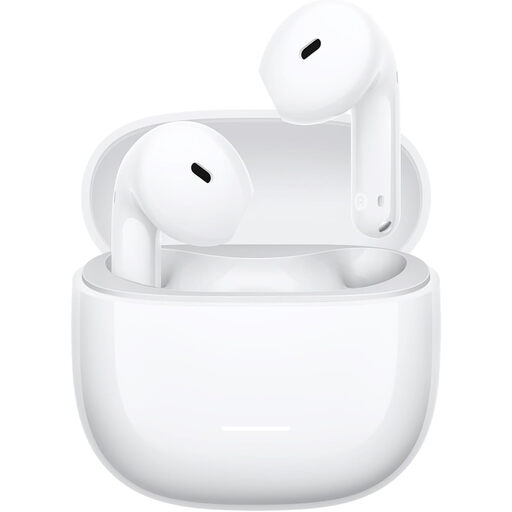 Image unavailable
Semi-in-ear Bluetooth earbuds to compare if you’d prefer a less snug fit than traditional in-ear earbuds.
Stated listening time: up to 7 hours per charge; the longer total time includes the case.
 Image unavailable
Wired USB-C earbuds with active noise cancellation, for anyone who wants to avoid charging breaks for their earbuds.
The product description lists multiple eartip sizes and stability wings. Use requires a device with suitable USB-C audio output.
 Image unavailable
Wireless open-ear Bluetooth earbuds for anyone who prefers to keep their ear canals clear.
The product description lists Voice Focus for audiobooks and podcasts. An open design doesn’t guarantee that you’ll hear every sound around you when you’re out and about.
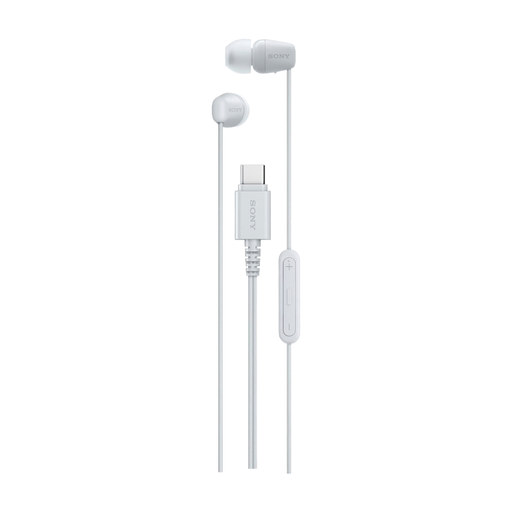 Image unavailable
Wired USB-C in-ear earbuds for anyone who doesn’t want to stop and recharge their earbuds. Sony specifies USB Audio Class 1.0 as a compatibility requirement.
According to Sony, operation and controls may vary depending on the device, operating system or app.
No. If your recordings are on your phone, tablet or another player, that device is the playback source. Check that the Bluetooth or USB-C connection you choose works and that your app can play the recordings offline.
Choose an eartip size that feels comfortable, keep the volume low and take listening breaks. The World Health Organization recommends keeping sound levels low; an app that measures volume can help.
The Dutch government says hands-free listening is allowed, but you must not hold an electronic device while riding. Keep the volume low and stay aware of your surroundings; an ambient sound mode doesn’t guarantee that you’ll hear every traffic sound.
You’re entitled to a product that is of satisfactory quality; according to the Dutch government, there is no fixed statutory warranty period in the Netherlands. For eligible online consumer purchases, you generally have 14 days from delivery to change your mind, although exceptions may apply. Check the terms that apply to your purchase; a manufacturer’s warranty is separate from your statutory rights.