
Listener looking for quiet
You listen while working on your own and want to follow spoken comedy despite office noise. You can pause the programme when a colleague needs you. Consumentenbond points out that earbuds vary in comfort.


Choose sealed in-ear earbuds with a good-fitting tip and noise cancellation if you mainly want to follow spoken comedy while working on your own. An open design is a better fit if you need to hear your colleagues regularly. Either way, check the fit, listening time per charge in your chosen mode and connection to your device. Don’t automatically turn up the volume to drown out office noise.
You listen while working on your own and want to follow spoken comedy despite office noise. You can pause the programme when a colleague needs you. Consumentenbond points out that earbuds vary in comfort.
You want to keep listening, but need to hear conversations or signals around you. An open design or an easily accessible ambient mode matters more to you than maximum isolation.
You wear earbuds for several hours at a time, so you pay attention to how they fit you and how long they last per charge, not just the total battery life including the charging case.
If you mainly want to follow speech, start with the fit and how much the earbuds seal out noise. If you often need to hear your colleagues, prioritise awareness of your surroundings.
Choose this option: if you mainly want to follow the voices in the programme while working on your own and don’t need to be constantly available to others.
Bear in mind: you may hear your colleagues less clearly. Try different tip sizes, and pause or switch to an ambient mode when needed.
Choose this option: if you regularly speak to colleagues face to face or don’t want a sealed tip in your ear canal.
Bear in mind: you’ll still hear office noise, which may drown out the speech in the programme. So don’t automatically turn up the volume.
| What to consider | What should you look for? | Who is this important for? |
|---|---|---|
| Speech clarity | Check whether the model has active noise cancellation and try the supplied tips to find a good seal. | If background noise drowns out the programme, you’ll want to follow spoken comedy without cranking up the volume. Around 33% of consumers prioritise speech clarity above all else. |
| Hearing your colleagues | Think about how often you need to respond straight away; compare an open design with the ambient mode on the specific in-ear model. | If you regularly need to talk to colleagues while listening, you’ll want to keep hearing their voices or signals. Around 25% of consumers prioritise being approachable. |
| Comfort over long periods | Check the available tip sizes or the shape of an ear hook or clip. Before opening the pack, check the returns policy for that specific pair. | If you listen for several hours, you’ll want a comfortable fit that doesn’t press unnecessarily on your ear canal. Around 25% of consumers prioritise long-lasting comfort above all else. |
| Battery life and connectivity | Compare listening time per charge in the mode you’ll use, not just the total time including the charging case. Check that your device supports Bluetooth or the connection you need. | If you want to listen without stopping to recharge, battery life per charge matters. For everyday use, the earbuds also need to connect to your phone or computer. Around 17% of consumers prioritise uninterrupted use and connectivity. |
The charging case can extend the total time you can use the earbuds, but it doesn’t tell you how long you can wear them continuously. Under laboratory conditions, soundcore quotes 7.5 hours per charge for the Liberty 4 Pro with noise cancellation and 10 hours in normal mode; actual use may vary.
Compare the listening time per charge in the mode you actually plan to use.
You may need to interrupt your listening session to recharge the earbuds in the case.
An open design lets you hear your surroundings. This means conversations in a busy office may still drown out the speech in the programme; turning up the volume isn’t a good default solution.
Choose open-ear earbuds if staying approachable is your priority. If you mainly want more isolation from background noise, check the fit and noise cancellation of a sealed model.
ACM ConsuWijzer notes a possible exception to the cooling-off period for hygiene products that have been removed from their packaging. Whether this exception applies to a particular pair of earbuds depends on the circumstances.
Before opening the pack, read the terms for the specific product and purchase.
If a relevant hygiene exception applies, it may affect your right to cancel the purchase.
The WF-1000XM5 is an in-ear option worth considering if you’re looking for isolation and the ability to switch between devices.
AirPods Pro 3 combine sealed tips with active noise cancellation and Transparency mode.
The OpenFit 2 series is an open-ear option for anyone who wants to stay aware of their surroundings and prefers not to use a sealed tip.
Soundgear CLIPS are an ear-clip option for anyone who wants to stay in touch with their surroundings.
The Liberty 4 Pro is an in-ear option with adjustable noise cancellation and a choice of tip sizes.
This selection includes earbuds for two situations: more isolation with active noise cancellation, or open listening where you can still hear ambient sounds.
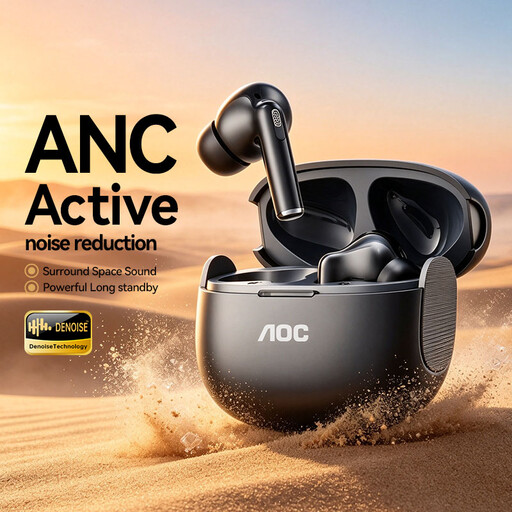 No image available
A good fit if you’re looking for a sealed in-ear option with active noise cancellation while working on your own.
Wireless; Bluetooth 6.0.
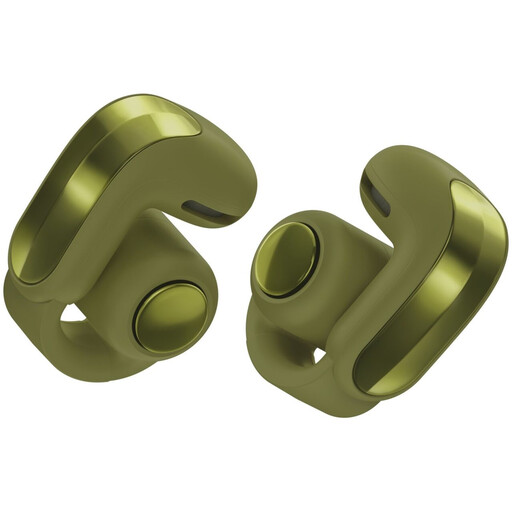 No image available
A good fit if you want to hear your colleagues; in a busy office, ambient noise may still drown out the spoken programme.
Open-ear design; Bluetooth.
 No image available
A good fit if you’re looking for a wired in-ear option with noise cancellation and use a device with a USB-C audio connection.
Wired; USB-C connection. Check that your device supports audio over USB-C.
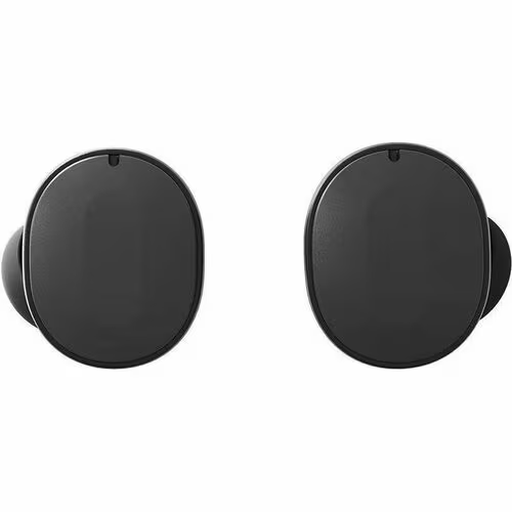 No image available
A good fit if you’re looking for an in-ear option for listening to a spoken programme while working on your own.
Before buying, check which features and connection work with your playback device.
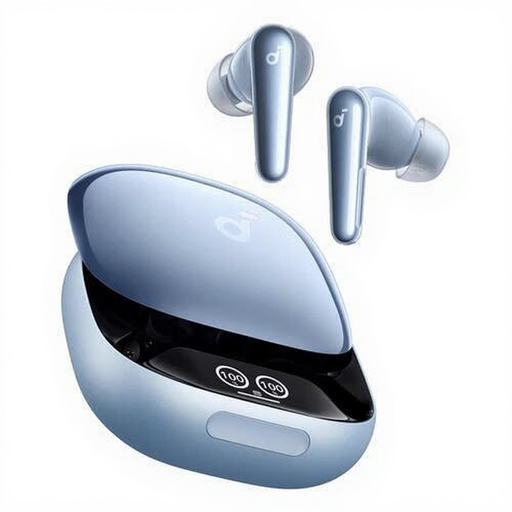 No image available
A good fit if you’re looking for sealed in-ear earbuds with adjustable noise cancellation. soundcore lists six tip sizes for the Liberty 4 Pro.
According to soundcore, listening time per charge under laboratory conditions is 7.5 hours with noise cancellation and 10 hours in normal mode; actual use may vary.
Noise cancellation can reduce background noise, but it can’t guarantee that you’ll hear every voice clearly. According to Consumentenbond, noise cancellation in earbuds doesn’t always work as well as it does in headphones; a well-fitting in-ear tip is still important.
Choose a comfortable listening level and don’t keep turning up the volume to drown out background noise. The World Health Organization recommends well-fitting earbuds and noise cancellation to help reduce the temptation to turn the volume up, and advises keeping an eye on your volume and listening time. Its example of 80 dB for a maximum of 40 hours per week relates to listening exposure, not a measurement of your earbuds or a legal office noise limit.
Don’t assume they are just because they’re labelled ‘noise cancelling’. According to Arboportaal, part of the Ministry of Social Affairs and Employment, employers must provide hearing protection when daily exposure exceeds 80 dB(A); above 85 dB(A), employees must wear it. These rules relate to measured workplace noise. Annoying office noise does not in itself mean those levels have been reached.
Check that the earbuds connect to your phone or computer, try the available tip sizes if you’re using in-ear earbuds, and compare battery life in the mode you use. The total time including the charging case isn’t the same as listening time per charge.
When you buy from a business online, you usually have a statutory 14-day cooling-off period after delivery. ACM ConsuWijzer notes an exception for hygiene products that have been removed from their packaging, so check the terms for the specific pair before trying them on. If there’s a fault, the seller is your point of contact for your statutory rights to a product that meets the required standard. The Dutch government states that there is no fixed statutory two-year period for this in the Netherlands.