Who are earbuds for talks on the train for?

Listeners who want to follow speech over train noise

You listen to talks where the words matter more than the music. A good fit and tested noise reduction matter more to you than an ANC label alone. The Consumers’ Association highlights differences in wearing comfort and measures how much sound is reduced in its tests.

Travellers who want to keep up with announcements

You want to be able to pause the talk or let in surrounding sounds when you’re expecting your stop or a change to your journey. NS says that announcements provide up-to-date travel information; no listening mode guarantees that you’ll hear every one.

Long-session listeners who are sensitive to ear pressure

You wear earbuds on a longer journey and want to know whether the ear tips stay comfortable, and how long the earbuds themselves last without the case. The Consumers’ Association points to differences in wearing comfort; fit is a personal matter.

What should you look for when choosing?

Sealing in-ear earbuds with ANC

Choose these if: train noise and conversations are distracting you from spoken talks, and you find in-ear earbuds comfortable.

Keep in mind: the seal varies from ear to ear and may make travel information harder to hear; ANC can’t guarantee a quiet train.

In-ear earbuds with transparency mode

Choose these if: you often want to pay attention to stops, announcements or fellow passengers while listening.

Keep in mind: letting in surrounding sounds can make the talk harder to understand and doesn’t guarantee that you’ll hear an announcement.

More open earbuds without sealing ear tips

Choose these if: pressure in your ear canal bothers you more than a lack of maximum isolation, and you usually listen in a quiet carriage.

Keep in mind: they provide less isolation; weigh how easy the talk is to understand against the temptation to turn up the volume.

What to consider What to look for when buying Who should pay particular attention?
Understanding speech over train noise Compare the fit, available ear tip sizes and noise-cancellation test results. If I don’t want to miss words in a talk because of train noise, I look beyond the ANC label alone. Around 31% of consumers prioritise speech clarity.
Hearing travel information and your surroundings Check whether you can quickly switch on transparency mode on the model you’re considering. If I want to keep an ear out for stops or announcements during a talk, I want to be able to pause easily or let in surrounding sounds. Around 25% of consumers put travel information first.
Comfort during a longer talk Check the ear tip sizes and consider whether the fit will stay comfortable for as long as you plan to wear them. When I wear earbuds for a long time, a comfortable fit matters more than maximum noise reduction. Around 19% of consumers make comfort their top priority.
Uninterrupted listening time Compare listening time per charge with ANC on, and check the conditions under which it was measured. If charging part-way through my journey would be inconvenient, I look at the listening time of the earbuds themselves, not just the total with the case. Around 13% of consumers prioritise uninterrupted listening time.
Price and how long you’ll use them Compare the same version of each model and the features you actually need. If I only want to pay for features I’ll use, I weigh them against the fit and how long I expect to use the earbuds. Around 12% of consumers put value for money first.

Common buying pitfalls when choosing earbuds for the train

  • Confusing total battery life, including the case, with one listening session

    The case can extend total listening time, but you can’t use the earbuds while they’re charging. Listening time may also change when ANC is on.

    Compare listening time per charge with ANC on and under similar testing conditions. Look at the total duration with the case separately.

    A session that ends sooner than expected may mean you need to charge during or between journeys.

  • Assuming an ANC claim means silence or that you’ll hear announcements

    Noise reduction varies depending on the fit and the conditions. NS says that announcements provide up-to-date travel information, but no listening mode guarantees that you’ll hear them.

    Compare test results and how transparency mode is controlled, and keep track of your journey yourself too.

  • Assuming the fit will be comfortable based on the specifications

    A sealing ear tip can block out sound, but in-ear comfort varies from person to person. A more open model feels different and provides less isolation.

    Check the included ear tip sizes and the returns policy before choosing a sealing or more open design.

    If the fit isn’t comfortable, you may end up not using the earbuds at all.

Brands and models to compare

Sony

The WF-1000XM5 is an in-ear model worth comparing if train noise is distracting you from your talk.

  • Sony describes noise-isolating ear tips and noise cancellation for uses including train journeys.
  • The manufacturer’s description doesn’t prove that the noise reduction or fit will work the same for every ear.

Apple

The AirPods Pro 3 offer a useful comparison for anyone weighing up ANC against a separate transparency mode.

  • Apple specifies five sizes of silicone ear tips and up to 8 hours of listening per charge with ANC on.
  • The stated duration isn’t based on a measured train journey, and fit is a personal matter.

JBL

The Live Beam 3 is worth considering if you want to adjust settings using the charging case without opening the phone app.

  • JBL lists controls via the case and 48 hours of total playback time.
  • The total duration isn’t the same as 48 hours of uninterrupted listening with the earbuds; the ANC performance is a manufacturer claim.

Sennheiser

The MOMENTUM True Wireless 4 is an in-ear option for comparing adaptive ANC and a transparency mode.

  • Sennheiser lists several sizes of silicone ear tips and fins.
  • The stated listening time of up to 30 hours shouldn’t be taken as listening time per charge without checking how it was measured.

OnePlus

The Buds Pro 3 provide a useful comparison for battery life with different listening settings.

  • OnePlus lists 10 hours per charge with adaptive ANC off and 6 hours with ANC on, using AAC at 50% volume.
  • These are manufacturer figures for those conditions, not independent measurements on a train.

Earbuds on Joybuy for listening on the train

This selection features in-ear earbuds with noise cancellation. For models with transparency mode, you can weigh up that feature if you want to keep track of travel information during a talk.
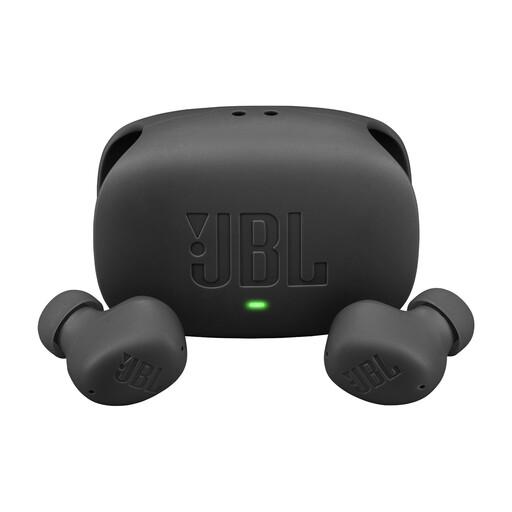
JBL Wave Buds 2 - Black

JBL Wave Buds 2 - Black

An option to compare if you’re weighing up noise cancellation and transparency mode for your train journey.

Active noise cancellation and Smart Ambient are listed, with controls via the earbuds. The stated listening time is up to 10 hours with ANC off, not with ANC on.

Joybuy
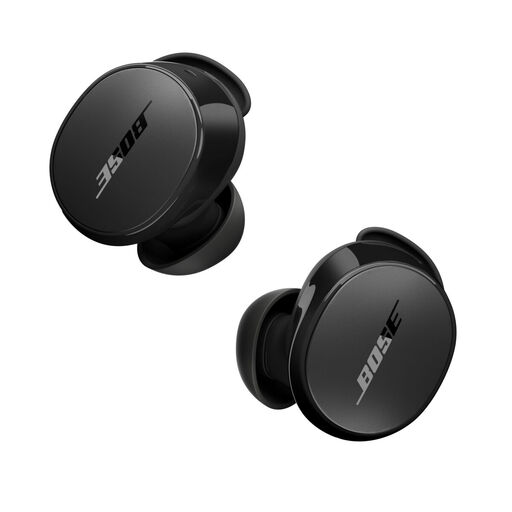
Bose QuietComfort Earbuds Black

Bose QuietComfort Earbuds Black

An option if you want to switch between active noise cancellation and surrounding sounds while listening.

The product description lists an Aware mode, touch controls, three sizes of ear tips and up to 8.5 hours per charge.

Joybuy
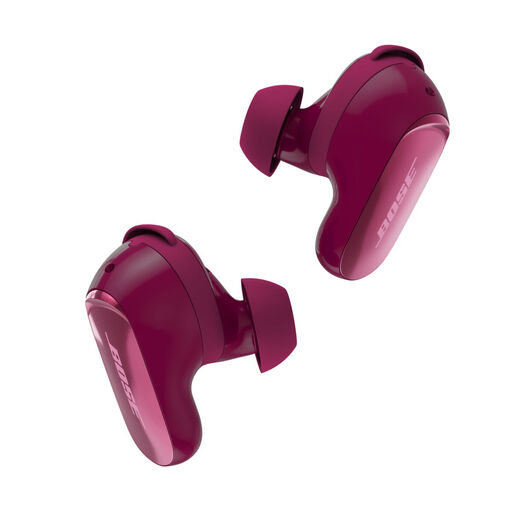
Bose QuietComfort Ultra Earbuds (2nd Gen) Deep Plum

Bose QuietComfort Ultra Earbuds (2nd Gen) Deep Plum

An option to consider if you want to combine noise cancellation with a choice of fit options.

The product description lists active noise cancellation, an Aware mode, nine sizes of ear tips, stability bands and up to 6 hours of playback time.

Joybuy
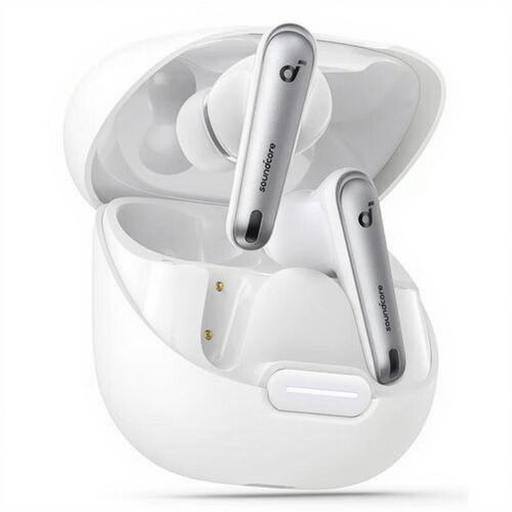
soundcore Liberty 4 NC Wireless In-Ear White

soundcore Liberty 4 NC Wireless In-Ear White

An option to compare if you want to use noise cancellation while listening to a spoken talk.

The product description lists in-ear earbuds with noise cancellation, up to 10 hours of playback per charge and additional ear tips.

Joybuy
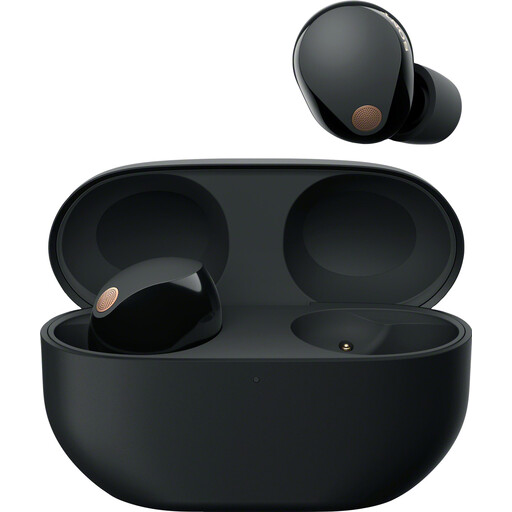
Sony WF-1000XM5 True Wireless Earbuds with Noise Cancelling - Black

Sony WF-1000XM5 True Wireless Earbuds with Noise Cancelling - Black

An option to compare if you’re looking for an in-ear model with active noise cancellation for spoken audio on the train.

The product information lists active noise cancellation and 8 hours of battery life with noise cancellation on.

Joybuy

Frequently asked questions about earbuds for talks on the train

Is maximum noise cancellation always the best choice for a spoken talk?

No. The right choice depends on how distracting the train noise is and whether you want to keep track of travel information. Compare the fit and tested ANC performance, and consider how quickly you can pause or let in surrounding sounds too; none of these features guarantees that you’ll hear an announcement.

How do I set up and look after in-ear earbuds for longer journeys?

Try the supplied ear tip sizes to find a comfortable, secure fit, and follow the pairing instructions for your exact model. Clean the earbuds according to the manual; Sony recommends using a dry cloth or cotton bud on the charging contacts of the WF-1000XM5.

Who should I contact if earbuds become faulty too quickly with normal use?

In the Netherlands, there’s no fixed statutory guarantee period that applies to all products. What you can expect from a product depends on factors including the product itself and the purchase information; if a product is faulty, contact the seller to resolve the issue.

What should I bear in mind in a designated quiet carriage in the Netherlands?

NS describes the quiet zone as a place without disruptive noise and says that announcements provide up-to-date travel information on the train. Keep your audio inaudible to others and keep track of your journey yourself; NS information doesn’t guarantee that a particular listening mode will let you hear every announcement.

How can I avoid turning the volume up to compensate for train noise?

Choose earbuds that fit well and keep the volume low rather than continually turning it up. The World Health Organization gives a maximum of 40 hours per week at an average of 80 dB as an example; at higher sound levels, safe listening time decreases. This is general health advice, not a measured sound level for a specific model.
