For a play script with a fixed PDF layout, a larger screen is often the more practical choice; for an easy-to-read EPUB, a more compact model may be more convenient. If you want to make notes, check that the specific model and file format support this feature. Test the script offline on the device before you travel: a large screen won’t automatically make every A4 PDF comfortable to read.
Who is this buying guide for?
Readers of scripts in PDF format
You want to follow the fixed layout, character names and stage directions without constantly scrolling or zooming. With a PDF, the available screen space matters: support for the file format alone says nothing about how comfortable it is to read.
Travellers who annotate scripts
You highlight passages or write notes about performance and direction. Check that you can make and save those notes in your file format and on the model you’re considering.
Readers short on hand luggage space
You’re looking for a portable device for a long reading session, but you’ll want to check first that your script is easy to follow on the smaller screen.
What should you look for when choosing?
Larger e-reader for fixed PDF layouts
Choose this option: if your script’s layout needs to stay intact and screen space matters more to you than a compact size. Kobo describes the Elipsa 2E as having a 10.3-inch screen and a Stylus 2 for annotating PDFs; BOOX describes PDF annotation for the Go 10.3 (Gen II) series.
Bear in mind: a larger device takes up more space, and a bigger screen still doesn’t guarantee that every A4 page will be comfortable to read without zooming.
More compact e-reader for adjustable text
Choose this option: if your script is available as an EPUB, or if your PDF is easy to read on a smaller screen. Kobo lists a 7-inch screen for the Libra Colour; PocketBook lists a 7.8-inch screen for the InkPad 4.
Bear in mind: a fixed PDF page may require more zooming and scrolling on a smaller screen. Kobo says you can’t adjust the text size in its PDF reader in the same way as you can with a standard e-book.
Tablet as an alternative for awkward A4 PDFs
Consider this option: if you mainly read scripts with a fixed A4 layout and find zooming on an e-reader uncomfortable.
Bear in mind: according to the Consumentenbond, zooming may be smoother on a tablet, but a tablet is heavier and its battery may run down faster with intensive use.
Compare the trade-offs using your own file: test how the pages display, the notes you want to make and how the device performs in the lighting you expect to read in.
| What to consider |
What to look for |
Best suited to |
| Readability of the script layout |
Open a representative page with stage directions and test it in portrait and landscape, and with zoom. Kobo says you can’t adjust the text size in a PDF in the same way as you can in a standard e-book. |
If I want to follow the fixed page layout without constantly scrolling, I first check whether my script is easy to read on screen; around 31% of consumers prioritise readability. |
| Notes and highlights |
Test your own PDF or EPUB to see if you can make, find and save exactly the notes you want. Check the feature for the specific model: stylus support doesn’t automatically mean every highlighting feature works with every file. |
If you want to note roles, cues or stage directions as you read, it’s worth testing with your own file; around 25% of consumers put annotation first. |
| Portability |
Compare the dimensions with your bag, and try holding and using the device while seated. Then check again that the script page is still large enough. |
If I have limited hand luggage space, I weigh up a smaller device against the space my script needs; around 19% of consumers prioritise a compact device for travelling. |
| Reading light and offline access |
Check whether the exact model has a reading light. Load the script onto the device before you leave and open it with the connection turned off; also check in advance how to transfer any files with DRM. |
For a long flight, I want to be able to open and read my file in changing light conditions; around 25% of consumers prioritise reliable reading while travelling. |
Common buying mistakes
-
Assuming PDF support means comfortable reading
A file may open but still be awkward to read on a small screen if the page layout is fixed. The Consumentenbond points out that many PDFs are laid out for A4.
Test an actual page from your script on the screen size you’re considering, and keep a tablet in mind as an alternative if you need to zoom a lot.
Frequent zooming and scrolling can interrupt your reading of a scene.
-
Confusing the standard BOOX Go 10.3 (Gen II) with the Lumi
The models differ in their reading light: BOOX says the standard Go 10.3 (Gen II) has no front light, while the Lumi does.
Before buying, check the full model name and whether the version you’re choosing has a front light.
In a dark cabin, a model without a front light may mean you need a separate light source.
-
Assuming every script will open on every e-reader
The file format and DRM may determine whether you can read a script on your device. The Consumentenbond says Kindle devices don’t support the Adobe DRM used for borrowed library books.
Check the file permissions and transfer method with the provider, and open the file on your chosen device before you travel.
Depending on the permissions, you may need a different version of the file or another way to read it.
Brands to compare
These brands are relevant to different product ranges and uses; their inclusion isn’t an endorsement of the brand as a whole or a guarantee that a model is available.
Kobo
Kobo offers compact models and larger e-readers for anyone who wants to read PDFs and possibly annotate them.
- Kobo lists support for PDF and EPUB. According to Kobo, the Elipsa 2E has a 10.3-inch screen and is offered with a Stylus 2 for annotating PDFs.
- Kobo says you can’t adjust the text size in a PDF in the same way as you can in a standard e-book. Also check how to transfer files with DRM.
PocketBook
The InkPad 4 is a mid-sized option to compare if you want to open both EPUB and PDF files on one device.
- PocketBook lists a 7.8-inch screen, support for EPUB and PDF, adjustable SMARTlight and a weight of 265 g for the InkPad 4.
- These specifications don’t automatically mean an A4 script will be comfortable to read without zooming; test your own file to find out.
BOOX
The Go 10.3 (Gen II) series is worth considering if you’re looking for a larger screen and PDF annotation.
- BOOX describes PDF annotation and EPUB support for the series.
- According to BOOX, the Lumi version has a front light, but the standard Go 10.3 (Gen II) does not. Check the full model variant.
Kindle
The Kindle Scribe is an alternative for larger documents and stylus use within the Kindle ecosystem.
- The Consumentenbond says Kindle devices don’t support the Adobe DRM used for borrowed library books.
- So check the permissions on your script and whether the file can be opened on your device.
reMarkable
The reMarkable 2 is a paper-like tablet for reading documents and annotating PDFs or EPUBs; it’s an alternative to a standard e-reader.
- reMarkable describes how to import and annotate PDF and EPUB files.
- Check which import features are needed for the way you want to use it, and whether they’re available without an additional service.
Joybuy products
These product choices include compact e-readers and E-Ink tablets as alternatives for scripts with a fixed PDF layout.
 No image available
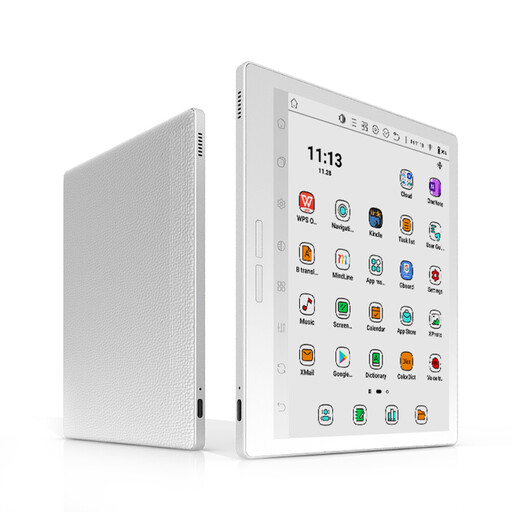
iFLYTEK AINOTE 2, 10.65-inch E-Ink tablet
An E-Ink tablet to consider if you want to take notes as well as read; it isn’t a conventional e-reader.
The product is described as a 10.65-inch E-Ink tablet for note-taking.
View at Joybuy
 No image available
Bigme B751C S, 7-inch colour screen
A compact e-reader to consider if your script is easy to read on a smaller screen and you want a built-in front light.
The product name lists a 7-inch colour screen and a front light with 36 brightness levels.
View at Joybuy
 No image available
Bigme HiBreak Pro, 6.13-inch colour E-Ink reader
A small E-Ink reader to consider if portability matters more than the screen space needed for a fixed script page.
The product name lists a 6.13-inch colour screen and Android 14.
View at Joybuy
 No image available
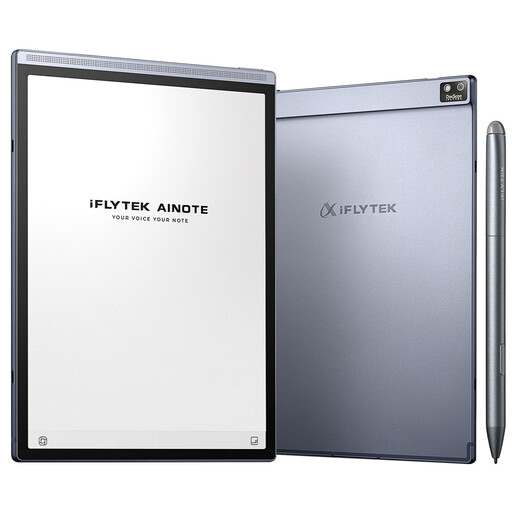
iFLYTEK AINOTE Air 2, 8.2-inch E-Ink tablet with protective case
An E-Ink tablet to consider if you want to read PDFs and take notes; it isn’t a conventional e-reader.
The product information lists PDF and e-book reading, a stylus and a two-colour reading light with 24 brightness levels. The screen is 8.2 inches and the stated weight is 230 g.
View at Joybuy
Frequently asked questions
Can I read my script without an internet connection?
Yes, if the file is stored on the device in advance and can be opened there. Kobo describes transferring unprotected PDF and EPUB files locally via a computer; files with Adobe DRM require a different transfer process. Test the file before you leave with the connection turned off.
Why can’t I enlarge the text in my PDF like I can in an e-book?
According to Kobo, you can zoom in and rotate the page in the PDF reader, but you can’t adjust the text size or style as you can in a standard e-book. Check how your own script displays on the device before relying on it during your flight.
Can I take an e-reader in my hand luggage?
KLM explicitly lists an e-reader as an electronic device that can be taken in hand luggage. Rules may vary between airlines across your full journey; the Dutch government advises contacting your airline if you’re unsure.
What should I know if I’m taking a power bank?
Schiphol says power banks must be carried in hand luggage and sets a maximum of two. KLM asks passengers to keep their power bank with them rather than putting it in the overhead locker; check the rules of the airlines on your route.
What are my rights if I’m not happy with the e-reader or it breaks soon after purchase?
For a typical online consumer purchase, ACM ConsuWijzer says you’ll usually have up to 14 days from delivery to change your mind, with some exceptions. Separately, you’re entitled to a product that meets what you could reasonably expect; if it’s faulty and the relevant conditions apply, the retailer is your point of contact.


