
Reader of letter scans
You want to see the handwriting and original page layout. Try one of your own PDFs on the screen you’re considering to see how often you need to zoom or move around the page.


Choose a compact e-reader if you mainly read typed transcripts and want to travel light. If you’re reading scans of complete handwritten letters, a larger screen may make the page more comfortable to view. Try your own file before deciding, as PDFs don’t always offer the same text adjustment options as standard e-books. Then weigh up screen size, lighting, water protection and offline access.
You want to see the handwriting and original page layout. Try one of your own PDFs on the screen you’re considering to see how often you need to zoom or move around the page.
You mainly read typed letters and want to take a device with you that you can load with files in advance. Check the file format and make sure you can open your files offline.
You read in changing light and may be out in the rain. Kobo lists water protection for specific models, so check the exact model and charge your device in advance.
Start with the format of your letters: scans need to be tested on screen, while transcriptions call for a closer look at file compatibility and portability. The percentages below relate to consumers looking for an e-reader to read historical letters while camping.
| Purchase concern | What should you look for? | Who is this most important to? |
|---|---|---|
| Scan readability | Try one of your own PDFs and see how much you need to zoom and move around the page. Also check which PDF features are available. | I want to see the handwriting and the whole page clearly without constantly adjusting the view. Around 36% of consumers put scans first. |
| Protection and reading light | Check water protection for each model, bear sand in mind and try the lighting in the conditions you’ll be reading in. | When I read outdoors, I want to know how the device handles changing light and rain. Around 29% of consumers prioritise protection and reading light. |
| Portability and screen space | Compare screen sizes using one of your own letter files; a compact screen shows less of a full-page scan at once. | I want to carry as little as possible, but still read comfortably. Around 21% of consumers prioritise portability over screen space. |
| Using files offline | Check access and terms of use, file format and any DRM restrictions. Transfer files in advance and try opening them. | I want to access my letters before setting off and open them without an internet connection. Around 14% of consumers say offline file access is their main concern. |
According to Kobo, its PDF viewer lets you zoom in and rotate the page, but not change the text size or highlight text. Staying zoomed in for a long time may be impractical with your scan.
Try a representative letter scan on the screen size you’re considering.
Kobo warns that its waterproof e-readers are not dustproof or sandproof. The manufacturer recommends drying the USB port before connecting the charger.
Check the protection offered by the exact model, keep it away from sand and don’t charge it near water.
The KB states that its collection of letters can only be consulted in the Special Collections Reading Room. An e-reader can’t make material with this kind of access restriction available offline.
Before buying, check access, terms of use and offline availability for the specific letters you want to read.
Kobo offers compact black-and-white e-readers and describes features for PDFs and transferring unprotected files.
PocketBook presents the Verse Pro as a compact e-reader for EPUB and other file formats.
BOOX describes the Note Air6 C as a model for larger documents, PDFs and note-taking, with a 10.3-inch colour screen.
This selection includes e-ink e-readers and larger E Ink tablets for reading historical letters. The most important thing to compare is the screen size against one of your own files.
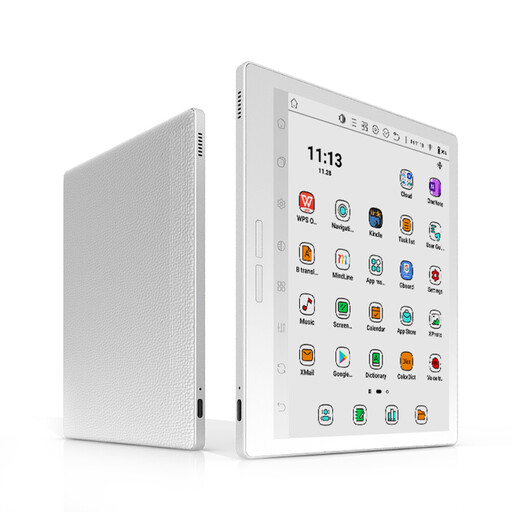 No image available
An option if you’re looking for a 7-inch colour screen and adjustable front light for reading in changing light.
The product name lists 4+64GB, 300 ppi and a 36-level front light.
 No image available
The screen size may suit you if you’re looking for a more compact e-ink reader. Try your own scans to see whether the page is comfortable to read.
The product name lists Android 14 and 8GB+256GB.
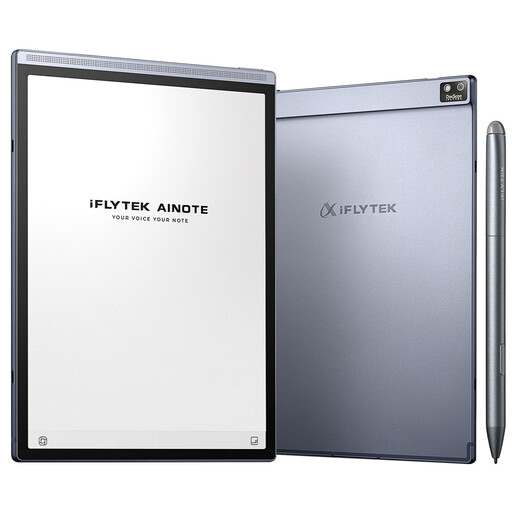 No image available
An option if you’re looking for a larger E Ink screen and a stylus. Try your own PDF to check whether the size and controls work for you.
The product name lists an 8.2-inch screen and a stylus.
 No image available
The larger screen may be useful if you want more screen space and a note-taking feature. Try one of your own scans to assess readability.
The product name lists a 10.65-inch screen.
Not in the same way in Kobo’s PDF viewer: according to Kobo, you can zoom in and rotate the page, but you can’t change the text size or highlight text. Try one of your own scans to see whether zooming in is enough.
Kobo explains how to transfer unprotected PDF and EPUB files using a computer. For DRM-protected files, check the relevant transfer method and try opening your files at home first.
Don’t assume so. Kobo warns that its waterproof models are not dustproof or sandproof, and recommends drying the USB port before connecting the charger. Don’t charge it near water.
No, not every collection is available that way. The KB states that its collection of letters can only be consulted in the Special Collections Reading Room. Also check the specific terms of use for the material you want to take with you.
No. Material on KB.nl is subject to copyright terms of use, and sometimes additional conditions. Check the terms for the specific source before downloading or sharing material.