If reflections or background noise are an issue in your small booth and you can speak close to the microphone, a dynamic mic is a sensible option to compare. A short test recording is still important, as microphone placement affects what you hear. If the booth is quiet and you want to record without a separate interface, consider a compact USB condenser microphone and check that it suits your device and workspace. Choose USB/XLR or XLR-only mainly if you’re actually going to use the extra connection option.
Who is this choice relevant to?
Recordists who can hear the booth in their recordings
If you record short audio cards and can hear reflections or background noise, look for a microphone that you can use close to you and in a fixed position. RØDE advises placing the microphone close to the speaker, as too much distance can make the voice sound more distant and bring reflections and background noise to the fore.
Creators who want to record straight to a computer
If you make lots of short recordings, you may value a simple USB connection and a setup that fits into your limited workspace. Also check that the microphone is compatible with the device you plan to use.
Creators who want to check their recordings as they go
If you want to listen to your pronunciation and recording level while speaking, look for direct headphone monitoring. If you plan to use an interface later, the available connection is also worth considering.
What should you look for when choosing?
Dynamic microphone
When to choose it: if reflections or background noise are an issue and you can maintain a consistent, short speaking distance.
Trade-off: the microphone won’t make the booth quiet; also check that the stand or boom arm fits your available space.
USB condenser microphone
When to choose it: if the booth sounds quiet and you want to record directly to a compatible computer.
Trade-off: test the microphone in the intended position and check that the cable, stand and device compatibility suit your setup.
| Factor to consider |
What should you check? |
Who is this most important to? |
| Booth acoustics and background noise |
Make a test recording at the distance and in the position you intend to use; check that a stand or boom arm will fit there. |
I want to record short cards without the room’s sound overpowering my voice. Around 36% of consumers give booth acoustics and background noise top priority. |
| Connection and setup |
Check compatibility, the cable and the space needed for the stand. Recording to a computer via XLR requires a suitable interface or mixer. |
I want to record quickly on my computer without extra equipment or a complicated setup. Around 29% of consumers prioritise an easy connection. |
| Direct monitoring |
Check whether the microphone offers direct headphone monitoring and whether you can mix in computer audio if needed. |
I want to hear a pronunciation mistake or unwanted noise straight away while recording cards. Around 21% of consumers choose with this monitoring feature in mind. |
| A future XLR setup |
Check whether the model has USB and XLR, and what extra equipment and accessories your XLR setup will need. |
I want to use an interface or mixer later without having to choose a different microphone. Around 14% of consumers prioritise this upgrade option. |
Common buying mistakes
-
Assuming a small booth will automatically sound quiet
Placing the microphone too far away can make reflections and background noise more noticeable.
Make a test recording in the intended position and at the intended speaking distance before choosing a microphone type based only on the size of your booth.
-
Treating an XLR microphone like a USB microphone
Recording to a computer via XLR requires a suitable audio interface or mixer to convert the signal.
Choose USB if you want to get started without an interface; choose an XLR or hybrid model if you’ve already planned the connection and the equipment you’ll need.
An XLR setup may require a suitable interface or mixer, as well as any additional connections or mounting equipment.
-
Assuming every version includes a stand or boom arm
Accessories vary by model and version; a desk stand is not the same as a boom arm.
Check what’s included with the exact version and compare it with the space available in your booth.
If a suitable holder or boom arm isn’t included, you may need to use a separate mounting solution.
Brands to compare
Samson
The Q2U is a dynamic USB/XLR microphone for close-up speaking, with the option of recording to a computer via USB or using an XLR setup later.
- Samson lists direct headphone monitoring, along with a windscreen, desktop tripod and cables in the box.
- Samson’s claims about reduced ambient noise are manufacturer claims, not measurements taken in your booth; keeping the microphone at a suitable speaking distance is still important.
RØDE
The NT-USB Mini is a compact USB condenser microphone for a simple setup on a desk or boom arm.
- RØDE lists a removable desktop stand, built-in pop filter and headphone output.
- Check the cable and compatibility with your intended device; some tablets and phones require additional connection accessories.
Audio-Technica
The AT2020USB-X is a USB condenser microphone for anyone who wants to mix their voice with computer audio while recording.
- Audio-Technica lists direct headphone monitoring, a mix control and a desktop stand in the box.
- An optional shock mount is not the same as an included accessory; the listed features don’t predict how the microphone will perform in a particular booth.
Shure
The MV7+ is a dynamic USB-C/XLR model for anyone who wants multiple connection options and adjustable digital features.
- Shure lists headphone monitoring and app features.
- The standard package described doesn’t include a stand. Shure’s claims about voice isolation and noise reduction are manufacturer claims; assess the recording in your own space.
Sennheiser
The Profile USB is a USB-C condenser microphone for a desktop setup, with controls on the microphone itself.
- Sennheiser lists gain, mix and headphone volume controls, a mute button and a desktop stand.
- The standard version is a USB model; the separately listed Streaming Set with boom arm is a different version.
Microphones for voice recordings
These Joybuy product picks are suited to recording spoken flashcards; check that each model’s connections and setup suit your booth and device.
 No image available
DJI Mic Mini 2S (2 TX + 1 RX + Charging Case)
The product name describes a set with two transmitters, one receiver and a charging case; the product description mentions PC compatibility and internal recording.
The product description mentions a compact clip-on microphone. Check that the intended attachment and recording setup suit the way you plan to use it.
Joybuy
 No image available
USB condenser microphone with cardioid polar pattern
The product name specifies a USB condenser microphone with a cardioid polar pattern.
The product description mentions headphone monitoring via a 3.5mm connection. Check that the included boom arm, shock mount and pop filter suit the space you have available.
Joybuy
 No image available
HyperX SoloCast 2 USB Gaming Microphone
The product name and description specify a USB microphone with a cardioid polar pattern for desktop use.
The product description lists a compact adjustable stand with a stable base, a pop filter and a mute function. Check that the stand fits your workspace.
Joybuy
 No image available
Razer Seiren V3 Mini Quartz USB Microphone
The product name specifies a compact USB microphone with a tap-to-mute function.
The product description mentions a supercardioid polar pattern. Check that your intended speaking position suits the way you’ll place it in your booth.
Joybuy
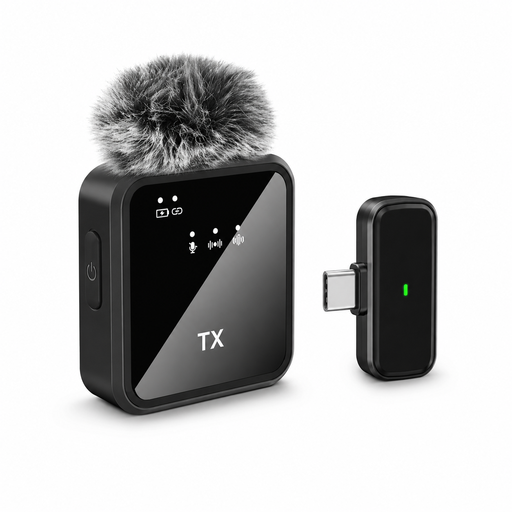 No image available
Verbex ST5 Single-Mic Lavalier Microphone
The product name describes a single small lavalier microphone for a portable recording setup.
Before buying, check that the connections are compatible with the device you want to use to record your flashcards.
Joybuy
Frequently asked questions
How should I set up a microphone for short voice recordings?
Start with the microphone in a fixed position close to your mouth, then make a test recording at your normal speaking volume. RØDE says that placing it too far away can make your voice sound more distant and bring reflections and background noise to the fore; the right distance also depends on the type of microphone.
Do I need an extra device for an XLR microphone?
To record to a computer via XLR, you’ll need a suitable audio interface or mixer to convert the analogue signal. If it’s compatible, a USB microphone can connect directly to a suitable device.
What should I look out for to avoid recording mistakes?
Before recording a batch of cards, check the microphone position and listen to a test recording. A windscreen or pop filter can help with plosive sounds; check what’s included with the version you choose and keep your speaking position consistent.
What can I do if a microphone I bought online isn’t suitable for my booth?
For a standard online consumer purchase in the Netherlands, you generally have a statutory 14-day cooling-off period from the day after delivery; ACM ConsuWijzer lists some exceptions. If a product is faulty, the seller is responsible for the statutory guarantee. This is separate from the cooling-off period.
Can I record someone else’s voice and use it for flashcards?
If you record identifiable voices and process the resulting personal data as an organisation, the Dutch Data Protection Authority says you need a lawful basis under the GDPR. Consent is one possible lawful basis, but not automatically the only one; which rules apply depends on how the recording is used and who is involved. This does not create a general requirement to get consent for recordings made solely for your own private use.


