In a room with noticeable echo, a dynamic USB microphone that you can position close to you is a sensible first option. In a quiet space, you could also compare it with a cardioid condenser USB microphone. Record a voice sample in the same spot, and check the monitoring, compatibility and included stand or pop filter too: neither type will remove room echo on its own.
Who is this choice relevant to?
Narrator in an echoing room
Records at a fixed spot at home and wants to reduce the room sound in the voice recording by positioning the microphone close. Shure explains how the distance from the speaker affects the balance between direct voice and reflections.
Narrator with a quiet recording space
Can keep the recording environment quiet and wants to assess vocal nuance and clarity without overlooking the room's acoustics.
Creator of several narration clips
Wants to listen back between recordings and adjust levels, and check which components are needed for a practical desk setup.
What should you look for when buying?
| What to consider |
What should you check? |
Who is this important to? |
| Room sound |
Record a voice sample in the spot you plan to use and check whether you can position the microphone close and keep it steady. |
If I record narration in an echoing room, I want to know whether a fixed position close to me will make my voice clearer. Around 36% of consumers give reducing room sound their highest priority. |
| Vocal detail |
Record the same passage in the same spot and listen for consonants, breathing, plosive sounds and room sound. |
In a quiet space, I want to compare vocal nuance and clarity without forgetting the effect of the room. Around 29% of consumers prioritise vocal detail. |
| Recording control |
Check what headphone output, monitoring and mix controls the model offers. |
If I record several narration clips, I want to be able to listen back between takes and check the levels. Around 21% of consumers put monitoring during recording first. |
| Complete setup |
Check the system requirements and whether the model comes with a desk stand, arm or pop filter. |
If I want to get started easily, I want to know in advance whether the microphone is compatible with my device and suits the way I plan to position it. Around 14% of consumers give having a complete setup their highest priority. |
Buying pitfalls
-
Expecting noise processing or a directional pickup pattern to fix echo
Even a directional microphone picks up reflections from the room. The distance from the speaker affects how much direct voice you hear compared with those reflections.
Start by recording a test in the room where you plan to speak. Compare a steady position close to you with your usual position.
-
Assuming USB and XLR connections offer the same processing
According to Shure, DSP processing on the Shure MV7+ is available via USB, but not through the XLR output.
For each model, check which features work through the connection you plan to use.
Using a different connection may mean setting up your settings or recording chain again.
-
Looking only at the microphone and not at what’s in the box
Different versions in a product range may come with different mounting accessories. RØDE lists a desk stand and pop filter with the NT-USB+; Sennheiser distinguishes between the Profile version with a desk stand and the Streaming Set with an arm.
Compare the box contents with the spot and position you plan to use for recording.
If there’s no arm, suitable stand or pop filter included, you may need to add one to your setup.
Brands to consider
RØDE
The PodMic USB is a dynamic USB/XLR option for close-up recording; the NT-USB+ is a cardioid condenser USB model.
- RØDE lists a headphone output and digital processing features for both models.
- These features don’t prove that the processing removes room echo. RØDE lists a desk stand and pop filter with the NT-USB+; check what’s included with the version you choose.
Shure
The MV7+ is a dynamic USB/XLR microphone for close-up voice recording.
- Shure lists automatic level control and digital processing for noise and plosive sounds as features.
- According to Shure, DSP processing on the USB output isn’t available via XLR. The listed features won’t automatically remove the effect of the room’s acoustics.
Sennheiser
The Profile USB is a cardioid condenser microphone with controls for gain, mix and headphone volume.
- The controls are on the microphone, and versions are available with either a desk stand or an arm.
- The Profile and Profile Streaming Set differ in what’s included in the box. Also check that your recording device meets the system requirements.
Audio-Technica
The AT2020USB-X is a cardioid condenser USB microphone for anyone who wants to mix their voice with computer audio.
- Audio-Technica lists a headphone socket, mix control and touch-sensitive mute button.
- These features alone don’t tell you whether your room’s acoustics are suitable for recording.
Razer
The Seiren V3 Mini is a compact USB condenser microphone with a supercardioid pickup pattern and tap-to-mute control.
- The manufacturer describes these features for uses including gaming, streaming and calls.
- These uses alone don’t show whether the model meets the requirements of a specific museum production.
USB microphones at Joybuy
These Joybuy products are intended for USB voice recording with a cardioid condenser microphone. Check each product’s version and whether its listed features suit your recording space.
 No image available
Cardioid USB condenser microphone
An option to compare if you’re recording voice narration in a quiet space.
View at Joybuy
 No image available
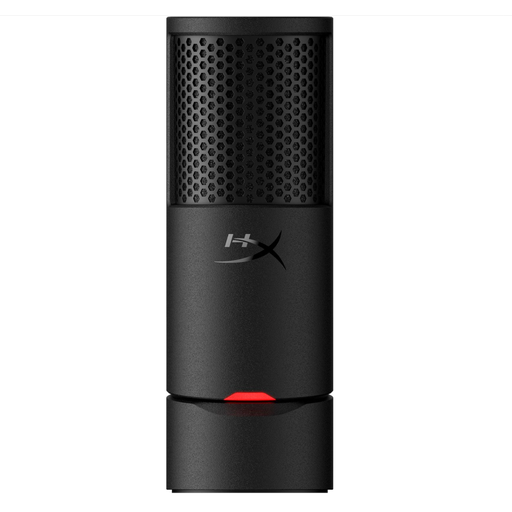
HyperX SoloCast 2 USB microphone
A USB option to consider for a desk setup for spoken narration.
The product is described as a cardioid USB microphone and is black.
View at Joybuy
 No image available
Razer Seiren V3 Mini Quartz
A compact USB option to compare for a desk setup.
The product name highlights an ultra-compact design and tap-to-mute control.
View at Joybuy
Frequently asked questions
Should I always choose a dynamic microphone if my room echoes?
No. Start by comparing a short voice sample recorded in the same spot. Shure explains that greater distance from the speaker can worsen the balance between direct voice and room reflections, so positioning the microphone close is worth trying, whatever the model.
How can I avoid having to re-record long narration scripts?
First check that your recording device recognises the microphone, set the level and listen back to a short test using suitable headphones. According to the manual, you can adjust gain, mix and headphone volume on the Sennheiser Profile, among other things; the exact steps depend on the model you choose.
What can I do about plosive sounds or an inconsistent vocal tone?
Try a pop filter and keep your speaking position consistent during the test recording. Shure explains that speaking very close to a directional microphone can produce more bass, so try listening from different positions before recording a long script.
Can I use an existing museum text or music in a public audio tour?
Not automatically. According to the Dutch Government, you generally need permission to use other people’s copyright-protected texts or music. You can’t distribute or make a private copy available to the public, so check the rights for the specific text and audio before publishing.
What return and warranty rights apply to an online purchase in the Netherlands?
For an online purchase, you generally have a statutory 14-day cooling-off period after delivery, with some exceptions. ACM ConsuWijzer also clarifies that the legal guarantee is separate from any manufacturer’s guarantee offered. If a product proves faulty under normal use, the seller is your point of contact for an appropriate solution.


