If you can hear ventilation, computer noise or reflections, a directional dynamic USB model is a sensible first option to compare, provided you can speak close to the microphone. In a quiet, treated booth, you could also consider cardioid condenser models. The Acoustical Society of America identifies mechanical noise and vocal reflections as potential recording problems. So, make a test recording in your own booth: neither type of microphone can replace acoustic treatment, and monitoring, pop protection and any plans to use XLR may affect your choice.
Who is this choice relevant to?
Voice-over artist with audible booth noise
You can hear ventilation, computer noise or reflections in your recordings, and you can speak close to the microphone. The Acoustical Society of America identifies this kind of mechanical noise and vocal reflections as potential recording problems.
Voice-over artist with a quiet, treated booth
You can make test recordings in a quiet space and want to decide which vocal sound suits your documentary. RØDE and Sennheiser describe condenser models as options for recording speech; the best choice comes down to listening in your own space.
Voice-over artist who wants to monitor audio in real time
You want to check your voice and the playback through headphones while recording longer scripts. The models mentioned differ in the controls and monitoring options described by their manufacturers.
What should you look for when buying?
Directional dynamic USB microphone
When to compare: if you can hear booth noise and speak close to the microphone. Shure and RØDE offer models with USB and XLR; Audio-Technica describes the AT2040USB as having a hypercardioid pickup pattern.
Trade-off: speaking distance and positioning still matter; a directional pickup pattern does not guarantee a noise-free recording.
Cardioid condenser USB microphone
When to compare: if a test recording confirms that your booth is quiet and sufficiently treated, and you want to assess the vocal sound of a condenser model. RØDE and Sennheiser describe the NT-USB+ and Profile USB, among others, as options for this purpose.
Trade-off: even with a cardioid pickup pattern, booth noise and reflections may still be audible.
| Factor to consider |
What to look for |
Who should pay particular attention? |
| Booth noise and reflections |
Check the pickup pattern and positioning options; record both silence and a full passage in your own booth. |
If I can hear ventilation, computer noise or reflections, I want to know what the microphone picks up where I speak. Around 36% of consumers prioritise controlling booth noise above all else. |
| Vocal sound you want |
Compare a passage with soft and powerful speech, keeping recording and playback levels the same. |
If my booth is quiet and treated, I want to decide for myself which vocal sound suits the narration. Around 29% of consumers prioritise the vocal sound they want. |
| Headphone monitoring |
Compare the headphone output, volume control and any monitor mix; check that the controls are within reach where you speak. |
When recording longer scripts, I want to monitor my voice as I speak and have the controls within easy reach. Around 21% of consumers prioritise direct monitoring above all else. |
| Set-up and expandability |
Check the exact version, included mount and cable, and which features work over USB or XLR. |
If space is limited or I may want to use a different connection later, I want to know in advance what my set-up will need. Around 14% of consumers prioritise ease of set-up or future expandability. |
Common buying mistakes
-
Expecting a directional microphone to silence a noisy booth
Mechanical noise and vocal reflections may still be audible; a microphone cannot improve the room’s acoustics. The Acoustical Society of America identifies these sounds as potential recording problems.
Make a test recording from your usual speaking position and adjust the distance and angle. Deal with audible noise sources or reflections before attributing the result to the microphone model.
-
Assuming USB and XLR connections offer the same features
Shure says that the specified DSP features, including Auto Level, are not applied to the MV7+’s XLR signal. RØDE says its software does not recognise a PodMic USB connected via XLR only as a USB device.
Choose a connection that suits your recording set-up and check which features are available with that connection.
An XLR set-up also requires a suitable audio interface or mixer.
-
Assuming a microphone arm or extra isolation shown in a picture is included as standard
The Profile USB and Profile Streaming Set have different items included in the box. Audio-Technica sells the optional AT8458a shock mount separately.
Check the exact version and what’s in the box, and make sure the included mount suits your speaking position.
You may need a separate arm or shock mount for the set-up you want.
Brands to consider
Shure
The MV7+ is a dynamic USB-C and XLR option for anyone who works close to the microphone and may want to use an audio interface later.
- Shure lists direct headphone monitoring, Auto Level and digital processing over USB.
- Shure says Voice Isolation helps reduce background noise; this is not an independently verified result for your booth. The specified DSP features do not work on the XLR signal.
RØDE
The dynamic PodMic USB offers USB and XLR; the NT-USB+ is a cardioid condenser model to compare in a quiet, treated recording space.
- RØDE says both models offer direct headphone monitoring. The PodMic USB has internal and supplied external pop protection; the NT-USB+ comes with a removable pop filter and desk stand.
- RØDE software does not recognise a PodMic USB connected via XLR only as a USB device. These model features are not a measured comparison of vocal quality.
Audio-Technica
The AT2040USB is a dynamic USB model with a hypercardioid pickup pattern, designed for a fixed speaking position.
- Audio-Technica specifies a built-in pop filter, shock-absorbing mount, USB-C output and direct headphone monitoring.
- The manufacturer says the directional pattern can help with background noise, but the results in a particular booth have not been independently verified. The optional AT8458a shock mount is sold separately.
Sennheiser
The Profile USB is a cardioid condenser USB microphone for a suitably quiet space, with on-device controls.
- Sennheiser specifies gain, mix and headphone volume controls, plus a desk stand included in the box.
- The Streaming Set is a separate version that includes an arm; don’t assume the standard set includes one. Make a test recording to check whether it suits your booth.
USB microphones at Joybuy
These product options are intended for USB voice recordings; compare their versions and features with the requirements of your own recording booth.
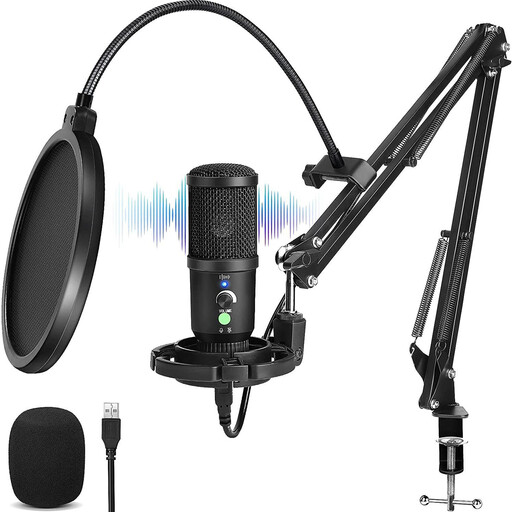 No image available
Cardioid USB condenser microphone
Worth comparing if you’re looking for a condenser microphone for voice recording in a quiet, treated booth.
The product title lists a USB connection, cardioid pickup pattern and zero-latency monitoring.
View at Joybuy
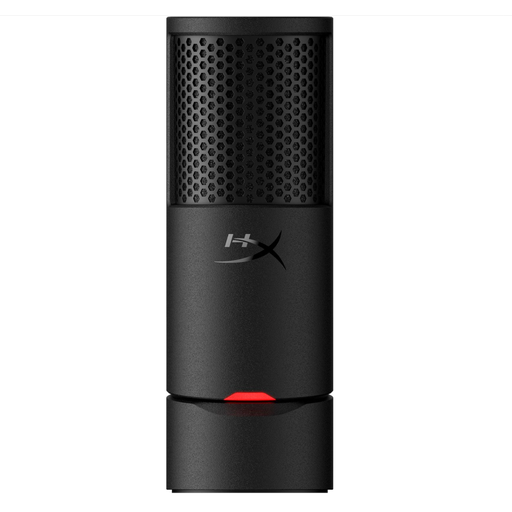 No image available
HyperX SoloCast 2 USB microphone, black
An option to compare for USB voice recordings; assess the results with a test recording in your own booth.
The product title lists a cardioid pickup pattern and a black finish.
View at Joybuy
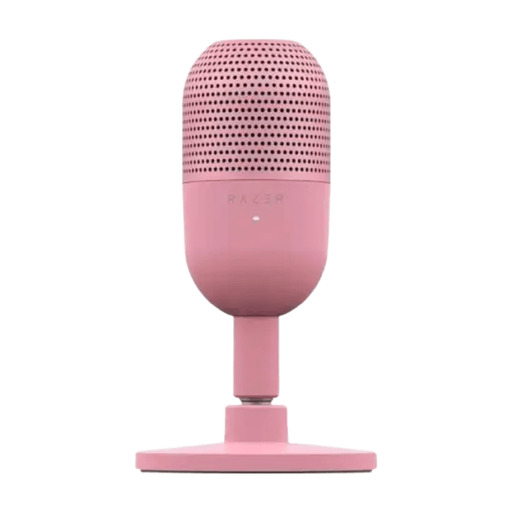 No image available
Razer Seiren V3 Mini Quartz USB microphone
This compact model may be worth considering if you have limited desk space for a USB microphone.
The product title lists an ultra-compact design and tap-to-mute control.
View at Joybuy
Frequently asked questions
How do you test the positioning of a USB microphone in a small booth?
Record both silence and a representative passage from your usual speaking position. Adjust the distance and angle, check for plosives with a suitable pop filter, and listen for any remaining ventilation noise or reflections. RØDE recommends trying different distances for each microphone and environment; a microphone cannot improve the room’s acoustics.
Do the digital features of a USB/XLR microphone work over XLR too?
Not necessarily; the available features depend on the connection and model. Shure says that features including Auto Level are not applied to the MV7+’s XLR signal. RØDE says its software does not recognise a PodMic USB connected via XLR only as a USB device. Before buying, check which features you can use with your intended connection.
What warranty applies to a personal purchase in the Netherlands?
When you buy as a consumer, you’re entitled to a product that works as it should, and the retailer is your point of contact if there’s a problem. According to the Dutch government, the Netherlands has no fixed statutory warranty period; any manufacturer’s warranty is in addition to your statutory rights.
Can you return a microphone bought online?
For a consumer distance purchase, a 14-day cooling-off period generally applies. The Dutch government says the retailer must tell you about the terms; check which conditions apply to your purchase.
What does a CE mark tell you about a USB microphone?
For products covered by applicable harmonised EU rules, the manufacturer uses the CE mark to declare that the product meets those requirements; the mark does not mean the recording quality has been independently assessed. Shure publishes an EU declaration of conformity for the MV7+ variants mentioned. Check the documentation for the exact version you’re considering.


