
First shop for your home
You’re looking for Dutch breakfast cake that suits what you actually eat at home. The pack size and how you store an opened pack are important considerations.


For regular use at home, a standard pack of Dutch breakfast cake that you can finish is a sensible place to start. If you mainly want individual portions to take with you, an individually wrapped option may be more practical. When comparing nutritional values, always check the labels per 100 g. Don’t assume that Dutch breakfast cake is a straightforward substitute for bread.
You’re looking for Dutch breakfast cake that suits what you actually eat at home. The pack size and how you store an opened pack are important considerations.
You choose Dutch breakfast cake as a sweet snack and want to compare the sugars, fibre and salt in different varieties per 100 g.
You want to take a slice or bar to school or work. In that case, portion size and suitable packaging matter more than a large pack for home.
First decide whether you’ll mainly eat Dutch breakfast cake at home or take it with you. Then compare pack sizes and nutritional information across varieties suited to how you’ll use it.
| What to consider | What to check | Who is this important for? |
|---|---|---|
| Amount for home | Check the net weight and choose a pack that suits how often you eat Dutch breakfast cake. | If I eat Dutch breakfast cake regularly at home, I want a pack I’ll actually finish. Around 36% of consumers put pack size for home use first. |
| Nutritional value | Compare sugars, fibre and salt per 100 g in the nutrition tables of similar varieties. | When choosing between varieties, I want to see what changes beyond the name on the pack. For around 29% of consumers, this comparison is their first concern. |
| Packaging and storage | Check whether the cake is pre-sliced and read how to store it after opening. | If I don’t eat Dutch breakfast cake often, I want to avoid leaving an opened pack unfinished. An estimated 21% of consumers put suitable packaging first. |
| Portions on the go | Check the number of portions and the weight of each piece; see whether they’re individually wrapped. | For school or work, I want to take something with me without having to wrap slices myself. For around 14% of consumers, convenient portions are the deciding factor. |
A description such as ‘less sugar’ doesn’t, by itself, tell you how a Dutch breakfast cake compares across all nutritional values. Varieties from the same brand can also differ in their sugar and fibre content.
Compare the nutrition tables per 100 g and focus on the characteristics that matter to your choice. Use any Nutri-Score only to compare similar products, not as a substitute for reading the label.
The Netherlands Nutrition Centre says that bread made with iodised baker’s salt is an important source of iodine in the Netherlands. That doesn’t mean that any Dutch breakfast cake provides the same amount of iodine.
Treat Dutch breakfast cake and bread as separate products. If you want to know whether a specific product contains baker’s salt, check the ingredients list.
A pack for home may not be the best fit if you only have a slice now and then or usually want to take a portion with you.
Choose a size that suits how you’ll use it, and follow the storage advice on the label once opened.
Flavour, packaging and nutritional information vary both within and between these ranges. So compare specific varieties rather than just brand names.
Peijnenburg offers plain, wholemeal, ginger and raisin varieties, as well as packs of individually wrapped slices.
Albert Heijn’s own brand includes a standard 600 g Dutch breakfast cake and other options, including pre-sliced varieties.
Jumbo’s own-brand range includes plain, pre-sliced and wholemeal Dutch breakfast cake.
PLUS sells a standard plain Dutch breakfast cake, as well as Korenlanders baker’s breakfast cake.
Tastino is the range name Lidl uses for its Dutch breakfast cake, alongside a separate zero variety.
These two products suit different ways of enjoying Dutch breakfast cake: individually wrapped portions for on the go and pre-sliced cake for home. Check the nutritional information on both packs before comparing varieties.
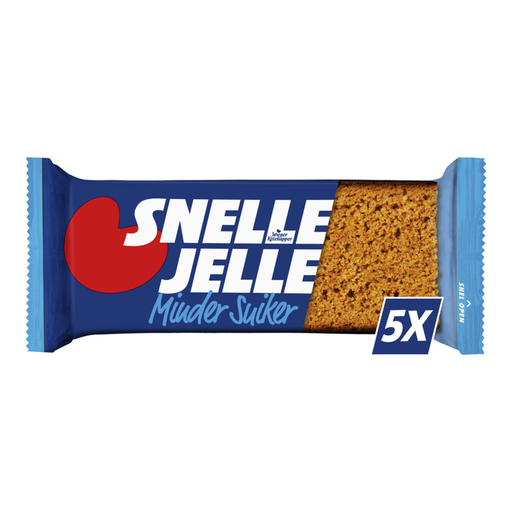 No image available
For anyone who wants individual portions of Dutch breakfast cake to take with them: the pack contains five individually wrapped 50 g bars. Check the nutritional information per 100 g and, if you have allergies, read the label.
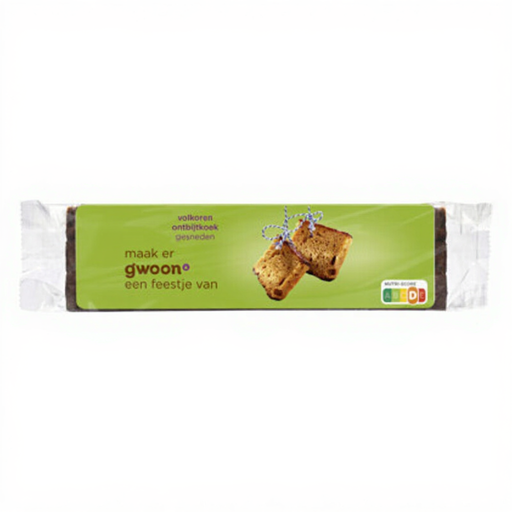 No image available
For anyone who wants pre-sliced Dutch breakfast cake at home. Compare the nutritional values per 100 g on the pack, and check the label carefully if allergens are important to your choice.
Choose a pack that suits how often you eat Dutch breakfast cake and whether you want to take slices with you. A pack for home also needs to be stored appropriately after opening; individually wrapped portions are most practical if you’ll make use of that convenience.
No. When comparing varieties of Dutch breakfast cake, also look at fibre and salt per 100 g. The nutrition table gives you more information than the variety name alone.
No, don’t assume that. The Netherlands Nutrition Centre specifically refers to bread made with iodised baker’s salt; check the ingredients list of the Dutch breakfast cake itself.
Follow the storage advice on the pack you buy. Albert Heijn recommends keeping its Bakkersontbijtkoek in a dry place and transferring it to a sealed tin after opening.