
Practising in a busy space
You want to listen back to your voice while other people are talking in the same room. Making a test recording there will help you assess what the microphone actually picks up.


For short exercises that you’ll mainly listen back to, choose a headset with an adjustable microphone boom and a connection that works with your recording device. If background speech is your biggest challenge, assess a test recording made in the shared space; noise cancellation for calls doesn’t prove that the signal will remain suitable for vowel analysis. A headset also won’t automatically prevent other people’s recognisable voices from being recorded.
You want to listen back to your voice while other people are talking in the same room. Making a test recording there will help you assess what the microphone actually picks up.
You compare vowel recordings or examine formant contours, and want to see what the recording chain does to the signal.
You often record short exercises and are looking for a suitable connection, a consistent microphone position and a comfortable way to listen back.
Start with your recording device and the purpose of your practice: for listening back, the microphone needs to work as an input source, while vowel analysis requires you to assess the recorded signal itself.
| What to consider | What to look for when buying | Who should consider this most? |
|---|---|---|
| Background speech | Make a test recording in the shared space and check which signal processing is active. | If I practise while other people are talking, I want to listen back to my own voice without assuming theirs will disappear. Around 36% of consumers rank reducing background speech as their top priority. |
| Vowel recording | Check the input source and input level; compare the same series of vowels under the same conditions. | If I compare vowels, I want to know what happens to my recording before assessing contours or differences. Around 29% of consumers prioritise suitability for vowel assessment. |
| Connection | Check the exact USB-A, USB-C or 3.5mm TRRS connection, and whether the device recognises the microphone as an input. | If I record on my own computer or another device, I want both the microphone and headphones to work via the connection I’ve chosen. Around 21% of consumers make device compatibility their top priority. |
| Comfort and ease of listening | Check the fit, whether the microphone boom is adjustable, and whether you can listen back to your recording through the headset. | When doing repeated short exercises, I want to wear the headset comfortably and listen to my recording straight away. Around 14% of consumers give comfort and ease of listening the highest priority. |
Manufacturers mainly describe noise reduction in relation to calls. That doesn’t prove the recording will remain suitable for assessing vowel characteristics; Praat, from the University of Amsterdam, can display recorded speech and formant contours.
Record the same exercise in the shared space and assess separately how intelligible your voice is and whether the recording is suitable for comparing vowels.
A connection that physically fits doesn’t guarantee that the device will recognise the headset as the correct recording source. USB versions vary; the supplied TRRS cable is required for the microphone on the RØDE NTH-100M.
Check the exact model, ports and any splitter. Then make a test recording and check that the intended input and output devices are selected.
A recognisable voice in a recording may contain personal data. The Dutch Data Protection Authority makes clear that the assessment also depends on how the recording is used.
Listen back to your test recording, avoid recording other people unnecessarily, and check the rules that apply to storing or sharing the recording.
The wired Evolve2 30 SE is an option for computer use; the connection and version vary by model.
The H390 is a wired computer headset with an adjustable microphone boom; USB-A and USB-C versions are available.
The NTH-100M combines over-ear headphones with a detachable headset microphone.
The Blackwire 3220 USB-A is a wired stereo on-ear headset in a specified USB-A version.
The IMPACT 100 range is designed for calls and includes mono and stereo versions.
This selection includes wired and wireless headsets with microphones. Above all, check that the connection and microphone setup work with your recording device.
 No image available
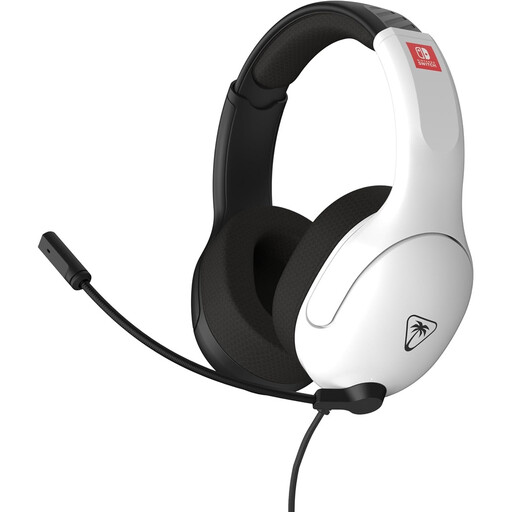
Worth considering if you’re looking for a wired headset with a microphone; check that the 3.5mm connection works with your recording device.
3.5mm connection; flip-to-mute microphone; the product name lists Nintendo Switch, Switch Lite and Switch OLED.
 No image available
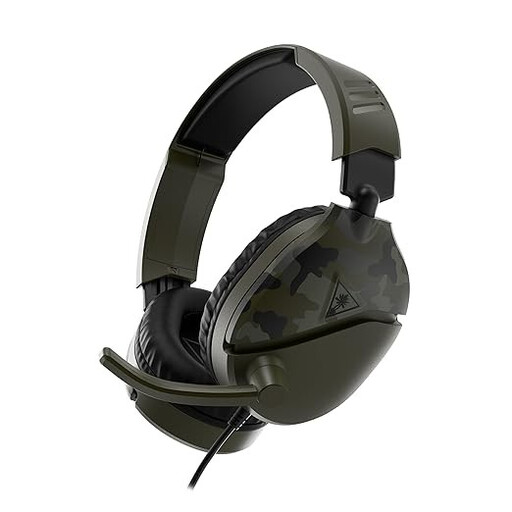
This wired version may suit you if you’re looking for a 3.5mm headset; first check whether your recording device recognises the microphone as an input.
3.5mm connection; flip-to-mute microphone. The product name lists PC, PS5, Switch 2 and Xbox Series X|S.
 No image available
An option with USB-A to consider if you record on a computer and want a wired connection; check that your device recognises the headset as an input source.
USB-A; two microphones; 28mm speakers; noise cancellation; in-line controls; adjustable headband and memory foam ear cushions.
 No image available
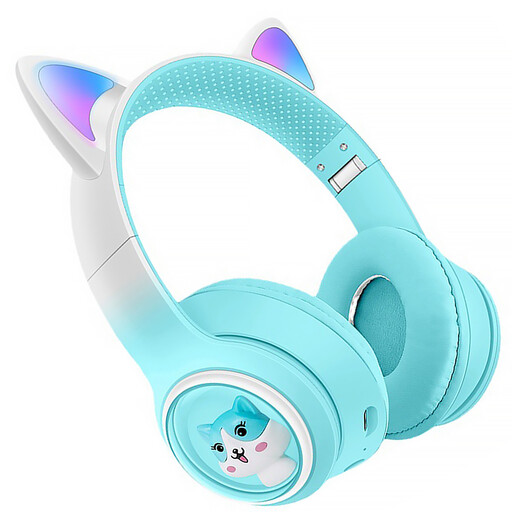
A wireless option to consider if Bluetooth works with your setup; check whether your recording device can use this microphone as an input source.
Bluetooth 5.3; built-in microphone; adjustable headband; soft ear cushions.
 No image available
A wired USB option to consider if you can select the microphone in your recording setup; check the result with a test recording.
USB connection; cardioid microphone; memory foam ear cushions.
Select the intended input source in your recording settings and make a short test recording. According to the Praat documentation, you can choose the input device and input level, depending on your system.
No, it depends on the combination of headset, phone and app. Jabra says that not every USB-C device or app supports the audio connection for the Evolve2 30 SE, so check the exact combination.
Adjust the headband and microphone boom, then check the position before each recording. Record the same exercise again and listen back; keeping the microphone in a fixed position won’t automatically prevent background speech from being recorded.
Not automatically. Manufacturers describe noise reduction for calls, but that doesn’t show that the processed signal is suitable for vowel analysis. Compare a test recording and assess the signal itself.
A recognisable voice may contain personal data; the assessment depends on the situation and how the recording is used. The Dutch Data Protection Authority explains that processing covered by the GDPR requires a lawful basis. Avoid unnecessary recordings and check the rules before storing or sharing material.