If you practise at a computer, choose a headset with a microphone and a connection that suits your device. That way, you won’t need a separate microphone stand on your desk, and you can listen back to your own voice. Choose mono if you want to keep one ear free, or stereo if you prefer to listen through both earcups. A claim about clear calls doesn’t prove that vowel differences will be recorded more accurately.
Who is this buying guide for?
Dutch as a second language learner who listens back to recordings
You listen to Dutch vowels, repeat them and compare your own recording with an example. The Dutch pronunciation training programme SpreekTour describes listening, repeating and feedback as separate practice steps. Research into listeners with different language backgrounds shows that some vowel contrasts can be more difficult than others.
Learner with a small desk
You want to speak and listen through one headset without making room for a separate desk microphone. The USB headsets described here combine earcups and a microphone in one device.
Learner who wants to keep one ear free
You want to play recordings while still hearing your own voice or your surroundings directly. Check whether a mono version is available; some models come in separate mono and stereo variants.
What should you look for when buying?
Wired USB stereo headset
Choose this if: you want to hear listening examples and your own recordings through both ears.
Bear in mind: how the cable runs across your desk, and that you’ll hear your unamplified voice less directly.
Wired USB mono headset
Choose this if: you want to keep one ear free while listening back to recordings.
Bear in mind: the exact mono and USB variant; you won’t be listening through two earcups.
Separate desk microphone and headphones
Choose this if: you specifically want a separate recording setup and have room for it.
Bear in mind: the microphone takes up desk space, and you’ll need to choose where to place it and how to connect it.
| What to consider |
What should you check? |
Who is this important for? |
| Recording and listening back to your own vowels |
Make a test recording with your practice programme and listen back to several pairs of vowels. Check whether the microphone is adjustable and where the mute control is. |
If I want to compare my pronunciation with an example, I need to be able to hear my own recording clearly. Around 33% of consumers prioritise recording and listening back. |
| Limited desk space |
Check where your computer’s port is and whether the cable, controls and storage space will fit comfortably. |
I want to speak and listen without a separate microphone stand taking up space on my small desk. The figure is around 27% among consumers who mainly want to keep their desk clear. |
| Connection and recording settings |
Compare the exact USB-A, USB-C or USB-C/A version with your device. After connecting, check the input setting and app permissions. |
When I connect my headset, I want my computer and practice app to recognise the microphone. Around 20% of consumers prioritise device compatibility. |
| Listening in mono or stereo |
Check the wearing style of the exact item and whether you want to keep one ear free while listening back. |
I want to choose whether to keep one ear free or listen through both earcups. Around 20% of consumers mainly consider this listening style. |
Common buying mistakes
-
Mistaking clear calls for proof of accurate vowel recordings
Manufacturers mainly describe these headsets as suitable for calls. That doesn’t tell you how well a particular headset captures Dutch vowel contrasts in your practice app.
Make a test recording with your own practice app and check whether you can hear the differences clearly when you play it back.
-
Ordering based on the model name alone
Headset ranges can vary in USB connection and wearing style. A particular version may therefore be unsuitable for your device or preferred way of listening.
Check the full product number, plug and mono or stereo version against your device and preferred listening style.
-
Forgetting how the cable will run across a small desk
A headset doesn’t take up space with a separate microphone stand, but the cable and controls still need to fit into your workspace.
Before choosing, check where your computer port is, where you sit and how the cable will run.
Relevant brands to consider
Logitech
The H390 is a wired USB headset for speaking and listening at a computer. On the Dutch product page, USB-A and USB-C are listed as separate options.
- Logitech says the H390 has an adjustable microphone boom and in-line controls. According to the manufacturer, the USB-A version has a 1.9 m cable.
- Check which plug comes with the version you choose. A claim about clear calls isn’t an independent assessment of vowel recordings.
EPOS
The PC 8 USB is a stereo USB headset for PC and Mac, with a microphone and in-line controls.
- For item number 1000432, EPOS lists a unidirectional microphone and volume and mute controls.
- Check the plug on the version being offered and make a test recording for your own vowel practice.
Jabra
According to Jabra, the Evolve2 30 SE comes in separate mono and stereo variants, as well as different USB versions.
- The manufacturer’s data sheet lists a 1.5 m USB cable and different item numbers for each connection and wearing style.
- Check that you’re choosing the SE, mono or stereo variant, and the right UC or Teams version. Manufacturer claims about calls and concentration aren’t independent pronunciation tests.
HP Poly
The Blackwire 3320 is a wired stereo headset. According to HP, the Dutch version 8X220AA has a USB-C cable and a USB-A adapter.
- For this version, HP lists a flexible microphone boom and mute and volume controls.
- Check the full model number and the connections included with the version you’re considering.
Headsets at Joybuy
A selection of Joybuy products for speaking and listening back through a headset with a microphone. Check the connection and wearing style for each version.
 No image available
Logitech PC 960 USB wired headset
Worth considering if you’re looking for a wired USB headset that lets you speak and listen at your computer.
View at Joybuy
 No image available
Logitech H340 USB headset, black and wired
Worth considering if you want to use a wired USB headset for speaking and listening; check that the version is compatible with your computer.
View at Joybuy
 No image available
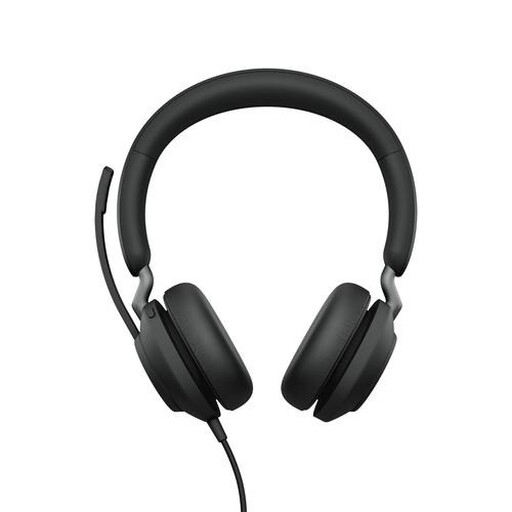
Jabra Evolve2 65 USB-A Black MS Mono
Worth considering if you want to keep one ear free while listening back to recordings. Check that the USB-A version is compatible with your device.
View at Joybuy
 No image available
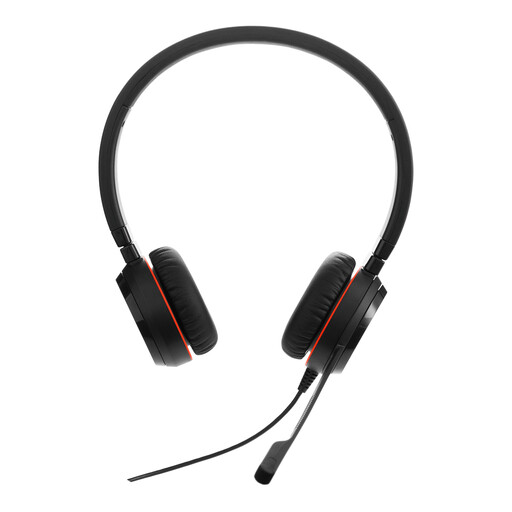
Jabra Evolve 30 II MS Stereo
Worth considering if you’re looking for a stereo headset for speaking and listening. If your device has separate audio and microphone ports, you may need a splitter; according to the product information, one isn’t included.
View at Joybuy
 No image available
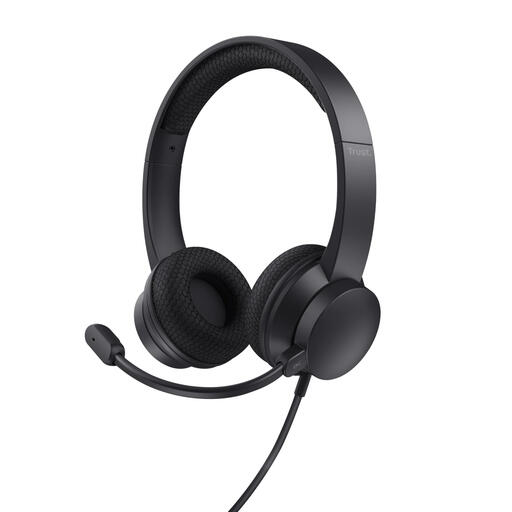
Trust Ayda USB Type-A headset
Worth considering if you’re looking for a wired USB Type-A headset that lets you speak and listen through one device.
View at Joybuy
Frequently asked questions
How can you check whether the headset records your vowel practice?
On a Windows computer, select the headset as the audio input, start the microphone test, say pairs of vowels and play the recording back. Also check that your practice app has permission to use the microphone. This tests your own setup, not the recording quality of headsets in general.
Where should you position the microphone?
Position the microphone boom near your mouth and make a test recording. Shure recommends positioning its SM35 microphone near the corner of the mouth to reduce popping sounds; this product-specific guidance isn’t a required distance for other headsets.
Do you need extra software or a subscription to listen back to your own voice?
For a simple microphone test in Windows, Microsoft explains how to record and play audio through the sound settings. Check separately whether any features in your chosen pronunciation app require payment.
What cooling-off period and guarantee apply to a consumer purchase in the Netherlands?
According to ACM ConsuWijzer, online purchases generally come with a 14-day cooling-off period from the date of delivery, with exceptions including certain unsealed hygiene products. Check the applicable terms before opening the packaging. You’re also entitled to a legal guarantee if a product doesn’t meet what you could reasonably expect under normal use; a manufacturer’s guarantee doesn’t replace this right.


