What should you look for when choosing?
Closed-back and wired
Best suited to when: you usually practise in one place and your device has a suitable audio output.
Bear in mind: the cable limits your freedom of movement; also check the fit and speech reproduction of each model.
Closed-back and wireless with ANC
Best suited to when: background noise distracts you, or you want to switch between playback devices. Sony and JBL describe ANC and an ambient sound mode on the models mentioned.
Bear in mind: ANC doesn’t prove better vowel recognition; compare speech, fit and battery life in the mode you use.
Open-back and wired
Best suited to when: you practise in a quiet, private space and don’t need to block out background noise.
Bear in mind: an open-back design won’t block out distracting noise, and other people may be able to hear your audio.
The Consumentenbond assesses speech reproduction separately from music. So listen to your practice clips yourself and consider where you’ll be listening, as well as comfort and connectivity.
| Concern |
What to look for when buying |
Who is this most important for? |
| Speech and vowel differences |
Listen to the same short clips from several speakers at a comfortable, consistent volume; assess speech separately from music. |
When I replay recordings, I want to compare vowels clearly without confusing a marketing claim with a listening test. Around 36% of consumers give the highest priority to intelligible speech and vowel differences. |
| Distracting background noise |
Test the recording in your usual surroundings and check whether you still need to hear background noise. |
When I practise in a noisy room, I want to hear the clips clearly without turning up the volume. Around 29% of consumers prioritise dealing with distracting noise. |
| Comfort when replaying clips |
Check the pressure around your ears and, if you wear glasses, around the arms during a listening session of a similar length. |
When I replay clips a lot, I want my headphones to stay comfortable, even with my glasses on. Around 21% of consumers give wearing comfort the highest priority. |
| Connectivity and controls |
Check whether your device supports the cable or Bluetooth connection you’ve chosen, then test play, pause and replay. |
When I switch between devices, I want to start and replay recordings easily, without connection problems. Around 14% of consumers prioritise connectivity and controls. |
Joybuy product picks
Below are wired and wireless listening options for replaying recordings. For each model, check that the connection, fit and level of background noise you want to hear suit your practice space.
 No image available
Sennheiser MOMENTUM 4 Wireless, Black, 60u Battery
An option for playing recordings via Bluetooth or a 3.5mm cable; check your device’s connection and test the speech reproduction for yourself.
The product information lists ANC, a transparency mode, EQ settings and controls via the touch panel on the ear cup.
View at Joybuy
 No image available
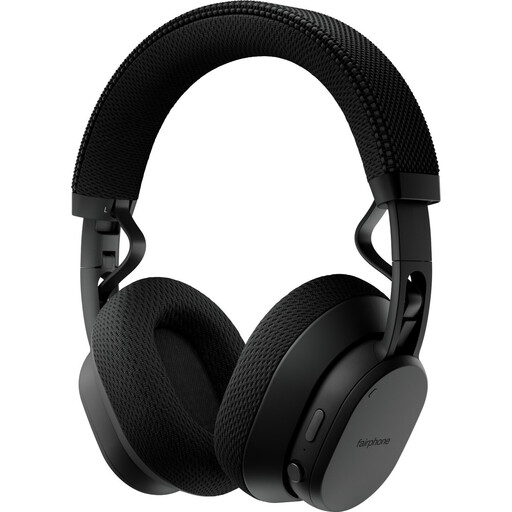
Fairphone Fairbuds XL 2025, Black
A wireless option for practising with recordings when you want to use ANC or an ambient sound mode; see for yourself whether the fit and speech reproduction work for you.
The product information lists a closed-back, over-ear design, hybrid ANC, an ambient sound mode, Bluetooth and multipoint. It also mentions a replaceable battery and mesh on the headband and ear cushions.
View at Joybuy
 No image available
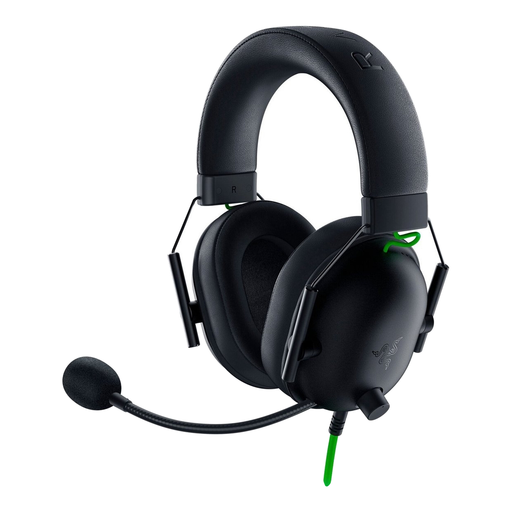
Razer BlackShark V2 X 7.1 Wired Gaming Headset, Black
A wired option for practising with a device that has a suitable 3.5mm connection; bear the cable in mind while listening.
The product information lists passive noise cancellation, a weight of 240 g and a 1.3 m cable.
View at Joybuy
 No image available
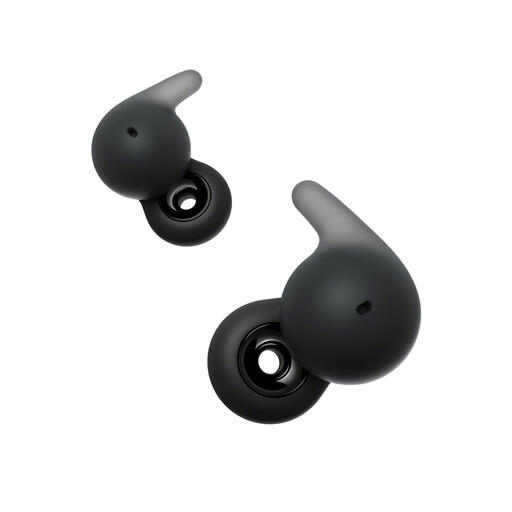
Sony LinkBuds Open, Black
An open-ear option if you want to remain aware of background noise while listening; the open design doesn’t block out external sound.
The product information lists Bluetooth, multipoint and a weight of 4.8 g per earbud.
View at Joybuy
 No image available
Bose QuietComfort Ultra Headphones (2nd Gen), Black
An option for listening to recordings wirelessly or with a cable, with ANC to use when background noise is distracting.
The product information lists Bluetooth, a detachable cable with a 3.5mm connection and active noise cancellation. No charger is included; the information specifies a compatible 1.8 W to 2.5 W charger and says PD fast charging isn’t supported.
View at Joybuy
Frequently asked questions
How can I compare different vowel recordings without continually turning up the volume?
Use the same short clips at a comfortable volume and check whether background noise or the recording itself is making them hard to understand. The World Health Organization recommends a good-fitting model and notes that noise cancellation can help reduce the need to listen at higher volumes in noisy environments.
Do I need ANC to learn to distinguish Dutch vowels?
No, product specifications don’t prove that ANC helps you distinguish vowels more effectively. Noise cancellation may be useful if background noise distracts you; the Consumentenbond assesses noise cancellation and speech reproduction separately. So compare your recordings in the environment where you’ll use them.
What should I check before my first practice session?
Check whether your device supports the cable or Bluetooth connection you’ve chosen, then test play, pause and replay. Start by listening at a comfortable volume. If you’re using wireless ANC headphones, remember to charge them before you begin; battery life can vary between usage modes.
What rights do I have if my headphones aren’t suitable after buying them online in the Netherlands?
For eligible distance purchases from a business, you’ll usually have a 14-day cooling-off period, according to the Dutch government. You also have a statutory guarantee; ACM ConsuWijzer explains that this is separate from any guarantee offered by the manufacturer or retailer. This doesn’t mean that every pair of headphones has a fixed statutory guarantee period of two years.
Can I practise with headphones while on the move?
For people driving on the road, the Dutch government says hands-free listening is permitted, but you must not hold a mobile device. Make sure you can still hear your surroundings; those rules don’t automatically make it sensible to practise while driving with closed-back ANC headphones.


