
Vowel listener
You replay short Dutch speech clips to compare different sounds. The Dutch Consumers' Association assesses speech clips separately as part of its testing method.


Start with earbuds that make speech easy to understand and stay comfortable during a long session. In a noisy space, a well-fitting, noise-isolating model with noise cancellation may be useful. In a quiet setting, an open design could work well, while wired earbuds mean you won’t need to charge them, provided your device has a suitable connection. None of these features, on its own, proves that you’ll get better at recognising Dutch vowels.
You replay short Dutch speech clips to compare different sounds. The Dutch Consumers' Association assesses speech clips separately as part of its testing method.
You practise for extended periods, so you’ll want a fit that stays comfortable. If you choose wireless earbuds, battery life per charge is also important.
Background noise makes it harder to listen to speech, and you want to avoid continually turning up the volume.
Choose these if: you practise in a noisy space and find noise-isolating earbuds comfortable.
Bear in mind: fit is personal, and the battery needs to last long enough in the listening mode you use.
Choose these if: you practise somewhere quiet or want to remain aware of surrounding sounds.
Bear in mind: an open design lets distracting sounds through too. Don’t turn up the volume to drown them out.
Choose these if: your device has a compatible connection and you don’t want to stop to charge your earbuds.
Bear in mind: a cable limits your freedom of movement, and you may need a suitable adapter.
The Dutch Consumers' Association assesses speech separately from music. Try your own short practice clips to judge how easy they are to understand; a music specification is no proof of better vowel recognition.
| Factor to consider | What should you check? | Who should pay extra attention? |
|---|---|---|
| Speech clarity | Where possible, listen to the same short speech clips on your own device and check that replaying and pausing is convenient. | If I’m mainly comparing Dutch vowels, I want to be able to assess clearly articulated sounds. Around 36% of consumers prioritise the clarity of vowels and speech. |
| Comfort | Check which tip sizes or fit options are available, then judge for yourself how the earbuds feel. | If I practise for long periods, I want a fit that stays comfortable. Around 29% of consumers give comfort during a long session top priority. |
| Background noise | Consider where you practise, how the earbuds fit and which ANC or ambient sound mode is available; keep the volume low. | If I practise in a noisy space, I want to follow speech without continually turning up the volume. Around 21% of consumers prioritise managing background noise. |
| Uninterrupted playback | For wireless models, compare the stated battery life per charge in the listening mode you use. For wired models, check your device’s connection. | If I don’t want to stop halfway through a practice session to charge my earbuds, I look for enough battery life per charge or a suitable wired connection. Around 14% of consumers give uninterrupted use top priority. |
The playback time of the earbuds themselves isn’t the same as the total time, including recharging in the case. Sony states that the WF-C710N offers up to 8.5 hours of continuous music playback with noise cancellation on.
Compare the stated playback time of the earbuds themselves with the length of your session, and check which listening mode is being used.
Noise cancellation or a music specification doesn’t prove that you’ll get better at recognising Dutch vowel contrasts.
Assess clarity using your own practice clips, and choose ANC based on the amount of background noise.
Wired earbuds will only work if the connection is compatible with your practice device; you may need an adapter.
Before buying, check the connection on your device and the connection on the exact product variant.
Sony offers both the noise-isolating WF-C710N in-ear earbuds with ANC and an ambient sound mode, and the open-design LinkBuds Open. These models suit different practice settings.
According to JBL, the JBL Tune Flex 2 lets you choose between open earbuds and noise-isolating tips, as well as offering ANC and an ambient sound mode.
The wired TAE4105WT/00 is an example of in-ear earbuds with a cable and interchangeable tips, for use with a device that has a compatible connection.
These models include wired USB-C earbuds, noise-isolating wireless in-ear earbuds with noise cancellation, and an open-ear model. Check that the connection, fit and listening mode suit your practice setting and session length.
 No image available
A wired option if you have a compatible USB-C connection and don’t want to stop to charge your earbuds.
The product information lists three ear tip sizes, two sizes of stability bands and in-line controls.
Requires a practice device that supports USB-C audio.
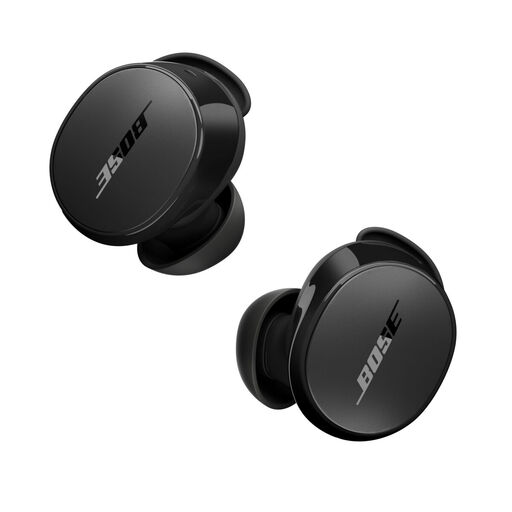 No image available
A wireless option to consider if you practise in a noisy space and find noise-isolating earbuds comfortable.
The product information lists active noise cancellation, play and pause controls, three ear tip sizes and stability bands.
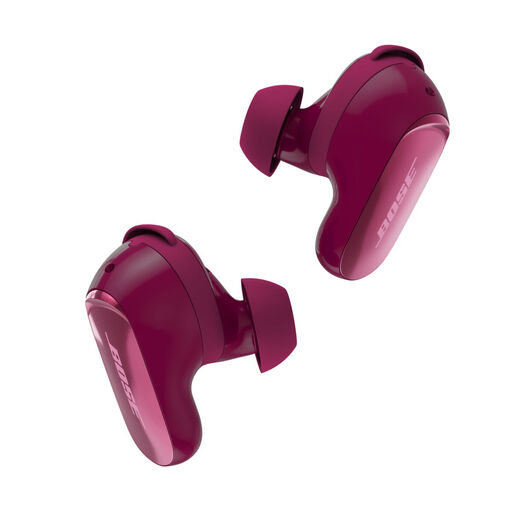 No image available
A wireless option for anyone practising in a noisy space who wants to try different fits.
The product information lists noise cancellation, an Aware mode, nine ear tip sizes and stability bands. The stated maximum playback time is 6 hours in Quiet or Aware mode.
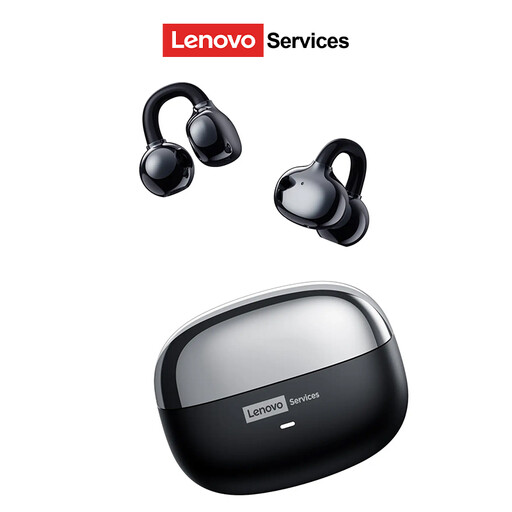 No image available
An open-ear option if you want to stay aware of surrounding sounds while practising.
The product information describes a wireless clip-on design. An open design lets surrounding sounds through too.
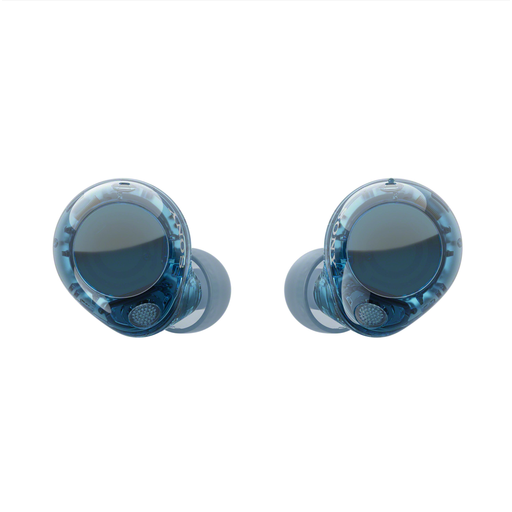 No image available
A noise-isolating wireless model to consider if you practise in a noisy space and want to use ANC.
Sony states that the WF-C710N offers up to 8.5 hours of continuous music playback with noise cancellation on. The product information also lists touch controls.
The stated playback time applies to music and is not a measure of comfort or results when practising vowels.
Don’t choose a special music feature expecting it to make vowel contrasts easier to learn. Assess clarity using your own short speech clips; the Dutch Consumers' Association treats speech reproduction as a separate part of its testing.
Keep the volume low and take regular listening breaks. The World Health Organization gives the example that at 90 dB, safe listening time falls to four hours per week; this is listening advice, not a legal volume limit in the Netherlands.
Check that the connection or wireless pairing works with your practice device, and, if the tips are interchangeable, choose a size that feels comfortable. Use the controls for short repeats, and follow the instructions for cleaning and storage for your chosen model.
For online purchases from a business, a 14-day cooling-off period applies in many cases; exceptions may depend on the product and circumstances. The Dutch Government states that if a product is faulty, you can request a repair or replacement at no extra cost.