Who is this guide for?

Dutch as a second language learner recording vowels

You’re practising Dutch vowels and words, and want to record and compare your attempts. A consistent microphone position and the ability to listen back are important considerations. Oefenen.nl offers exercises with Dutch vowels, letters and words.

Learner who wants to hear themselves straight away

You want to hear your voice through the headset as you speak. So check whether the exact version has sidetone; a microphone and earcups alone don’t confirm that it does.

Learner practising at a desk for longer sessions

You practise sitting down and want to consider adjustability, the fit of the headband and ear cushions, and the connection to your computer. You may also want to think about whether you prefer mono or stereo audio.

What should you look for when choosing?

Basic wired USB headset

Choose this if: you mainly practise on one computer and listen back to a recording after each attempt.

Consider: check the USB version and make a test recording yourself; specifications for calls aren’t a test of vowel reproduction.

Headset with sidetone

Choose this if: you want to hear your own voice through the headset as you speak.

Consider: you don’t need extra settings if listening back to a recording meets your needs.

Mono or stereo headset

Choose mono if: you deliberately want to keep one ear free; choose stereo if you want to listen through both earcups.

Consider: check the design of the exact version and assess the fit for yourself.

What to consider What should you check? Who is this important for?
Comparing recordings Check whether the microphone boom is adjustable, and record the same vowel pairs in similar conditions. If I want to compare my own vowels, I need a repeatable microphone position and recordings I can use. Around 36% of consumers say recording is their top priority.
Hearing your own voice Decide whether you want to listen back or hear yourself as you speak; check for sidetone on the exact version. If I want immediate feedback while practising, I check that sidetone is actually included. Around 29% of consumers say listening feedback is their top priority.
Comfort Check how adjustable it is and whether the specific version is mono or stereo; assess the fit for yourself. For longer sessions at a desk, I want a headset that suits my head and preferred style. Comfort is the top priority for around 21% of consumers.
Connection Compare the port on your computer or tablet with the exact version, and check the microphone and audio settings after connecting it. If I want to record and listen back on my own device, the connection needs to fit and the headset must work as both a microphone and audio output. Around 14% of consumers say device compatibility is their top priority.

Common buying mistakes

  • Assuming noise cancellation means accurate vowel reproduction

    Manufacturers’ claims about call quality or reducing background noise don’t show how well subtle vowel differences will be recorded.

    Before making noise cancellation a deciding factor, compare recordings of the same words in your own practice app.

  • Confusing sidetone with listening back to a recording

    Sidetone lets you hear your voice through the headset as you speak; playing back a recording of an attempt is different.

    Choose based on the feedback you use, and check that the exact version has sidetone if you want to hear yourself straight away.

  • Assuming every version has the same connection

    A product range may include versions with different USB connections, designs or included adapters.

    Before buying, check the full model name and connection, and make sure the version you choose includes any adapter you need.

Brands to compare

Logitech

Offers both basic USB headsets and the more configurable Zone Wired for seated practice.

  • For the H390 USB-A version, Logitech describes a repositionable microphone boom and in-line controls.
  • For Zone Wired, Logitech lists sidetone and EQ settings through Logi Tune.
  • Logitech says Logi Tune isn’t available in Dutch; these features don’t test vowel reproduction.

Trust

The Ayda USB headset for PC is a wired option with a flexible microphone boom.

  • For the version described, Trust lists a microphone that mutes when flipped up, a 1.8-metre cable and a USB-C-to-A adapter.
  • Check the product number and what’s in the box; the range name alone doesn’t confirm that it’s the same version.

Jabra

The Evolve2 30 SE range has mono and stereo versions, as well as different connection and UC options.

  • Jabra specifies a two-microphone system for the range and describes sidetone settings through Jabra Direct.
  • The USB-C/A UC Stereo version is a specific option; information about calls or UC isn’t an independent test of Dutch vowels.

EPOS

The IMPACT 100 range includes wired office headsets, including a UC Stereo version with USB-C and USB-A.

  • EPOS lists a weight of 76 grams for stereo versions and says new USB-C+A versions include an adapter.
  • The stated weight doesn’t tell you how comfortable the headset is or how suitable it is for pronunciation feedback.

HP Poly

The Blackwire 3200 range offers mono and stereo headsets so you can compare different designs.

  • HP Poly describes an adjustable design and a mono version that leaves one ear free.
  • The range includes several connection options; check the connection on the specific model.

Joybuy wired headsets for practice

These wired headsets have a microphone and are designed for use with a computer or another device with a compatible connection. Check the connection and features of the version you choose.

Logitech PC 960 USB headset

Logitech PC 960 USB headset

Well suited to practice where you want to keep the microphone boom in a fixed position and listen back on your computer.

The microphone boom is adjustable and can be moved out of the way. The headset has a USB connection and stereo audio.

Joybuy

Logitech H340 USB headset, black

Logitech H340 USB headset, black

Well suited to seated practice if you’re looking for a wired USB headset with an adjustable microphone.

The microphone is adjustable and the headset offers digital stereo audio. The description lists a USB connection.

Joybuy
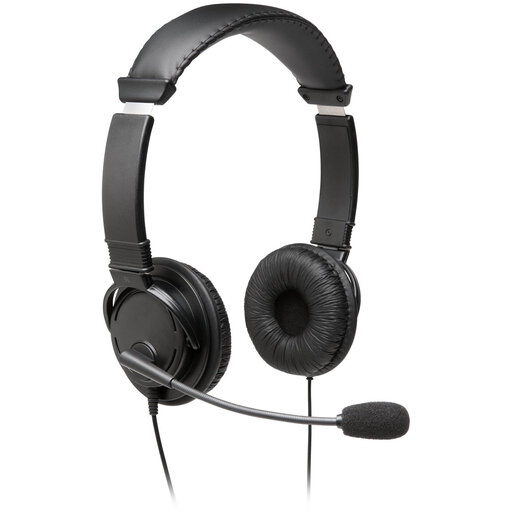
Kingston USB Hi-Fi headset with microphone

Kingston USB Hi-Fi headset with microphone

Well suited to practice if you want to adjust a flexible microphone boom and listen to audio over USB.

The description lists a microphone boom that rotates 270 degrees, a USB connection and stereo audio.

Joybuy
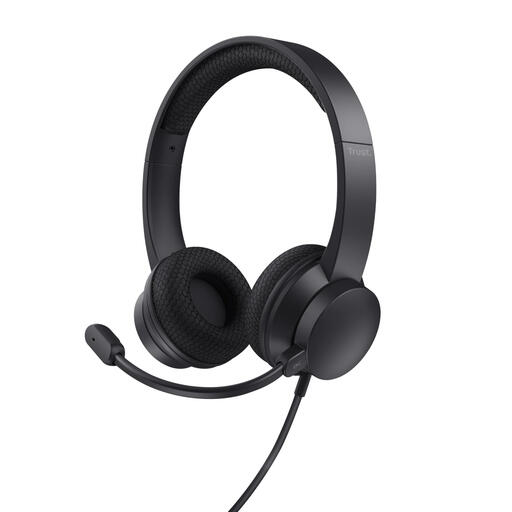
Trust Ayda wired headset, USB Type-A

Trust Ayda wired headset, USB Type-A

Well suited to practice if you want an adjustable microphone boom and stereo audio through a USB Type-A connection.

The microphone can be flipped up to mute it. The description lists stereo audio and an adjustable headband.

Joybuy
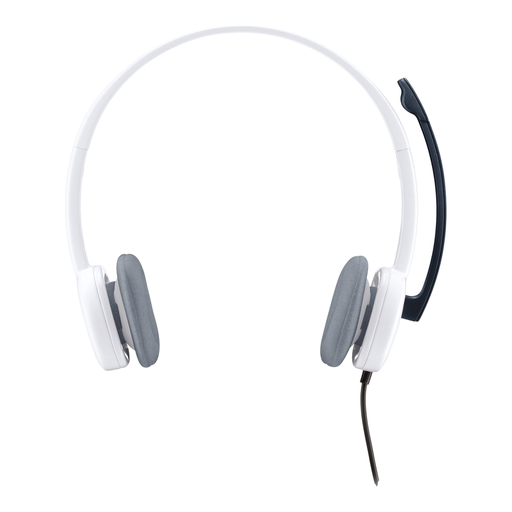
Logitech H150, model 981-000350

Logitech H150, model 981-000350

Well suited to a practice device with a 3.5mm connection if you’re looking for a wired stereo headset.

The microphone is adjustable and rotates. The headset has stereo audio and a 3.5mm connection.

Joybuy

Frequently asked questions

Where should you position the microphone for a short vowel practice session?

Position the microphone slightly to the side of your mouth rather than directly in the airflow, and keep it in roughly the same position between attempts. Shure gives this as general positioning advice; test the result with your own headset and recording app.

Do you need sidetone to practise Dutch vowels?

No, not if you listen back to a recording after each attempt. If you want to hear yourself through the headset as you speak, check that the exact version has sidetone; Logitech lists this feature for Zone Wired through Logi Tune.

What can you check if a connected headset doesn’t record?

Check that your practice app is using the headset as both the microphone and playback device, and that the microphone isn’t muted. Microsoft describes separate microphone and speaker selection in Teams’ audio settings; other apps may have different controls.

What warranty and cooling-off period apply when buying online in the Netherlands?

When you buy as a consumer, you’re entitled to a product that works as it should; according to the Dutch Government, the Netherlands has no fixed statutory warranty period. For distance purchases from a business, you usually have 14 days to change your mind, although there are exceptions. Check the terms of the specific purchase.

Can you record someone else to get feedback on their pronunciation?

This depends, among other things, on who is recording, the purpose and how the recording is used. The Dutch Data Protection Authority explains that processing personal data under the GDPR requires an applicable legal basis; consent is one possible basis, but it isn’t automatically the only one. This general rule doesn’t provide a definitive answer for every private practice session or lesson recording.
