What should you look for when buying?
Decide what matters most to you for your afternoon coffee: the sugar claim, fibre, a set portion or a particular ingredient requirement. Then check the label of the variety you actually want to buy.
| What to consider |
What to check when buying |
Who is this most important to? |
| Added sugars |
Read the exact claim and compare sugars in the nutrition information per 100 g. |
I want to avoid added sugars and not assume that ‘no added sugars’ also means ‘sugar-free’. Around 33% of consumers put this distinction first. |
| Fibre and wholegrain |
Compare fibre per 100 g and per portion; check separately whether the packaging says ‘wholegrain’. |
For a regular coffee break, I want to compare the fibre in different types of Dutch spiced cake. This is the main consideration for around 27% of consumers. |
| Portion and format |
Check the number of slices or bars and the weight per portion. |
I want to be able to serve or take one portion with my coffee easily. This practical consideration comes first for around 20% of consumers. |
| Ingredients and dietary requirements |
Read the current ingredients, allergens and warnings; check for a gluten-free label separately from the sugar claim. |
If an ingredient or dietary requirement is essential to me, I want to check the packaging before buying. Around 20% of consumers give this check top priority. |
Dutch spiced cake at Joybuy
This Dutch spiced cake bar may suit you if you’re mainly looking for an individual portion to enjoy with your afternoon coffee and want to consider a lower-sugar variety. If you’re specifically looking for Dutch spiced cake with no added sugars, check the ingredients and exact claim: according to the product information, this bar contains glucose-fructose syrup.
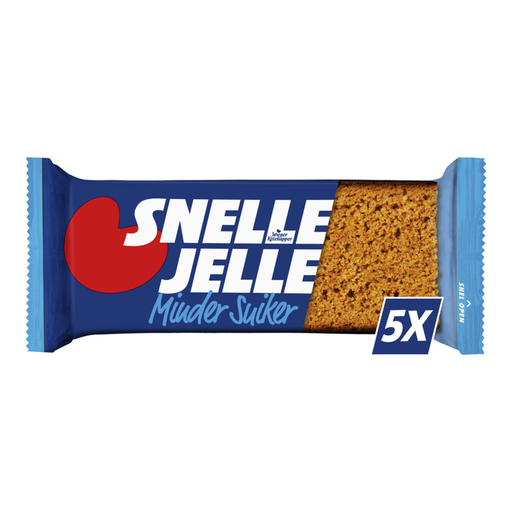 Image unavailable
Snelle Jelle Dutch spiced cake bars, less sugar, 250 g
Worth considering if an individual portion with your afternoon coffee matters more to you than choosing a product with no added sugars.
The product information lists sugars and glucose-fructose syrup. Check the current packaging for the nutritional values per 100 g and per bar, and read the allergen information if it’s relevant to you.
View at Joybuy
Frequently asked questions
Is Dutch spiced cake with no added sugars also sugar-free?
No, these labels don’t mean the same thing. The EU claim ‘no added sugars’ sets conditions on adding sugars and other foods used for their sweetening properties; naturally occurring sugars may still be present in the product. Jumbo explicitly mentions these sugars for a Peijnenburg variety. If the total amount matters to you, compare the sugars in the nutrition information.
What should I look for in the sweeteners used in zero Dutch spiced cake?
Check the ingredients and warnings on the packaging for the specific variety. According to the Netherlands Nutrition Centre, products containing more than 10% added polyols must carry a warning about a possible laxative effect if consumed in excess. The word ‘zero’ doesn’t tell you whether this applies to your product.
When should I choose gluten-free Dutch spiced cake?
Look for a gluten-free-labelled variety if gluten-free is a requirement for you. Jumbo says its Lekker Vrij Dutch spiced cake carries the Crossed Grain mark. Check sugars, fibre and other ingredients separately: the gluten-free label doesn’t tell you about these.
Does all Dutch spiced cake contain iodine under Dutch food regulations?
No, Dutch regulations don’t mean that every Dutch spiced cake contains iodine. The Warenwetbesluit Toevoeging micro-voedingsstoffen aan levensmiddelen, in force since 14 November 2014, allows iodine to be added to bakery products through baker’s salt, at a maximum of 65 mg of iodine per kg of salt. To find out whether a particular Dutch spiced cake contains baker’s salt, check the label or ask the manufacturer.


