Who is this choice relevant to?

Home bakers who want to choose the source of the sugar

You make Dutch spiced biscuits yourself and want to choose which ingredients, and how much of each, go into the dough. A standard recipe, such as the one from Albert Heijn Allerhande, gives you a starting point, but won’t automatically result in biscuits with less sugar.

Convenience shoppers looking to compare products with less sugar

You’d rather buy a packaged biscuit or ready-made Dutch spiced biscuits. In that case, the precise claim on the packaging and the nutritional information per 100 g matter more than the general impression created by the front of the pack.

Consumers who also need to check the ingredients

As well as sugars, you check the ingredients list, allergen information and any sweeteners. A statement about sugar alone doesn’t tell you anything definite about these other factors.

What should you look for when choosing?

First decide whether you want to control the source of sugar in homemade dough or are mainly looking for a packaged product with a comparable lower sugar value. Then check the ingredients that matter to you.

What to consider What to check when buying Who it matters to
Verifiably less sugar Compare sugars per 100 g with a suitable standard product. If you see a claim such as ‘light’, check which aspect the packaging says has been reduced. I don’t want to judge by the look of the packaging; I want to compare sugar values. For around 42% of consumers, a verifiable reduction in sugar is the top priority.
Control over the dough Choose a basic recipe and check the ingredients in any sugar substitute. Bake a small amount first before making more dough. When I bake Dutch spiced biscuits myself, I want to be able to change the source of the sugar without making a whole batch of dough straight away. Choosing my own recipe matters most to around 33% of consumers.
Ingredients and allergens Read the current ingredients list and allergen information. Also check which sweetener is named, if that’s relevant to your choice. A lower sugar value alone isn’t enough for me if I also need to avoid certain ingredients. For around 25% of consumers, checking the ingredients is the top priority.

Common mistakes

  • Assuming ‘light’ means ‘less sugar’

    According to the Netherlands Nutrition Centre, ‘light’ can refer to a reduction in energy, fat or sugar. So the label doesn’t necessarily mean that the sugar content has been reduced.

    Check which aspect has been reduced and compare both sugars and energy per 100 g with a suitable standard product.

  • Mistaking standard Dutch spiced biscuits for a lower-sugar option

    Albert Heijn lists 31 g of sugars per 100 g for AH Kruidnoten; Jumbo’s product information lists 31.1 g per 100 g for Jumbo Kruidnoten Naturel. A small biscuit or a familiar product name says nothing about whether its sugar content has been reduced.

    If you’re looking for a lower-sugar option, choose a specific product whose current nutritional information you can compare.

  • Using a sugar substitute without trying a small batch first

    The Netherlands Nutrition Centre explains that sweeteners can replace all or some of the sugar. This doesn’t mean there’s a fixed substitution ratio or a guaranteed crisp texture for Dutch spiced biscuits.

    Bake a small amount of dough first and check the taste and texture before making more.

  • Relying on an old online label

    Product ranges and ingredients can change for seasonal products. Albert Heijn also notes that product information may change.

    Use online information to compare products, and check the current packaging shortly before buying.

Brands and shops to explore

Albert Heijn

An option for a basic recipe from Allerhande, or ready-made AH Kruidnoten.

  • Albert Heijn Allerhande’s recipe calls for 125 g of dark brown sugar with 250 g of self-raising flour. This helps you identify which part of the standard recipe you might want to adjust.
  • The product information for standard AH Kruidnoten lists 31 g of sugars per 100 g, including 28 g of added sugars. Check the current packaging when you buy.

Jumbo

An option with a Dutch spiced biscuit recipe and ready-made biscuit dough.

  • Jumbo suggests ready-made dough if you want to spend less time making it yourself.
  • The product information for Jumbo Kruidnoten Naturel 500 g lists 31.1 g of sugars per 100 g. This figure doesn’t demonstrate a reduction in sugar compared with standard Dutch spiced biscuits.

Lidl / FAVORINA

A seasonal option with a range of packaged pepernoten and Dutch spiced biscuit varieties.

  • Lidl Netherlands lists white, chocolate and truffle varieties among its FAVORINA range.
  • Check the sugar value and ingredients on the current packaging for each individual variety; the variety name doesn’t indicate a reduction in sugar.

ALDI

A seasonal option for packaged Dutch spiced biscuits.

  • ALDI describes a 1 kg bag of Dutch spiced biscuits made with speculaas spices.
  • The size of the bag says nothing about its sugar content. Check the nutritional information on the packaging.

Lotus Biscoff

Lotus Bakeries describes Biscoff as a caramelised biscuit that can also be used as an ingredient in cooking.

  • If you want to use an existing biscuit in a baking idea, you can check the ingredients and nutritional information for your chosen Biscoff variety.
  • Don’t take the description ‘ingredient for cooking’ as a sign that it contains less sugar or as a substitute for tested Dutch spiced biscuit dough.

Joybuy products for home baking

If you make Dutch spiced biscuits yourself and want to choose the source of sugar in the dough, you’ll find a xylitol sugar substitute here. It isn’t a ready-made biscuit or Dutch spiced biscuit product.
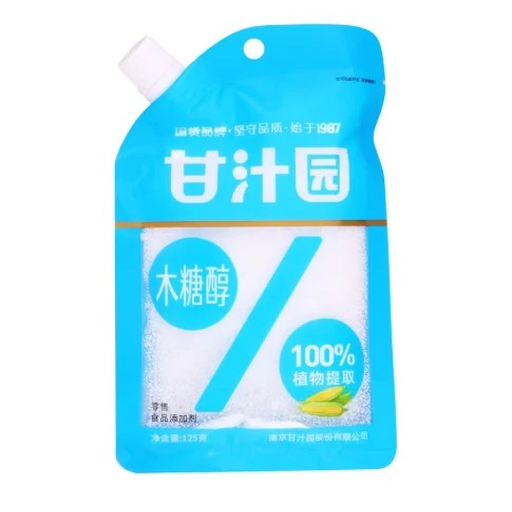
Ganzhiyuan Xylitol Sugar Substitute Sucrose-Free, 125 g pack

Ganzhiyuan Xylitol Sugar Substitute Sucrose-Free 125 g

For home bakers considering xylitol as a sugar substitute in their dough. The product name indicates a 125 g pack; check the ingredients and nutritional information on the packaging, and bake a small test batch of Dutch spiced biscuits first.

View at Joybuy

Frequently asked questions

Does ‘light’ on a biscuit mean it contains less sugar?

No, not necessarily. According to the Netherlands Nutrition Centre, ‘light’ can mean at least 30% less energy, fat or sugar. Check which aspect has been reduced, then compare the nutritional information per 100 g with that of a suitable standard product.

Do ‘sugar-free’ and ‘less sugar’ mean the same thing?

No, they’re different claims. Read the exact wording on the packaging and check the sugars per 100 g, rather than treating the two terms as interchangeable.

Can I replace sugar in Dutch spiced biscuit dough with a sweetener?

According to the Netherlands Nutrition Centre, sweeteners can replace all or some of the sugar, but that doesn’t tell you how much to use or guarantee the result when baking Dutch spiced biscuits. Try any change with a small amount of dough first.

Are standard AH or Jumbo Dutch spiced biscuits a lower-sugar option?

The standard products mentioned don’t in themselves demonstrate a reduction in sugar. Albert Heijn lists 31 g of sugars per 100 g for AH Kruidnoten, while Jumbo lists 31.1 g per 100 g for Jumbo Kruidnoten Naturel. Compare a specific alternative and check the current packaging.

What should I check besides the sugar content?

Also read the ingredients list, allergen information and details of any sweeteners on the current packaging. A lower sugar value doesn’t tell you what other ingredients the product contains.
