
Holidaymakers planning breakfast supplies
If several guests will be having breakfast from the same pack, the number of pieces, pack size and how to store the rusks after opening are all practical considerations.


For a simple breakfast stash in your holiday home, plain rusks are a good starting point. Choose wholemeal or a seeded variety if the recipe, size or nutritional information matters to your group. If people will be eating at different times, individually wrapped rusks may be handy, if available. Compare Dutch rusks by variety, number of pieces and label rather than by ‘medium sliced’: this isn’t a useful measure for the rusks discussed here.
If several guests will be having breakfast from the same pack, the number of pieces, pack size and how to store the rusks after opening are all practical considerations.
If you eat rusks regularly during your stay, compare wholemeal varieties by their fibre content per 100 g and per rusk. Check the ingredients and allergens too.
If guests won’t be having breakfast at the same time, the packaging may matter. If anyone has allergies, check the latest ingredients and allergen information for each variety.
First, work out how many guests will be eating rusks and which recipe or type of packaging matters to them. Then compare the information on the pack: a large rusk and a standard rusk aren’t necessarily the same portion.
| What to consider | What to check | Who it matters most to |
|---|---|---|
| Breakfast supplies | Compare the number of pieces and the pack weight with the number of breakfasts you’re planning. | If several guests will be having breakfast from one pack, I want to know whether it’ll last for the planned meals. This is the top priority for around 36% of consumers. |
| Wholemeal and fibre | Check the wholemeal description and compare fibre per 100 g and per rusk. | If I eat rusks regularly, I want to be able to compare the fibre content of different varieties. This is the top priority for around 29% of consumers. |
| Size and packaging | Check whether you’re choosing large rusks or individually wrapped pieces, and how many pieces the pack contains. | For a leisurely breakfast or different mealtimes, I look for a size or type of packaging that suits the guests. This is the main concern for around 21% of consumers. |
| Ingredients and allergens | Read the latest ingredients list and allergen information for the specific variety. | If a guest needs to avoid certain ingredients, I want to be able to check the pack before serving anything. This matters most to around 14% of consumers. |
This term isn’t useful for comparing the size of the Dutch rusk varieties discussed here.
Instead, search for plain, wholemeal, large or individually wrapped, then compare the number of pieces, the weight and the packaging.
Ingredients vary by variety. As well as wheat, egg, sesame, oats or barley may be relevant, for example.
Check the latest packaging for every guest with an allergy, even if you’re familiar with the brand.
That description doesn’t tell you how large each rusk is, or which other ingredients and nutritional values matter to your choice.
Compare fibre and salt per 100 g, check the portion size and read the ingredients for the variety you’re planning to take.
You can’t tell from the product name or a mention of salt whether a rusk contains iodised baker’s salt.
Check the ingredients list for the specific product if baker’s salt matters to your choice.
Bolletje offers plain, wholemeal and multiseed rusks, among other varieties. Compare each one separately for size and recipe.
As well as stocking other rusk brands, Albert Heijn has its own plain variety.
PLUS offers a roll of plain rusks and a larger variety with seeds and kernels.
ALDI sells plain and wholemeal rusks under the Goud Gebakken brand.
Lidl lists a plain rusk product for shoppers buying in store.
These Joybuy products give you a choice of seeded rusks, wholemeal rusks and a plain breakfast variety. For your holiday-home supplies, check the number of pieces and read the packaging for ingredients and allergens.
 Image unavailable
A variety to compare if you’re looking for seeded rusks for holiday breakfasts. The pack contains 10 pieces. If anyone has allergies, check the latest label, particularly for wheat and sesame.
 Image unavailable
A wholemeal variety for anyone who wants to take the recipe into account when planning holiday breakfasts. The pack contains 10 pieces. For guests with allergies, check the latest information on wheat, egg and possible traces of sesame.
 Image unavailable
A wholemeal option to compare when the number of breakfasts matters. The pack contains 13 pieces. If anyone has allergies, check the label for wheat, egg and possible traces of sesame.
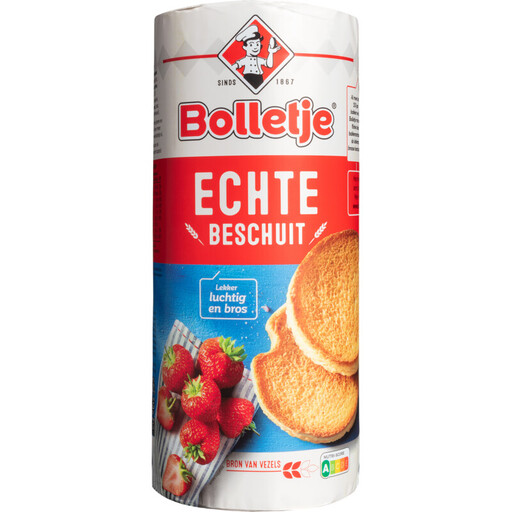 Image unavailable
A plain rusk variety for breakfast with toppings. The pack contains 13 pieces. For guests with allergies, check the latest information on wheat, rye, egg and possible traces of sesame.
No, it isn’t a useful way to compare the Dutch rusk products discussed here. Instead, compare the variety, number of pieces, weight and information on the packaging.
Seal the pack well after opening and keep the rusks somewhere dry. Albert Heijn recommends storing its plain variety in a sealed tin; PLUS advises keeping its plain variety in a cool, dry place, away from moisture and heat.
Yes. As well as checking the wholemeal description, compare the fibre per 100 g and per piece, the portion size and the allergens. Ingredients can vary by variety, so a wholemeal description doesn’t replace checking the label.
No, you can’t tell from the word ‘rusk’ or a mention of salt. Check the ingredients list for the specific product if you want to know whether baker’s salt has been used.