For a school lunch of Dutch rusks with chocolate sprinkles, start by choosing a base that suits your child, such as wholegrain rusks, and keep the sweet topping to a small amount. Then compare the different flavours and check the allergens in both the rusks and the chocolate sprinkles, as well as your school’s rules. The Netherlands Nutrition Centre recommends putting together a school lunch with other items too, such as vegetables or fruit.
Who is this choice for?
Parents looking to include a sweet topping
If your child enjoys chocolate sprinkles, you can consider the topping separately from the rest of the lunch. The Netherlands Nutrition Centre recommends wholegrain products and variety, with sweet toppings kept to a small amount.
Parents keeping an eye on allergens and school rules
If your child has a relevant food allergy, check the ingredients in the rusks and chocolate sprinkles separately. Check the current packaging of both products and make sure the packed lunch follows the arrangements in place for your child at school.
Parents of fussy eaters
If flavour is what determines whether your child will eat their lunch, you can compare milk, dark and mixed chocolate sprinkles. A flavour your child likes says nothing by itself about the nutritional value or allergens of that variety.
What should you look for when choosing?
Choose the rusks and chocolate sprinkles separately: a mix of flavours does not change the make-up of the base. The priorities will vary from one family to another.
| What to consider |
What to check when buying |
Who it matters to |
| The base of the lunch |
Check whether the rusks you choose are wholegrain, and include other items in the lunch too. |
If I pack chocolate sprinkles, I don’t want a sweet topping to define the whole lunch. The base is the priority for around 31% of consumers considering this school lunch. |
| Allergens and school rules |
Read the labels on both products, including any warnings about possible allergens, and follow the arrangements in place for your child at school. |
If my child has an allergy, I need to know before packing whether both the rusks and the chocolate sprinkles are suitable. This is the main concern for around 31% of consumers. |
| Flavour appeal |
Compare the ingredients and nutritional information per 100 g for the milk, dark or mixed variety you choose. |
If my child will only eat a particular chocolate flavour, I first look for a variety they’re willing to try. Flavour is the main consideration for around 23% of consumers. |
| Packaging and use |
Choose a pack size that suits how often you use chocolate sprinkles, and check the storage instructions too. |
If chocolate sprinkles only go to school occasionally, I don’t want to choose a pack that doesn’t suit how we use them. This practical point matters most to around 15% of consumers. |
Common misconceptions when putting a lunch together
-
Assuming the chocolate sprinkles have the same allergens as the rusks
Albert Heijn describes AH Milk Chocolate Sprinkles as gluten-free, while the product information for Bolletje High-Fibre Wholegrain Farmhouse Rusks lists cereals containing gluten. Checking one item does not automatically make the combination suitable.
Read the packaging for both products separately and, if your child has an allergy, follow their individual plan and the school’s arrangements.
-
Taking ‘less sugar’ as a verdict on the whole lunch
According to Albert Heijn, AH Milk Chocolate Sprinkles with Less Sugar contains 30% less sugar than AH Milk Chocolate Sprinkles. This comparison applies to two specific products, not all toppings or the whole lunch.
Compare the nutritional information for the variety you want to buy, then decide separately how much room sweet toppings have in the lunch.
-
Confusing mixed chocolate sprinkles with a mix of white and wholegrain bases
Jumbo describes its Duo Sprinkles Mix as a combination of chocolate sprinkles and white sugar sprinkles. The name tells you nothing about the rusks or bread you sprinkle them on.
For a fussy eater, choose the base and topping flavour separately, and check the label for each.
-
Assuming every rusk product contains baker’s salt
The Netherlands Nutrition Centre points out that bakers are not required to use baker’s salt. So don’t assume a product has a particular make-up just because of its category.
If baker’s salt is relevant to your choice, check the ingredients list for the specific product or ask the baker.
Brands to consider
De Ruijter
Offers milk, dark and mixed chocolate sprinkle varieties to compare by flavour and ingredients.
- Albert Heijn lists at least 52% cocoa solids for Intens Puur.
- Allergens vary by variety: if choosing between milk chocolate sprinkles and Hagelfeest, always check the specific packaging.
Venz
Offers a range of flavours, including milk, dark and mixed varieties.
- You can compare a familiar flavour with a mixed variety within the same brand.
- A range overview won’t tell you which allergens or nutritional values apply to the pack you choose.
Albert Heijn
The own-brand range includes milk chocolate sprinkles and a variety with less sugar than its standard milk chocolate sprinkles.
- Albert Heijn lists the sugar content per 100 g for these specific varieties, so you can compare them.
- ‘Less sugar’ is not a judgement on the overall nutritional value; check the rest of the nutritional information and the allergens too.
Jumbo
The own-brand range includes milk, dark and duo chocolate sprinkles.
- Jumbo describes Duo Sprinkles Mix as 50% chocolate sprinkles and 50% white sugar sprinkles.
- If your child has allergies, check the label for mixed varieties too; the product information for this duo variety says it may contain milk.
ALDI
Lists Kiekeboe dark chocolate sprinkles and Goud Gebakken wholegrain rusks as separate products.
- The product listings make it possible to look for a dark flavour and a wholegrain rusk base separately.
- Check the packaging of both products for your child; the name of the combination does not confirm which allergens they contain.
Bolletje
A rusk brand to look at if you’re searching for a wholegrain base, independently of your choice of chocolate sprinkles.
- Bolletje High-Fibre Wholegrain Farmhouse Rusks are labelled as wholegrain rusks.
- The product information lists wheat, oats, barley and sesame, among other ingredients; check whether this base fits your allergy arrangements.
Chocolate sprinkles for this lunch
These Joybuy products are chocolate sprinkle varieties to help you choose a flavour for a school lunch. Choose the rusks separately and check the current packaging for both products before packing the lunch.
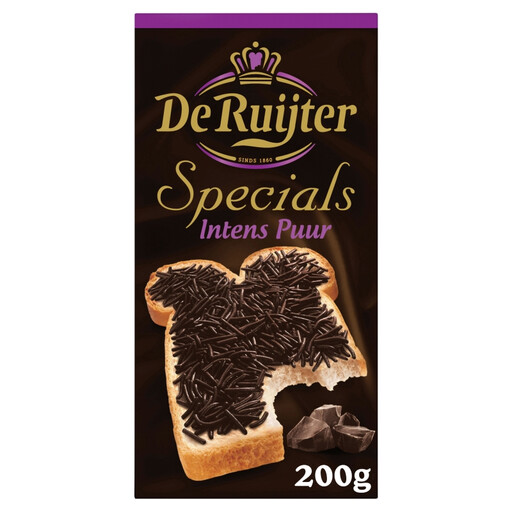 Image unavailable
De Ruijter Intense Dark chocolate sprinkles, 200 g
An option if your child likes a dark chocolate flavour on their rusks. If your child has relevant allergies, check the listed milk, soya and lactose; choose the rusk base separately.
View at Joybuy
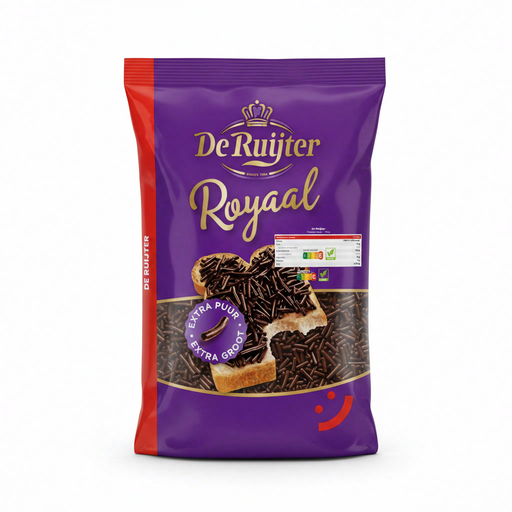 Image unavailable
De Ruijter Chocolate Chunks, 390 g
An option if you’re considering a chocolate topping. Check whether the shape of these Chocolate Chunks works with the rusks you have in mind, and if your child has allergies, read the current label for milk, soya and possible traces of lactose.
View at Joybuy
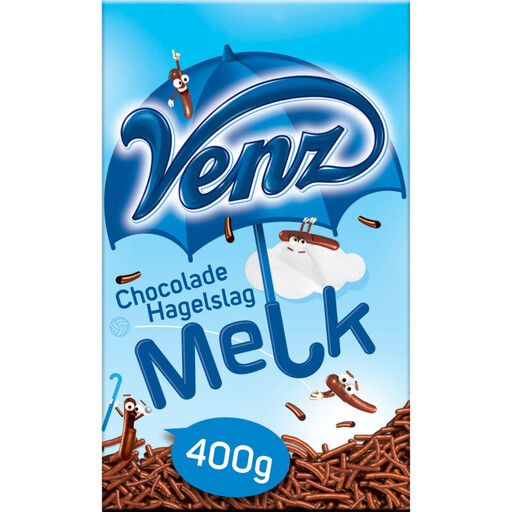 Image unavailable
Venz milk chocolate sprinkles, 400 g
A flavour option if your child likes milk chocolate sprinkles. Bear in mind the listed milk, lactose and soya, and check the allergens in the rusks as well.
View at Joybuy
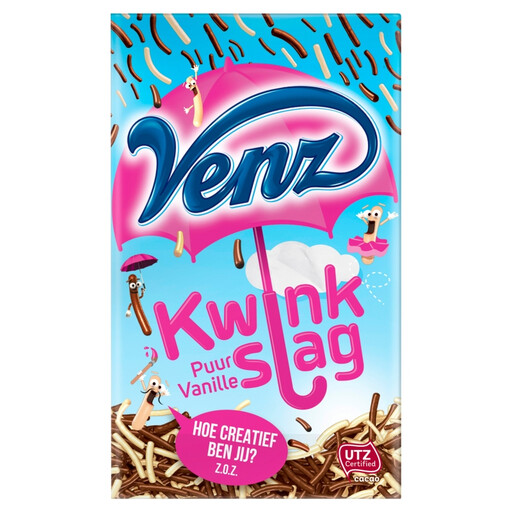 Image unavailable
Venz chocolate and vanilla-flavoured sprinkles, 400 g
For a child who wants to try both chocolate and vanilla flavours. This is a mix of flavours, not a mix of rusk types; if your child has allergies, check the listed milk, soya and wheat.
View at Joybuy
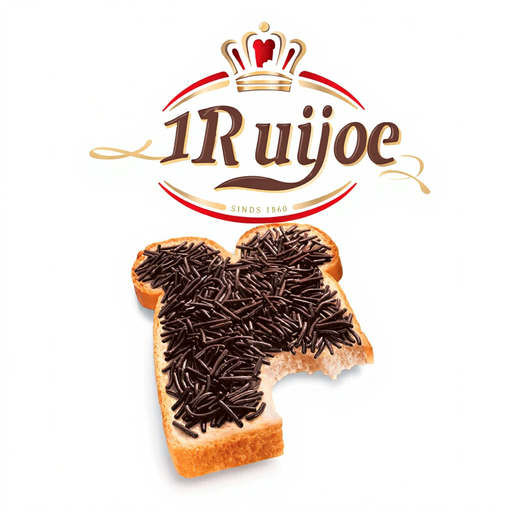 Image unavailable
De Ruijter dark chocolate sprinkles, 390 g
Another dark chocolate option to go on your separately chosen rusks. Check the current packaging for milk and soya, and compare the label for this variety with those for other dark chocolate sprinkles.
View at Joybuy
Frequently asked questions
Are Dutch rusks with chocolate sprinkles a complete school lunch on their own?
No, include other items in the lunch too. For primary school children, the Netherlands Nutrition Centre recommends wholegrain products and vegetables or fruit, among other things, and advises keeping sweet toppings to a small amount. So choose chocolate sprinkles as one part of the lunch, not as a measure of the whole meal.
Do Dutch rusks with chocolate sprinkles always contain gluten?
No, you can’t determine that for every combination at once. Albert Heijn describes AH Milk Chocolate Sprinkles as gluten-free, while the product information for Bolletje High-Fibre Wholegrain Farmhouse Rusks lists cereals containing gluten. If your child has a relevant allergy or coeliac disease, always check the current labels for both products you choose.
What should I do if there’s a ‘may contain’ warning on a school lunch product?
Take the warning into account when following your child’s individual allergy plan and the arrangements with the school. Checking only the chocolate sprinkles label isn’t enough: check the rusks too. VieCuri’s school protocol information advises not giving a product to the child if you’re unsure.
Do rusks automatically contain baker’s salt?
No, don’t assume this without checking. According to the Netherlands Nutrition Centre, bakers are not required to use baker’s salt. Check the ingredients list for the specific rusks or ask the baker which ingredients they use.


