What should you look for when choosing?
First decide whether the round rusk shape or sourdough matters more to you, then compare the ingredients in the specific products.
Classic plain rusks
Choose this: if you want a light, round base for butter and aniseed sprinkles.
Keep in mind: the classic varieties checked from Bolletje, Jumbo and PLUS contain wheat and egg; plain doesn’t mean sourdough.
Wholegrain or seeded rusks
Choose this: if a more pronounced grain flavour or the nutritional information matters more to you than a neutral base.
Keep in mind: ingredients vary by variety; PLUS lists wheat, barley, oats, egg and sesame among the ingredients in its Wholegrain with Seeds rusks.
Sourdough crispbread
Choose this: if the sourdough label matters more to you than round rusks.
Keep in mind: crispbread is a different type of product and doesn’t offer the same traditional presentation as rusks with aniseed sprinkles.
| What to consider |
What to check when buying |
Who it matters to |
| Shape and crispness |
Check the product shape and the number of pieces in the pack. Store rusks in a dry place and add the toppings just before serving. |
If I’m getting aniseed sprinkles ready for visitors celebrating a new baby, I want to be able to serve round rusks without topping them too far in advance. For around 45% of consumers, that traditional way of serving them comes first. |
| Sourdough or rusks |
Check whether sourdough is explicitly mentioned in the product name and ingredients, and whether you’re choosing rusks or crispbread. |
If you mainly want sourdough, you’ll need to be happy with crispbread looking and eating differently from round rusks. This sourdough preference is the top priority for around 33% of consumers. |
| Label and nutritional information |
Read the allergen declaration and compare fibre or salt per 100 g, rather than across different serving sizes. |
If I’m serving guests with specific dietary requirements or comparing nutritional information, the label determines my choice. Around 22% of consumers give this check top priority. |
Brands to consider
These brands offer different rusk options. The features listed apply to the products described and not necessarily to the entire range.
Bolletje
Its Echte Beschuit and Bakkers Beschuit are worth considering if you’re looking for classic round rusks.
- Bolletje says its Bakkers Beschuit is extra crisp and light thanks to the use of egg.
- The classic varieties described contain wheat and egg. Check the ingredients if sourdough is a must for you.
Albert Heijn
The range described includes plain, wholegrain and spelt rusks.
- You can compare different types of rusks before choosing a variety.
- Check the latest ingredients and nutritional information for the product you choose; the product type alone doesn’t confirm that it’s sourdough.
Jumbo
An option for classic plain rusks, alongside other types of rusks in the category.
- Jumbo Beschuit Naturel is sold in a pack of 13 pieces.
- The plain variety described contains wheat and egg; check the packaging if you have dietary requirements.
PLUS
Worth considering if you want to compare plain rusks with a wholegrain variety containing seeds.
- PLUS lists 10.6 g of fibre per 100 g for its Beschuit Volkoren met zaden, making it easy to compare with other products on the same basis.
- According to PLUS, this wholegrain variety contains wheat, barley, oats, egg and sesame.
Goud Gebakken
ALDI’s own-label option for classic plain rusks.
- ALDI lists Goud Gebakken Naturel Beschuit in a pack of 13 pieces.
- Before serving, check the ingredients and allergens on the pack you choose if they’re relevant to your guests.
Rusk options at Joybuy
These rusks suit the classic and wholegrain options for serving with aniseed sprinkles. If you specifically want sourdough, check that the product you choose says so explicitly on the packaging; don’t assume it based on the rusk shape.
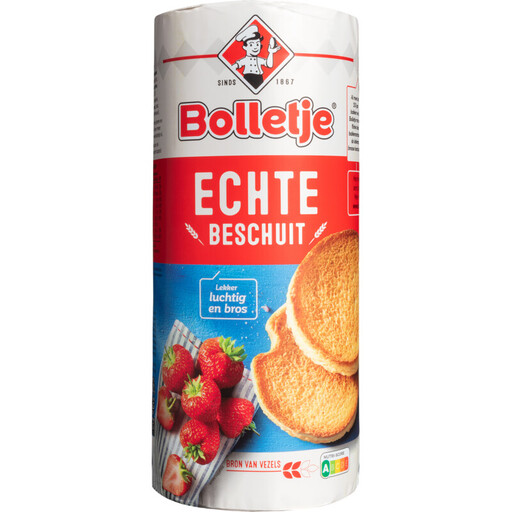 Image unavailable
Bolletje Real Rusk, 13 pieces
An option if you’re looking for round rusks as the traditional base for aniseed sprinkles.
The pack contains 13 pieces. Check the latest ingredients and allergens on the packaging if they’re relevant to your guests.
View at Joybuy
 Image unavailable
Bolletje Wholegrain Rusk, 13 pieces
A wholegrain option if you don’t specifically want a plain base for rusks with aniseed sprinkles.
The pack contains 13 pieces. Read the nutritional information per 100 g and check the allergens on the packaging before serving this variety.
View at Joybuy
 Image unavailable
Bolletje Dark Whole Wheat Rusk, 10 pieces
Another wholegrain option if you’d like something other than plain rusks for serving with aniseed sprinkles.
The pack contains 10 pieces, which is useful to know if you’re counting out portions for several guests in advance. Check the ingredients and allergens for this variety on the packaging.
View at Joybuy
Frequently asked questions
Do I need sourdough for rusks with aniseed sprinkles?
No. For the traditional round presentation, standard rusks are the obvious choice. If you prefer sourdough, you could consider sourdough crispbread such as Wasa Sourdough Rye, as long as you’re happy with the different product shape.
When is the best time to prepare rusks with aniseed sprinkles?
For the best crunch, add the toppings just before serving. Until then, store the packs in a dry place, following the instructions on the packaging.
Do plain rusks contain gluten or egg?
The classic varieties described from Bolletje, Jumbo and PLUS contain wheat and egg, but always check the exact packaging you buy. If you have an allergy or another dietary requirement, also read the allergen declaration and any warning about possible traces.
Can I assume rusks contain iodised baker’s salt?
No, don’t assume this based on the word ‘rusks’. The agreement published by the Ministry of Health, Welfare and Sport in 2008 encourages the use of iodised salt in bread and bread substitutes; according to the Netherlands Bakery Centre, the use of iodine-containing baker’s salt isn’t a legal requirement. Check the ingredients on the packaging of the product you choose.


