
Feeling peckish just before you head out
If you want something to eat just before exercising, the amount and how your stomach and gut respond matter more than the brand name. Try a small combination during a regular training session first.


Only choose Dutch rusk with chocolate sprinkles just before exercise if you’re having it as a small snack and know you tolerate it well. If you have around two to three hours, the Netherlands Nutrition Centre recommends a proper meal with a drink; consider the wholegrain base and the chocolate sprinkles separately. A lower sugar content on the label doesn’t automatically make a topping suitable just before exercise, especially if it contains polyols.
If you want something to eat just before exercising, the amount and how your stomach and gut respond matter more than the brand name. Try a small combination during a regular training session first.
If you often eat Dutch rusk with chocolate sprinkles, it’s worth considering the base too: is the rusk wholegrain, and how much fibre does the label list? This everyday choice is separate from what you find comfortable just before exercise.
If the ingredients matter most to you, read the labels for both the rusk and the chocolate sprinkles. A lower sugar content may come with polyols; also check the allergens in the exact product.
First, decide when you’re exercising and how substantial your snack or meal will be. Then compare the rusk and chocolate sprinkles separately: the information for one component doesn’t tell you the nutritional value of the whole combination.
| What to consider | What to check when buying | Who it matters most to |
|---|---|---|
| Timing and portion | Work out how long you have until your training session and how much rusk and topping you’ll have. The Netherlands Nutrition Centre recommends having a proper meal around two to three hours before exercise. | If I’m about to head out, I want to take the edge off my hunger without having a large meal just before exercise. Timing and stomach comfort are the top priorities for around 36% of consumers. |
| Wholegrain base | Check whether the rusk is wholegrain and compare the fibre per 100 g; consider when you’ll be eating it. | If I eat this regularly, I want to know what kind of base I’m choosing, even if I’m not exercising straight afterwards. Around 29% of consumers focus most on the nutritional make-up of their everyday choices. |
| Sugar and polyols | Compare the sugar per 100 g as well as the amount of topping you use. If you’re choosing a lower-sugar option, check the ingredients and any warning about polyols too. | When I choose chocolate sprinkles, I want to weigh up the sugar content without choosing a topping that doesn’t agree with me. Sugar and the composition of alternatives come first for around 21% of consumers. |
| Allergens | Read the current ingredients and allergen information for both the rusk and the chocolate sprinkles; don’t assume you know what’s in a product from the word ‘dark’. | If I need to avoid certain ingredients, the whole combination needs to be suitable, not just the topping. For around 14% of consumers, checking the ingredients is the first consideration. |
Several rusks with plenty of topping add up to more than a small snack. This matters particularly if you’re exercising soon afterwards.
First, consider how long you have until your training session, and keep the combination small if you’re about to head out. It’s best to try a new combination during a regular training session.
A higher-fibre base can work well as part of a regular snack, but may be less comfortable for some people just before exercise. Your everyday choice and your snack just before heading out don’t have to be the same.
Compare the fibre on the label and choose when to eat it based on how much time you have and how the combination feels for you.
Céréal lists 40 g of polyols per 100 g for its Hagelslag puur minder suikers (dark chocolate sprinkles with less sugar) and warns that excessive consumption may have a laxative effect.
As well as sugar, compare the polyols, allergens and your usual portion size. Don’t try a product containing polyols for the first time just before a training session.
If you’re looking for iodised baker’s salt, you can’t tell whether it’s used just from the product name ‘rusk’.
Check the ingredients list on packaged rusk, or ask the baker which type of salt they use.
Compare specific products within each brand: the nutritional values and allergens of one type of chocolate sprinkles don’t tell you about every product from that brand or about the rusk underneath.
Within the AH range, you can look at a wholegrain rusk base and different milk chocolate sprinkles separately.
Jumbo Chocolade Hagelslag Puur is a specific product label to compare if you’re looking for dark chocolate sprinkles.
De Ruijter Specials Intens Puur is an option to compare if you want to check the ingredients in dark chocolate sprinkles.
Venz XXL melk is a milk chocolate sprinkle with extra-large pieces, for anyone who prioritises texture.
Céréal Hagelslag puur minder suikers is an option to consider if you’re comparing sugar and substitute ingredients.
Kiekeboe is a brand to look out for at ALDI if you’re after a larger pack of dark chocolate sprinkles.
At Lidl, you can look at a wholegrain rusk base and choose your chocolate sprinkles separately.
These products are separate components for Dutch rusk with chocolate sprinkles: two wholegrain rusks as the base and three types of dark chocolate sprinkles as the topping. Put your own combination together and consider the portion and when you’ll eat it separately.
 Image unavailable
This wholegrain rusk is a good option if you’re choosing a base for a regular snack. The pack contains 10 pieces; chocolate sprinkles are a separate choice. Just before exercise, consider how much feels right for you.
 Image unavailable
This wholegrain rusk is a base to consider when you have time for a more substantial meal or snack. The pack contains 13 pieces and no chocolate sprinkles. If you need to avoid certain ingredients, check the current labels for both the rusk and the topping.
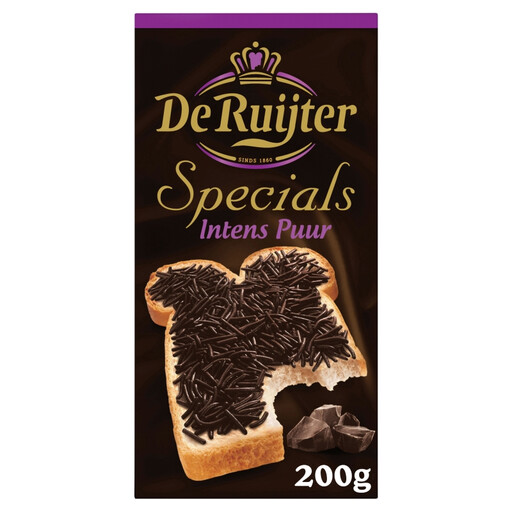 Image unavailable
These 200 g of dark chocolate sprinkles are a topping for the rusk of your choice; rusk isn’t included. Decide how much to use and check the current ingredients information if you have allergies.
 Image unavailable
These 390 g of dark chocolate sprinkles are a topping on their own, not a complete snack with rusk. If you’re having them before exercise, consider your portion and check the current label if milk or soya is relevant to you.
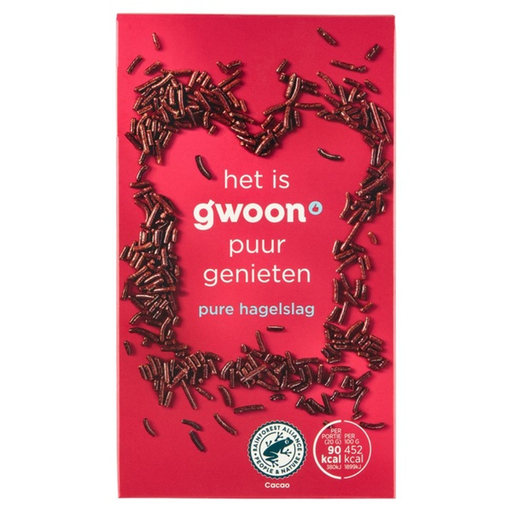 Image unavailable
These 400 g of dark chocolate sprinkles can be used as a separate topping with the rusk of your choice. The word ‘dark’ doesn’t tell you whether a product is suitable if you have an allergy, so check the current label.
A small portion may work if you tolerate the combination well. Avoid a large meal just before heading out; if you have around two to three hours, the Netherlands Nutrition Centre recommends a proper meal with a drink.
No, wholegrain rusk isn’t automatically the most comfortable choice just before exercise. Consider the fibre content, how long you have until your training session and how you’ve found this rusk in the past. The base may play a different role as part of a regular snack.
No, check the other ingredients and your portion size too. Céréal lists 40 g of polyols per 100 g for Hagelslag puur minder suikers (dark chocolate sprinkles with less sugar) and warns that excessive consumption may have a laxative effect.
No, you can’t tell which allergens chocolate sprinkles contain from the word ‘dark’. Check the current packaging for the exact variety and read the label on the rusk you’re having with it too.
Follow the storage instructions on each product’s own packaging. Keep opened rusk in a dry, sealed container to help it stay crisp; store chocolate sprinkles in a cool, dark, dry place.