For a fixed place to sit, a wired headset with an adjustable microphone boom is a sensible starting point: you won't need to manage a battery, and you can keep the microphone in roughly the same position. Choose a connection that suits your recording device and make a test recording to check that your pronunciation is clear and not distorted. Wireless is most useful if you also use the headset away from your usual spot.
Who is this buying guide for?
Readers who listen back to their own pronunciation
If you make short recordings to listen back to sounds and consonants, it helps to have a microphone that you can position consistently. Listening back to a test sentence can help you judge whether the recording works for your needs.
Learners with a fixed computer setup
If you record at a desk and don't want to manage a headset battery, a wired connection may be worth considering. Check that the plug fits your computer and that the connection supports microphone input.
Learners who listen back for long periods
If you record and play back repeatedly, fit and wearing style can make a difference. Consider whether you'd rather leave one ear uncovered or cover both, and whether the headset feels comfortable during longer sessions.
What should you look for when buying?
| What to consider |
What should you look for? |
Who is this for? |
| Voice recording |
Look for an adjustable microphone boom and make a test recording with both soft and loud sounds. Audacity recommends aiming for a peak of around −6 dB and lowering the recording level if clipping occurs. |
If I want to assess my pronunciation, I need to hear the sounds clearly and keep the microphone in roughly the same position each time. Around 36% of consumers are most concerned about getting a clear, easy-to-review voice recording. |
| Connection |
Check whether USB-A, USB-C or 3.5 mm matches your device's port, and make sure that port supports microphone input. |
If I want to record without hassle, the plug needs to fit and my device must be able to receive the microphone signal through that connection. Around 29% of consumers prioritise device compatibility. |
| Comfort |
Check the wearing style, adjustability and ear cushion material; comfort is a personal matter. |
For repeated practice sessions, I want a headset that's comfortable to wear, with a choice of one or both ears covered. Around 21% of consumers prioritise wearing and listening comfort. |
| Freedom of movement |
Think about whether you'll also record away from your usual spot. If not, focus instead on the cable and the distance to your recording device. |
If I want to move around while recording, a wireless connection may be more practical, although it does mean pairing and charging. Around 14% of consumers consider freedom of movement their main concern. |
Buying pitfalls
-
Assuming a headset for phone calls will capture pronunciation accurately
A claim about noise cancellation for calls doesn't prove that Dutch speech sounds will be captured faithfully for a reading exercise.
After connecting the headset, record a test sentence with both soft and loud words. Listen back and lower the recording level if the sound is distorted.
An unusable test recording can cost you extra time if you have to record it again.
-
Assuming every version has the same connection
Product ranges can include different plugs or versions, so the model name alone won't always tell you which connection you'll get.
Compare the full version name with the port on your recording device and check that the port also supports microphone input.
If the plug doesn't fit, you may need an adaptor or have to choose a different version.
-
Choosing wireless just because a headset ranks highly in a general list
A list for working from home doesn't automatically assess how suitable a headset is for seated pronunciation recordings. For a fixed setup, wireless isn't necessarily an advantage.
Choose wireless if you'll genuinely use the headset away from your usual spot. Otherwise, consider the cable and connection on a wired version.
Brands to consider
Logitech
The H340 and H390 are wired USB options; the H151 uses a 3.5 mm plug.
- Logitech describes the H340 as having an adjustable microphone boom. The H390 is available in USB-A and USB-C versions.
- Connections and controls vary by model and version. Product claims aimed at calls aren't a comparative test of pronunciation recordings.
Jabra
The Evolve 20 is a wired business headset range; the Evolve2 65 is a wireless range.
- Jabra lists wireless features and a Microsoft Teams version for the Evolve2 65.
- These are product details for communication, not independent measurements of recording quality for reading practice. Check the full version details.
Poly
The Blackwire 3200 series includes wired business headsets with different wearing styles and connections.
- HP describes both mono and stereo wearing styles within the range.
- Not every connection or wearing style is available with every version; check the version on offer.
JLab
GO Work is a wireless on-ear option if you'll also use the same headset away from your usual recording spot.
- JLab lists Bluetooth, multipoint and a wired-use option for GO Work.
- Check the version and how it connects to your recording device; wireless features alone don't tell you how well it reproduces pronunciation sounds.
Headsets at Joybuy
These Joybuy products are wired headsets with USB or 3.5 mm connections, suited to a fixed recording setup with a connection that matches your device.
 No image available
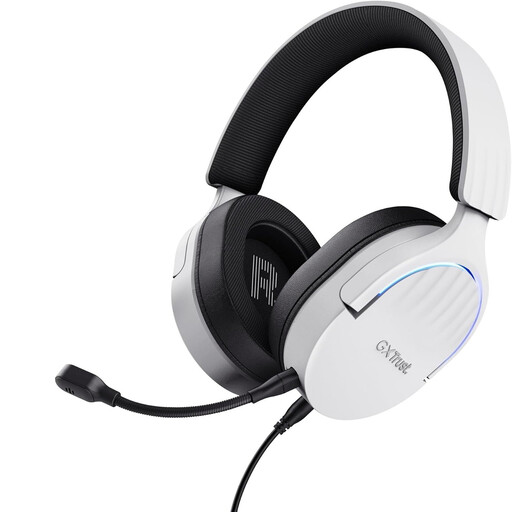
Trust GXT 498W Forta, white
This wired 3.5 mm headset with a flexible microphone may suit a recording setup with a compatible headset socket.
The microphone is detachable and flexible. The product description mentions soft ear cushions, a padded headband and a 1.2 m cable.
The recording device's 3.5 mm connection must also support microphone input.
Joybuy
 No image available
Trust GXT 490 FAYZO, USB Type-A, white
This wired USB Type-A headset is an option if your computer supports that connection.
The microphone is detachable and flexible. The product description mentions soft over-ear cushions and adjustable, rotating ear cups.
Joybuy
 No image available
Logitech H340, USB-A, black
The H340 may suit a fixed computer setup with USB-A; Logitech describes its microphone boom as adjustable.
This is a wired USB headset. Check that your device has a compatible USB-A port.
Joybuy
 No image available
Trust Ayda, USB Type-A, black
This wired USB Type-A headset is an option for a computer with a compatible port.
The microphone flips up to mute. The product description mentions an adjustable headband and breathable ear cushions.
Joybuy
 No image available
Razer BlackShark V2 X 7.1, wired, black
The wired 3.5 mm connection may suit a recording device with a compatible microphone input.
The product information describes a cardioid microphone, memory foam ear cushions and a weight of 240 g.
The recording device's 3.5 mm connection must also support microphone input.
Joybuy
Frequently asked questions
How do I set up my headset for my first reading exercise?
Select the headset microphone as the recording source in your operating system and recording software. Record a short test sentence and listen back; lower the recording level if the sound starts to distort. Audacity recommends aiming for a peak of around −6 dB in its recording guide.
Does a noise-cancelling microphone mean my pronunciation will be recorded accurately?
No, a product claim about noise cancellation doesn't prove that. Make a test recording and check that the sounds you want to practise remain recognisable.
Can I return a headset bought online if it doesn't fit comfortably?
For an online consumer purchase in the Netherlands, you generally have a statutory 14-day cooling-off period from delivery, although there are exceptions. ACM ConsuWijzer lists unsealed hygiene products as a possible exception; don't assume that every headset falls into this category, and check the terms before trying it on. The cooling-off period is separate from your rights if a product is faulty or doesn't match its description.
Can I record and share my reading practice?
Making a recording for your own practice is different from publishing information about other people online. The Dutch Data Protection Authority says that identifiable information about others may generally only be published online with their consent, and distinguishes this from strictly personal or household use; the circumstances determine which rules apply.


