For a small workspace, a headset with an adjustable microphone boom and a suitable connection is a practical choice: you won’t need a separate microphone stand, and you can keep the microphone in a consistent position. A wired USB headset doesn’t need charging, while a wireless headset gives you more freedom to move but means you’ll need to check the connection and recording sound. No product specification alone proves that individual Dutch sounds will be captured clearly enough, so make a test recording and listen back to it.
Who is this buying guide for?
Anyone practising pronunciation
Record short Dutch words or sentences and listen back to check whether the sounds are easy to distinguish. Keeping the microphone in a fixed position and making test recordings without clipping will help you compare them. Audacity explains how to listen back and check for clipping in its guide to voice recording.
Anyone short on desk space
A headset lets you listen and speak without a separate microphone stand taking up space on your desk. Compare a wired model with a wireless one if the cable restricts your movement.
Anyone using different devices
Before buying, check the connection on the version you’ve chosen and whether your computer recognises the headset as a recording device. Depending on the port, you may need a USB-A or USB-C connection, or an adapter.
What should you look for when choosing?
Wired USB headset
Best if: you mainly record at a small computer workstation and want a direct connection without having to charge your headset.
Bear in mind: the cable limits how freely you can move. Check the USB version too, and make a test recording; microphone specifications designed for calls don’t prove recording quality for pronunciation practice.
Wireless headset with microphone boom
Best if: you want to move around while practising and can test recording and playback on your own device.
Bear in mind: charging and wireless compatibility. With Bluetooth, whether you can play stereo audio while using the microphone depends on the headset, computer, operating system and drivers.
Separate desktop microphone and headphones
Best if: you want to try a different recording setup after making test recordings and have room for a microphone or boom arm.
Bear in mind: a separate microphone takes up extra space and needs positioning. General information from manufacturers about microphones doesn’t prove a quality difference between specific products.
| What to consider |
What to look for when buying |
Who is this important for? |
| Clear recordings |
Check whether the microphone boom is adjustable. Record the same words and listen back, checking for clipping in your recording software. |
If I want to compare sounds, I need to keep the microphone in a fixed position and avoid distorting my voice. Around 33% of consumers say clear, repeatable pronunciation recordings are their top priority. |
| Clear desk space |
Consider where a cable will run across your workspace and whether you need room to move. For a wireless model, check how it charges and whether you’ll need an adapter. |
If there’s no room for a separate microphone stand, I want a setup that lets me listen and speak at the same time. Around 27% of consumers say having clear desk space is their top priority. |
| Connection and recording device |
Check whether the USB-A or USB-C version matches the ports on your device. Select the headset as the microphone in your recording software and make a test recording. |
If I use more than one device, I want to know which connection will fit and whether the software is using the right microphone. Around 20% of consumers say device compatibility is their top priority. |
| Comfort during repeated practice |
Check the headband and ear cushions, and decide whether you want a mono or stereo version. Assess the fit during an appropriate trial period. |
If I practise regularly, I want a headset that feels comfortable to wear. Mono or stereo is a matter of wearing and listening preference, not a proven way to improve recording quality. Around 20% of consumers say wearing comfort is their top priority. |
Common buying mistakes
-
Assuming noise cancellation guarantees good pronunciation recordings
Manufacturers often describe noise cancellation as a feature for calls. The product specifications they quote don’t measure how well Dutch pronunciation sounds are captured.
Compare short, unedited test recordings of the sounds you want to practise.
-
Assuming every version of a model is the same
Connections, mono or stereo options and included accessories can vary between versions. A different connection may mean you need a separate adapter.
Before buying, check the full product specification and what’s included in the box against the connections on your device.
Bear in mind that you may need to buy a separate adapter if the headset’s connection doesn’t match your device.
-
Choosing wireless without testing recording and playback
Microsoft says that playing stereo audio while using the microphone over Bluetooth LE Audio requires specific support, including a compatible Windows 11 computer and drivers.
Test recording and playback at the same time on the device you’ll actually use for practice.
Brands to consider
Logitech
The H390 is a wired USB computer headset with a microphone boom and in-line controls. The product page shows USB-A and USB-C versions.
- Logitech describes the H390 microphone as adjustable and noise-cancelling.
- For the USB-A version shown, Logitech lists a 1.9 m cable. This isn’t a test of recordings for checking pronunciation.
Trust
The Ayda USB-ENC is designed for computer use and has an on-ear design. Check which connection comes with the version you choose.
- Trust lists a fold-up microphone that mutes when raised.
- Trust’s claim about reducing background noise isn’t an independent test for pronunciation practice.
Jabra
The wired Evolve 20 comes in mono and stereo versions; the Evolve2 65 is a separate wireless product range.
- For the Evolve 20, Jabra lists USB-A or USB-C connections and weights of 104 g for mono and 132 g for stereo.
- The listed weights aren’t a comfort test. Don’t confuse the Evolve2 65 with the Evolve2 65 Flex.
EPOS
The IMPACT 100 is available in wired mono and stereo versions. The specifications listed apply to the version described.
- For the stereo version in question, EPOS specifies a movable microphone boom and a weight of 76 g. The USB-C version comes with a USB-A adapter.
- The listed weight isn’t a comfort test, and the specifications aren’t a pronunciation test.
HP Poly
The Blackwire 3200 and 3300 series offer different wearing styles and connection options.
- For the Blackwire 3300 series, HP lists a flexible microphone boom and USB-C with a USB-A adapter attached.
- According to HP, a 3.5 mm connection depends on the version, so check the exact model.
Headsets at Joybuy
These product picks combine a headset and microphone for speaking and listening back in a small workspace. Both wired and wireless versions are included.
 No image available
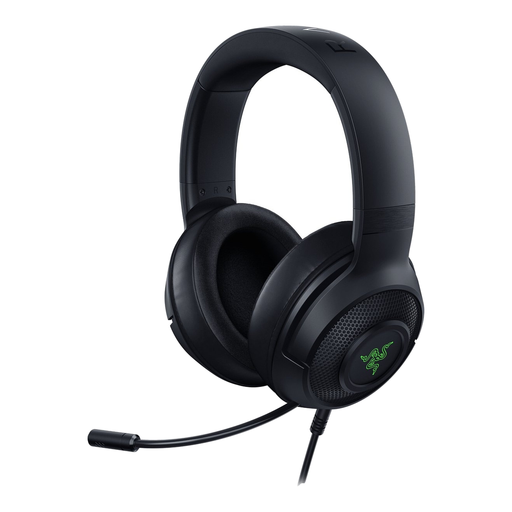
Razer Kraken V3 X, Black
This headset combines a microphone and headphones, so you won’t need a separate microphone stand on your desk.
The product description mentions a cardioid microphone and stereo playback; the listed weight is 285 g.
View at Joybuy
 No image available
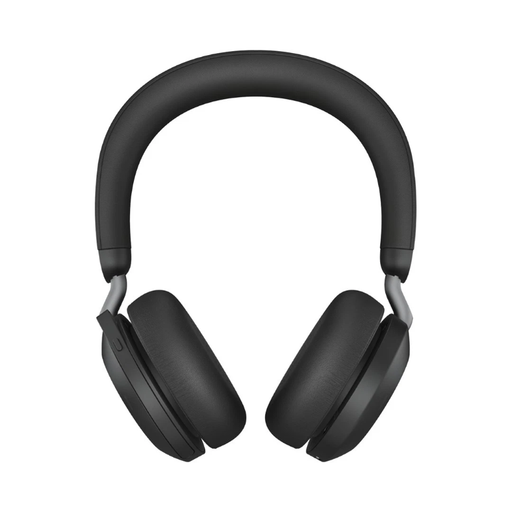
Jabra Evolve2 75 Headset
This wireless headset lets you listen and speak without a microphone stand on your desk. Check the connection on the device you use for practice.
The product description mentions Bluetooth, a range of 30 m, 36 hours of battery life and a USB-C cable.
View at Joybuy
 No image available
Logitech PC 960 USB Headset
The adjustable microphone boom can help you keep the microphone in a consistent position during repeated practice.
The product description mentions a USB connection and in-line volume and mute controls.
View at Joybuy
 No image available
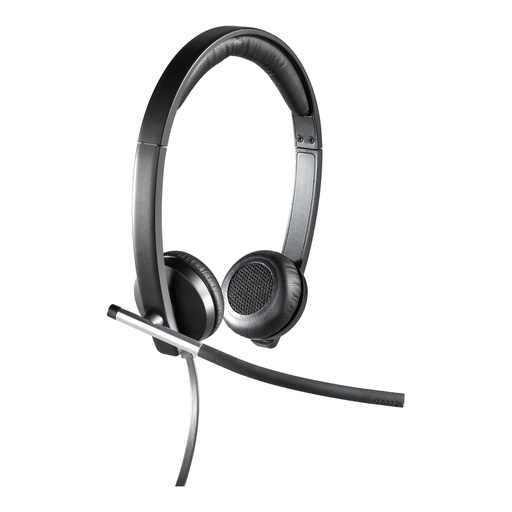
Logitech H650e Stereo Headset
This wired headset combines a microphone and headphones, so you won’t need a separate microphone stand.
The product description mentions in-line controls, echo cancellation and a microphone that isolates background noise. This isn’t a pronunciation test.
View at Joybuy
 No image available
Logitech H340 USB Headset, Black
This headset lets you speak and listen without a separate microphone stand on your desk.
The product description mentions a USB connection, stereo sound and an adjustable microphone.
View at Joybuy
Frequently asked questions
How do you make a test recording?
Connect the headset, select it as the microphone in your recording software and say a short list of practice words. Listen back to the recording and adjust the recording level if the meter shows clipping. Audacity explains these steps for its own software.
Does a wireless headset need to play stereo and record at the same time in Windows?
Not for every type of practice. If playing stereo audio while the microphone is active matters to you, check that the headset, Windows computer and drivers support Bluetooth LE Audio. Microsoft lists specific requirements for this feature, including Windows 11 version 24H2 or later and built-in Bluetooth LE support.
What if the headset breaks too soon during normal use?
If you bought the product as a consumer in the Netherlands, you may have a legal guarantee claim against the seller if it doesn’t meet what you could reasonably expect. A manufacturer’s warranty doesn’t replace this legal right; the appropriate remedy depends on the circumstances. ACM ConsuWijzer explains the difference.
Can you try a headset bought online and send it back?
For online consumer purchases, there is usually a statutory 14-day cooling-off period from the day of delivery. ACM ConsuWijzer lists exceptions, including certain hygiene products with a broken seal. Check the packaging and the relevant terms; don’t assume that every opened headset falls under this exception.


