Who is this choice relevant to?

Practising pronunciation on your own

You record Dutch sentences repeatedly and want to keep the microphone boom in a similar position so you can listen back to your pronunciation. Logitech describes the H390 as a headset with a positionable microphone boom.

Practising with a conversation partner

You may want to keep a recording of not just your own voice, but the other person’s responses too. Decide in advance whether both voices need to be clear on the recording. A personal microphone close to your mouth won’t automatically pick up someone further away just as clearly.

Practising at your computer for long periods

You’ll be speaking and listening during longer sessions, so consider more than just the microphone. Think about the fit, whether it has earcups and how it connects to your computer. EPOS, for example, describes the IMPACT SC 60 USB ML as having a flexible microphone boom.

What should you look for when choosing?

Complete USB headset

Suitable if: You want to record your own voice on a computer and listen back through the headset straight away. The Logitech H390 and EPOS IMPACT SC 60 USB ML are examples of headsets with a microphone boom and headphones.

Keep in mind: Check which USB version you’re getting, and test whether a conversation partner further away sounds clear enough.

Separate cardioid head-worn microphone with XLR

Suitable if: You already have a compatible XLR microphone input or audio interface and want to record your own voice close to your mouth. Shure describes the WH20XLR as having an XLR connection and a cardioid pickup pattern.

Keep in mind: This isn’t a complete USB headset with headphones. You’ll need to arrange a separate way to listen back, and test how it records a second speaker too.

Separate omnidirectional head-worn microphone with 3.5mm connection

Suitable if: You’re looking for a compact head-worn microphone and have a microphone input that supplies the plug-in power required by the RØDE HS2.

Keep in mind: The HS2 doesn’t have integrated headphones. Check both the connection and the power supplied by your recording device; having the right plug alone isn’t enough.

What to consider What should you check? Who is this important for?
Recording your own voice Check that you can position the microphone boom, then make a short test recording at your usual speaking volume. If I want to listen back to my pronunciation repeatedly, I need to be able to keep the microphone in a consistent position. About 36% of consumers consider recording their own voice their main priority.
Recording the other person too Record a short conversation from the seating positions you plan to use, then listen back to each voice separately. If I want to keep a complete dialogue, I also need to assess how my conversation partner’s voice sounds from further away. About 29% of consumers prioritise recording both voices.
Connection and power Compare the full model variant with the input available, and check whether it needs a particular power supply, such as plug-in power. If I want to get started without extra recording equipment, the connection needs to work with my computer or recording device. Around 21% of consumers prioritise being able to connect straight away.
Comfort during longer sessions Consider adjustability and wearing style, and decide whether you want to leave one ear uncovered while practising. For longer speaking and listening sessions, I want a comfortable fit that keeps the microphone in place. About 14% of consumers give wearing comfort top priority.

Common buying mistakes

  • Expecting one microphone to record both speakers equally clearly

    A microphone close to your mouth will be further away from your conversation partner. Distance and reverberation can affect how clearly their voice is picked up. Shure also notes that a microphone can’t improve the acoustics of a room.

    Make a test recording with both of you in the places where you’ll actually be practising, and listen back to both voices before choosing your setup.

  • Mistaking a separate head-worn microphone for a complete headset

    The Shure WH20XLR uses XLR, while the RØDE HS2 requires a 3.5mm microphone input with plug-in power. Neither is the same as a complete USB headset with built-in headphones.

    Check the full variant name, plug, power requirements and how you want to listen to the recording.

  • Assuming noise cancellation means a clean practice recording

    A claim about noise cancellation during calls doesn’t prove that reverberation or background noise will disappear in your practice room. A microphone can’t fix the acoustics of a room.

    Test the headset in the room where you’ll be practising, and listen for your voice, pauses and any background noise.

Brands to compare

Logitech

The H390 is a wired computer headset for anyone who wants to speak and listen back straight away. The connection depends on the USB version you choose.

  • According to Logitech, the H390 has a positionable microphone boom, volume controls, a mute function and an adjustable headband.
  • The manufacturer’s claim about noise cancellation during calls doesn’t, by itself, tell you how a second speaker or a recording in your room will sound.

EPOS

The IMPACT SC 60 USB ML is a wired USB headset with a microphone boom and integrated headphones.

  • The EPOS specification sheet lists a flexible microphone boom and in-line controls.
  • A stated microphone frequency response is a specification, not an independent assessment of pronunciation recordings. Check the exact version.

Poly

The Blackwire 3200 series includes wired computer headsets with different wearing styles and connection options.

  • HP describes both mono and stereo versions in the series. A mono version may suit you if you want to leave one ear uncovered.
  • Features listed for the series won’t necessarily apply to every model. Check the wearing style and connection of the specific version.

Shure

The WH20 is a head-worn microphone for use with a compatible recording input; the WH20XLR has an XLR connection.

  • Shure specifies an adjustable boom and cardioid pickup pattern for the WH20.
  • The WH20XLR isn’t a USB headset with earcups. The WH20XLR, WH20QTR and WH20TQG have different connections.

RØDE

The HS2 is a compact head-worn microphone for equipment with a suitable powered microphone input.

  • RØDE specifies an adjustable boom and an omnidirectional capsule.
  • The HS2 doesn’t have integrated headphones and, according to RØDE, requires a 3.5mm microphone input with plug-in power. A compatible plug alone isn’t enough.

Jabra

The wired Evolve2 40 SE is a communications headset with a microphone boom and headphones.

  • Jabra describes a flexible microphone boom and passively isolating ear cushions.
  • The product information focuses on calls and work. Manufacturer claims aren’t an independent assessment of unprocessed language-practice recordings.

Headsets at Joybuy

These are wired headsets with a microphone for speaking and listening back. Check that each model’s connection is compatible with your recording device.
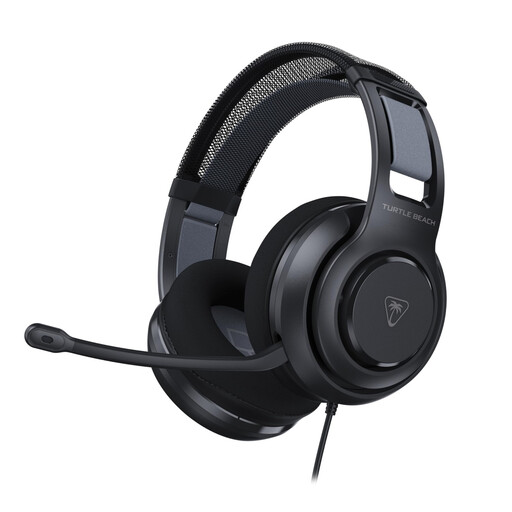
Turtle Beach Atlas 200 PC gaming headset, 3.5mm jack

Turtle Beach Atlas 200 PC Gaming Headset (3.5mm Jack)

You can position the microphone towards your mouth to record your own voice; test separately how well it picks up someone further away.

Wired headset with a 3.5mm connection and flip-to-mute microphone.

View at Joybuy

Turtle Beach Airlite Fit gaming headset, 3.5mm jack, blue/red

Turtle Beach Airlite Fit Gaming Headset (3.5mm Jack), Blue/Red

You can position the microphone towards your mouth to record yourself speaking; make a test recording to check how your conversation partner sounds.

Wired headset with earcups, a 3.5mm connection and flip-to-mute microphone.

View at Joybuy
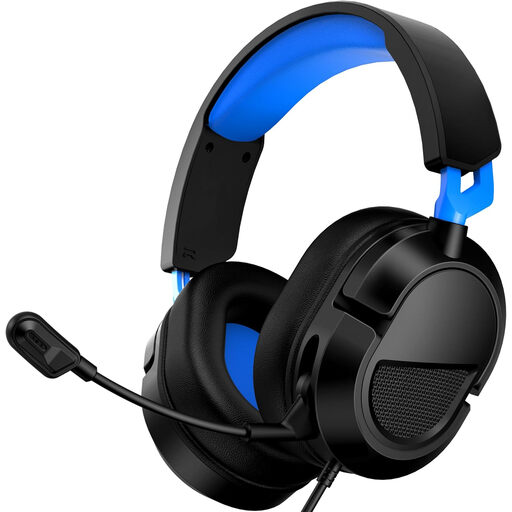
AOC wired gaming headset for PS5, Xbox Series X|S, Xbox One and PC

AOC Wired Gaming Headset for PS5, Xbox Series X|S & Xbox One, PC

You can position the adjustable microphone towards your mouth to record your own pronunciation; check separately whether a conversation partner sounds clear.

Wired headset with a 3.5mm connection and a microphone that adjusts through 360°.

View at Joybuy
Logitech PC 960 wired USB headset

Logitech PC 960 USB Wired Headset

You can position the adjustable microphone boom for your own speech recordings; listen back to see if the chosen position works.

USB headset with in-line controls, adjustable microphone boom and earcups.

View at Joybuy

Logitech H340 USB headset, black, wired

Logitech H340 USB Headset, Black

You can position the adjustable microphone to record your own voice; test separately how clearly it picks up a conversation partner.

Wired USB headset with an adjustable microphone.

View at Joybuy

Frequently asked questions

Will a headset close to your mouth also pick up your conversation partner clearly?

Not necessarily. A personal head-worn microphone is close to your mouth, while your conversation partner may be further away. Shure explains that distance and reverberation can make speech recorded from further away less clear. Make a test recording from the seating positions you plan to use, then listen back to both voices.

Where should you position the microphone boom for a pronunciation recording?

Position the boom as you normally would when speaking, then assess a recording using both your usual voice and more emphatic speech. Logitech describes the H390’s boom as positionable and Shure describes the WH20’s as adjustable. Make a test recording to check that your voice is clear and your breathing isn’t distracting.

Can you plug a separate head-worn microphone straight into any laptop?

No, it depends on the connection and the input on your device. The Shure WH20XLR has a three-pin XLR plug; the RØDE HS2 requires a 3.5mm microphone input that supplies plug-in power. Check your recording device’s input and power before choosing. A USB computer headset uses a different type of connection.

What warranty rights do you have in the Netherlands if your headset develops a fault?

According to the Dutch government, you’re entitled to a product that conforms to the agreement; there is no fixed statutory warranty period in the Netherlands. If a product is faulty, the seller must provide a solution. Any manufacturer’s warranty is in addition to these rights and doesn’t replace them.

Can you record a practice conversation with someone else and share it online?

That depends on the circumstances and what you do with the recording. An audio recording in which someone can be identified may be personal data. According to the Dutch Data Protection Authority, the exemption for personal or household activities applies only within that personal context; publishing online beyond that circle may be subject to GDPR requirements. Discuss recording and any possible sharing with your conversation partner in advance, and consider publication separately from keeping the recording private.
