
If Fairtrade chocolate is your priority
You want to see a Fairtrade mark that applies to the chocolate product itself. You can serve the biscuits alongside it, but the mark on the chocolate does not apply to them.


Choose Dutch chewy aniseed biscuits and Fairtrade chocolate as two separate parts of your Easter lunch. A Fairtrade mark on the chocolate does not automatically apply to the biscuits: only describe them as Fairtrade if you can verify the mark on the specific product. If you’re sharing lunch, check the current labels on both products too, especially for allergen information.
You want to see a Fairtrade mark that applies to the chocolate product itself. You can serve the biscuits alongside it, but the mark on the chocolate does not apply to them.
You want to serve the biscuits, but need to check the ingredients and allergens in both the biscuits and the chocolate separately for your guests.
You want to know which products you can actually take home or order. Check availability shortly before buying, rather than assuming that a product is Fairtrade because it appears in a general Fairtrade category.
First decide which product you want to present as Fairtrade: the chocolate, the biscuits or both. Then check the labels before serving the products together.
| What to check | What to check when buying | Who it matters to |
|---|---|---|
| Fairtrade mark | Check the mark on the chocolate you’ve chosen. If the certification mark includes an arrow, read the explanation on the packaging. Check the biscuits separately if you also want to describe them as Fairtrade. | If I want to serve Fairtrade chocolate, it needs to be clear which product and ingredients the mark applies to. This check is a priority for around 45% of consumers. |
| Ingredients and allergens | Read the current label on both products, including warnings about the possible presence of allergens. | When sharing lunch, I want to be able to check which products are suitable for my guests. This is the main concern for around 33% of consumers. |
| Availability | Check the product status and stock at your chosen shop shortly before buying. | If lunch is on a set date, I don’t want to rely on a product I might not be able to get. Availability comes first for around 22% of consumers. |
A mark on chocolate says nothing about the certification of a separate biscuit product.
Describe the products separately, for example, as Dutch chewy aniseed biscuits served with Fairtrade chocolate. Only describe the biscuits as Fairtrade if you can verify the mark on that specific product.
Fairtrade Nederland allows mass balance for cocoa. This means that a Fairtrade mark does not necessarily mean all the cocoa in a bar has been kept physically separate from other cocoa.
If physical traceability matters to you, read the information about the certification mark on the packaging.
The two types of product may contain different allergens. For example, PLUS lists milk, soya, peanuts and nuts in its chocolate mix; this information does not automatically apply to other chocolate.
Compare the current labels on the products you buy and keep the packaging to hand when serving them.
Albert Heijn listed the biscuits we looked at as available in store only; the Jumbo biscuits we checked were no longer in its online range. A listing therefore doesn’t confirm that you’ll be able to buy the product for your lunch.
Check the product status with the relevant shop shortly before buying.
A place to explore Dutch chewy aniseed biscuits and separate Fairtrade chocolate.
A shop where you can assess the biscuits and Fairtrade products using their individual product information.
Worth considering if you want to choose chocolate separately from the biscuits.
An option for exploring individual Fairtrade chocolate products for your lunch table.
A shop where you can look for a Fairtrade mark on the specific chocolate product you choose.
These bars are intended as a separate chocolate option to serve alongside the biscuits, not as a replacement for them or proof that they are Fairtrade. Before serving, check the Fairtrade mark and allergen information on the packaging you receive.
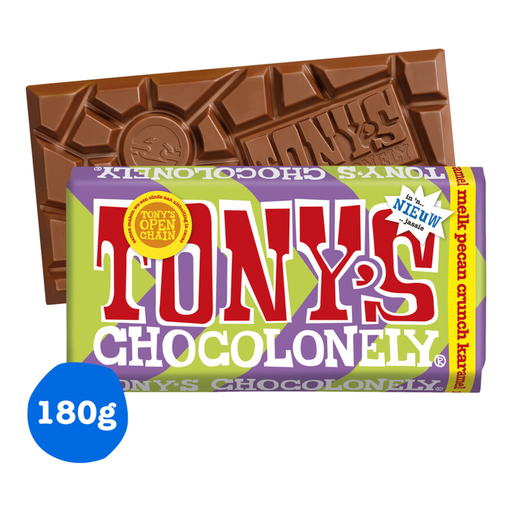 Image unavailable
A bar to serve as a separate chocolate option alongside the biscuits. The product description calls this chocolate Fairtrade.
The bar weighs 180 g. As this variety contains milk and pecans, check the full allergen information and any warnings on the current packaging.
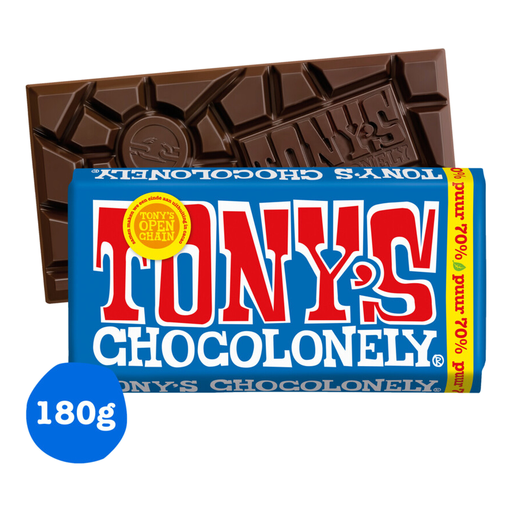 Image unavailable
A dark chocolate bar to serve separately from the biscuits. The product description identifies this chocolate as Fairtrade.
The bar weighs 180 g. The product information mentions different cocoa percentages, so check the percentage on the packaging if it matters to your choice. Read the current allergen information too.
When the mark applies to the specific chocolate product you’re serving. Check the packaging or product page. If the certification mark includes an arrow, read the explanation about the ingredients it covers, as advised by Fairtrade Nederland.
No, not necessarily. Fairtrade Nederland allows mass balance for cocoa, which means Fairtrade and non-Fairtrade cocoa may be mixed during processing. If physical separation is a requirement for you, read the information on the packaging.
Read the current label on each product separately, including warnings about the possible presence of allergens. Keep the packaging with you at lunch so guests can check the information for the product they’d like to eat.
Follow the storage instructions and use-by or best-before date on the packaging. For dark chocolate, Voedingscentrum advises checking, smelling and tasting it after the date to assess its quality. Follow the guidance for the product you’ve bought.