What do buyers look for most?
Start with your baking tin and the quantity you want to make per batch. Then decide whether a built-in or freestanding oven is right for you, before comparing the cooking settings and cleaning method.
| What to consider |
What to look for when buying |
Who should prioritise this? |
| Baking tin and capacity per batch |
Measure your tin and compare it with the internal dimensions and usable shelf heights. Rutger Bakt uses a 20 × 20 cm tin for the recipe mentioned. |
If I want to make enough squares for a coffee morning, I need to know how many suitable tins will fit in the oven per batch. Around 36% of consumers put capacity per batch at the top of their list. |
| Positioning and connection |
Measure the built-in space or available worktop area. Read the positioning instructions for the exact model and check the connection requirements. |
If you don’t have a suitable built-in space, a freestanding model may be a good option, but you’ll still need somewhere suitable to put it. Positioning is the main buying concern for around 29% of consumers. |
| Hot-air cooking and conventional heat |
Check that the model offers both settings if you want to follow the recipe and bake on several levels. Follow the instructions for your recipe and oven. |
If I want to choose the setting specified in my recipe and sometimes use several levels, I compare these features across models. Around 21% of consumers prioritise a choice of cooking settings. |
| Cleaning and running costs |
Compare the cleaning method and, where applicable, the energy label and consumption per standardised cycle. That figure doesn’t directly predict the cost of baking Dutch butter cake. |
If you bake and clean your oven regularly, you’ll want to know what a cleaning function involves. Maintenance and running costs are the main concern for around 14% of consumers. |
Ovens at Joybuy
These oven options focus on built-in models and hot-air cooking for anyone comparing how many tins will fit per batch. Before buying, check the internal dimensions and the settings available on the exact model.
 Image unavailable
Bosch HBG536EB4 Double Oven, 71 L, 3D hot-air cooking
The product information lists 3D hot-air cooking on up to three levels. Compare this model if you’re planning to bake several tins per batch, and check the internal dimensions first.
Capacity: 71 litres. Finish: stainless steel.
View at Joybuy
 Image unavailable
Bosch HBF133BR0 built-in oven, 66 L
The listed settings make this model worth considering if you want to choose between hot-air cooking and conventional heat. Check your recipe for the setting it recommends.
Capacity: 66 litres. The description lists 3D hot-air cooking on up to three levels, conventional heat and a temperature range of 50–275 °C.
View at Joybuy
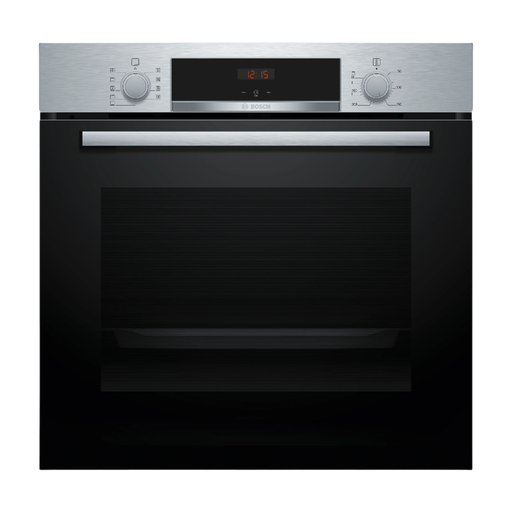 Image unavailable
Bosch HBA514BS3 built-in oven, 71 L
The listed hot-air cooking function on several levels makes this model worth comparing if you’re planning to bake several tins. Check that your tins will fit and which setting your recipe recommends.
Capacity: 71 litres. The product information lists hydrolysis cleaning, hot-air cooking on up to three levels and a maximum temperature of 275 °C.
View at Joybuy
 Image unavailable
Bosch HBA534BB3 Series 4 built-in oven, 71 L
Bosch lists 3D hot-air cooking on up to three levels. This may help you plan your baking, but it doesn’t confirm how many tins will fit or what result you’ll get when baking Dutch butter cake on each level.
Capacity: 71 litres. The product name specifies a 60 cm model; the product information lists EcoClean Direct.
View at Joybuy
 Image unavailable
Bosch HBG537EB4 Series 6 built-in oven, 71 L
The product information lists 3D hot-air cooking on up to three levels, making this model worth comparing when planning to bake several tins. Check the internal dimensions before deciding how many tins you expect to fit per batch.
Capacity: 71 litres. The description lists Air Fry and EcoClean Direct.
View at Joybuy
Frequently asked questions
What size baking tin should you use as a starting point for Dutch butter cake squares?
Rutger Bakt uses a 20 × 20 cm square tin for the recipe mentioned and gives a yield of around 40–50 small squares. Measure your own tin and compare it with the oven’s internal dimensions. If you use a different-sized tin, adjust the quantity of dough too.
Do you always need to use hot-air cooking for Dutch butter cake?
No. First check which setting your recipe recommends and which settings your chosen model offers. The Consumentenbond says hot-air cooking is particularly useful when baking on several levels; a general temperature guideline isn’t a specific Dutch butter cake recipe.
How far in advance can you make Dutch butter cake squares?
Allow time for the cake to cool: Rutger Bakt’s recipe says to leave the Dutch butter cake to cool in the tin for at least six hours before cutting it. The Voedingscentrum recommends keeping opened Dutch butter cake in the fridge for three days. You should also consider the ingredients and how it’s stored.
What should you know about an oven’s energy label and warranty?
EU energy-labelling rules apply to household ovens within their scope; the European Commission identifies small ovens as outside the scope shown. In the Netherlands, statutory guarantees apply alongside manufacturers’ warranties: if a product breaks sooner than you could reasonably expect under normal use, the retailer is responsible for providing an appropriate solution.
What rules apply if you serve Dutch butter cake at a coffee morning?
That depends on how the event is organised. The Nederlandse Voedsel- en Warenautoriteit sets out food safety rules for selling food at events and information requirements for allergens in unpackaged food offered for sale. If you’re only sharing food informally, the same obligations don’t automatically apply.


