
Baker with one square tin
You want to bake a small slab of Dutch butter cake and cut it into pieces. Match the amount of dough and the thickness you want to the tin. For example, Rutger bakt’s recipe uses a 20 × 20 cm square tin.


For one small square tin, a compact oven with top and bottom heat is an obvious choice, but only if the tin actually fits inside. An air fryer is an alternative if your ovenproof tin fits and there’s room around it for air to circulate. A larger oven makes sense mainly if you’ll also use it to cook other or larger dishes; Milieu Centraal recommends choosing an oven that’s no bigger than you need.
You want to bake a small slab of Dutch butter cake and cut it into pieces. Match the amount of dough and the thickness you want to the tin. For example, Rutger bakt’s recipe uses a 20 × 20 cm square tin.
You’re looking for a freestanding appliance that fits in the space available, with enough clearance around it as specified in the instructions. Tristar and Severin describe their products as compact mini ovens; a capacity in litres doesn’t tell you how much room there is inside for your tin.
You want to cook more than just Dutch butter cake and are weighing up extra oven settings or an air fryer against the space your tin needs. Inventum lists oven settings for the OV207B, while Philips stresses that a baking tin in an Airfryer needs room for air to circulate.
Choose this if: you want to use one small square tin and the exact model has enough space inside.
Keep in mind: space for the tin may be limited, and the appliance needs the clearance specified in its instructions.
Choose this if: you want to bake other dishes as well as Dutch butter cake and have room for a larger appliance.
Keep in mind: its size; extra features alone don’t prove it will bake Dutch butter cake better.
Choose this if: you also want to use the air fryer for other cooking and can fit a suitable tin with room around it.
Keep in mind: the basket may limit the size of the tin, so check the dimensions for your model.
Choose this if: you already have a suitable oven, regularly cook larger dishes or your preferred tin won’t fit in a mini oven.
Keep in mind: for small batches, a large appliance may offer more oven space than you need.
Measure your tin first, then decide which oven capacity and heating settings suit the way you’ll use it. For small batches, the main considerations are the size of the tin, temperature control, available space and how often you’ll use the appliance.
| What to consider | What should you check? | Who is this important for? |
|---|---|---|
| Tin and portion size | Measure the outside dimensions and height of your tin. Check the usable internal dimensions and the space available on the rack. | If I want to use one square tin, I need to know it will actually fit and that the amount of dough will give me the thickness I want. Around 36% of consumers put tin size and portion size first. |
| Baking controls | Check the heating settings, timer and whether you can monitor the baking process on the exact model. | If I want to keep a close eye on my Dutch butter cake while it bakes, I’ll look at the settings and controls. Around 29% of consumers say adjustable controls are their main consideration. |
| Positioning | Compare the external dimensions and follow the positioning and ventilation instructions in the manual. | If I have limited worktop space, I want an appliance that can be positioned there safely according to its instructions. Around 21% of consumers prioritise having a suitable space for the appliance. |
| Use and energy consumption | Consider how often you bake and whether you already have a suitable oven. Compare energy use only on a like-for-like basis per use. | If I only bake a small cake occasionally, I want to know whether an extra appliance makes sense for the way I use it. Around 14% of consumers base their choice mainly on use and energy consumption. |
Capacity in litres doesn’t tell you whether the tin will fit on the rack. If you use a smaller tin, you’ll also need to adjust the amount of dough to get the same thickness.
Measure your tin and check the usable internal dimensions of the exact model before choosing an appliance.
The Joybuy listing for the Severin TO 2052 gives different key specifications from Severin’s own information, including its capacity and fan-assisted cooking feature.
Compare the full product version and get the key specifications confirmed before relying on a product listing.
The wattage doesn’t show how much energy one cooking session uses. That also depends on how you use the appliance.
Milieu Centraal recommends comparing ovens by energy use per use or per year, and choosing an oven size that suits the way you use it.
Inventum describes the OV207B as a 20-litre freestanding oven with top and bottom heat and fan-assisted cooking, for anyone who wants to cook more than just Dutch butter cake.
Tristar describes the OV-3610 as a 10-litre mini oven with top and bottom heat for small batches.
Severin describes the TO 2052 as a 9-litre baking and toasting oven with top and bottom heat, which can be used separately or together.
Princess describes the 112751 as a 32-litre freestanding oven with convection and a rotisserie, making it more relevant if you also cook larger dishes.
Philips is worth considering if you’re thinking about using an ovenproof tin in an air fryer; the tin must fit the specific model.
This selection includes air fryers, compact mini ovens and a larger freestanding oven. Check that your tin fits the specific appliance and consult its product documentation. Ondernemersplein explains that the CE marking and EU declaration of conformity are manufacturer obligations for electrical appliances.
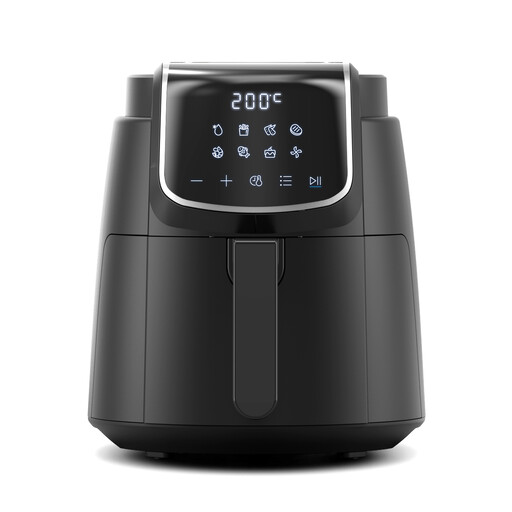 Image unavailable
The product description lists a baking programme. Check that your ovenproof tin fits and leaves room around it for air to circulate.
The description lists a capacity of 4 litres, a temperature range of 35–200 °C and a timer setting of 1–60 minutes.
 Image unavailable
The product description lists a baking function. Check the tin size for this model and keep the air inlet and outlet clear.
The description lists a capacity of 6.5 litres, a temperature setting of 80–200 °C, 360° fan-assisted cooking, a viewing window and an interior light.
 Image unavailable
A mini oven with top and bottom heat may suit a small baking job. Check that your tin fits in the usable internal space.
The product description lists a capacity of 22 litres, five heating settings, an adjustable temperature of up to 230 °C, a 60-minute timer and a rack with three positions.
 Image unavailable
The description presents this mini oven as suitable for small baking jobs. Check that your tin fits the stated baking tray size.
The description lists a capacity of 10 litres, top and bottom heat, a temperature range of 80–230 °C and a 30-minute timer. Baking trays of up to 20 cm are mentioned.
 Image unavailable
This freestanding oven has a larger capacity than a mini oven. Check that its size suits the way you’ll use it and the space you have available.
The product description lists top and bottom heat, a temperature setting of up to 250 °C, a 90-minute timer, four rack positions and a double-glazed door. The instructions specify at least 10 cm of clearance on all sides and 30 cm above.
You can’t tell from the capacity in litres. Compare the outside dimensions of your tin with the usable internal dimensions and rack position of the exact appliance. If you use a smaller tin, adjust the amount of dough too if you want the same thickness.
Yes, as long as the tin is ovenproof and fits the specific model. Philips lists glass, ceramic, metal and silicone as possible materials, and specifies that there must be room around the tin for air to circulate.
In the recipe from Rutger bakt, the Dutch butter cake is left to cool in the tin for at least six hours after baking before it’s cut. The recipe uses a 20 × 20 cm tin; don’t assume the timings will apply to a different dough thickness or appliance.
Check the documentation for the specific appliance. Ondernemersplein explains that manufacturers must ensure electrical appliances placed on the market meet the applicable requirements, and provide a CE marking and EU declaration of conformity. A general product listing doesn’t automatically confirm that a specific item complies.
No. According to the Dutch government, there is no fixed statutory warranty period in the Netherlands: you’re entitled to a product that works properly for as long as you can reasonably expect it to. A manufacturer’s warranty is in addition to this; if there’s a problem, contact the seller.